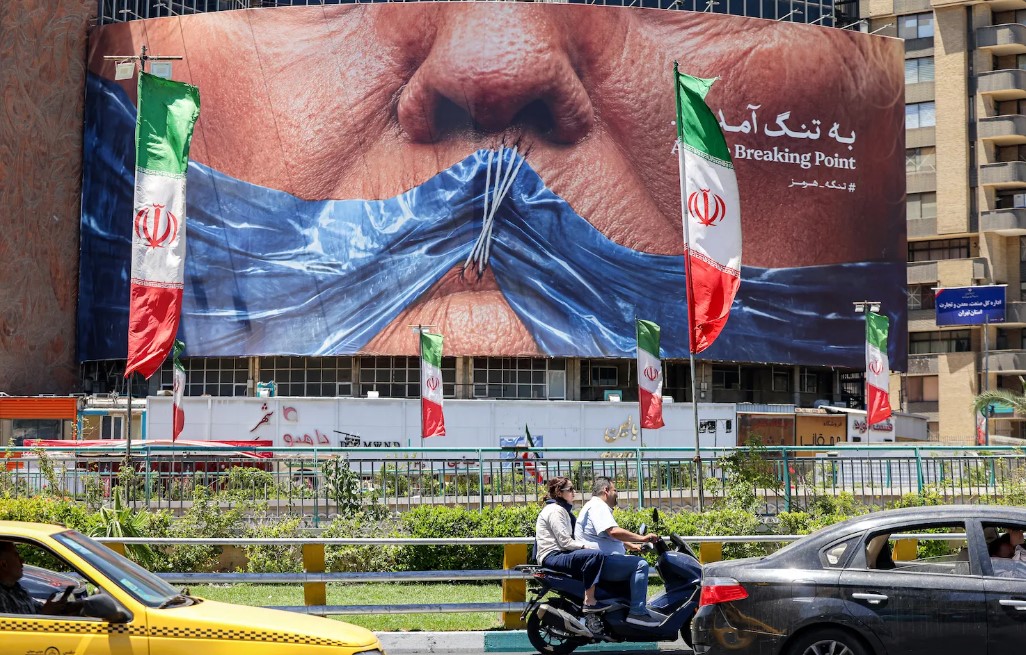
The Strait of Hormuz has become the world's most dangerous chokepoint again, and this time the stakes extend far beyond a disputed channel. Fresh US-Iran air strikes this weekend, following a ceasefire that clearly never fully held, reveal a deeper strategic impasse: both sides are fighting not just each other, but their own domestic political constraints, and neither can fully afford to stop.
What Happened
US Central Command confirmed it struck Iranian radar installations, a ground control station, and two drones on Qeshm Island and in Goruk, Iran, following what it described as aggressive Iranian actions, including the downing of an American MQ-1 drone over international waters. Iran's Islamic Revolutionary Guard Corps retaliated by targeting an air base used by US forces, while a separate Iranian strike on a Kuwaiti military facility marked the second such attack on Gulf state infrastructure in a week. Kuwait confirmed it was using air defence systems to intercept incoming threats, though its response remained carefully worded.
Why This Matters Beyond Headlines
This is not a conventional military escalation between two states with clear red lines. It is a managed confrontation, where each party strikes enough to satisfy domestic audiences and signal deterrence without crossing into full war. The tactical pattern is telling: the US targets air defences and command infrastructure, which degrades Iranian military capacity without attacking population centres. Iran targets bases and communications towers, which signals capability without destroying US assets outright. Both sides are calibrating, not unleashing.
The real risk is miscalculation. When calibration depends on intelligence about the other side's intentions, and when both sides have strong domestic incentives to appear resolute, the margin for error narrows dangerously. The MQ-1 drone shootdown that triggered the latest US strikes exemplifies how quickly tactical events generate strategic responses.
Political and Strategic Calculations
For Washington, the political arithmetic is constrained. President Trump's repeated public assertions that a deal was close have raised expectations. Requesting last-minute changes to a proposed 60-day ceasefire framework, complete with provisions to reopen Hormuz and restart nuclear negotiations, suggests the administration is seeking leverage rather than genuinely walking away. The edits also serve a domestic function: they allow Trump to frame any eventual agreement as having been toughened under his pressure.
Tehran's calculus is equally complex. The IRGC's strikes are partly institutional self-defence. Iranian hardliners have deep structural interests in prolonged tension. Foreign pressure strengthens their domestic position, mobilises nationalist sentiment, and justifies continued military spending. But economic pressure from the oil shipping blockade is severe: Iran cannot indefinitely absorb the fiscal and diplomatic costs of keeping Hormuz partially closed without credible gains.
Economic and Security Impact
Roughly one-fifth of global oil and liquefied natural gas shipments normally flow through Hormuz. The continued blockade has created sustained upward pressure on energy prices worldwide. For oil-importing economies across South Asia and Southeast Asia, the inflationary impact is already visible in fuel and freight costs. European energy markets, still managing post-Ukraine supply diversification, face renewed uncertainty. The longer the disruption holds, the more structural the price signal becomes, and the harder it becomes for governments to absorb the cost politically.
Kuwait's involvement deepens the crisis geometry. A Gulf Cooperation Council member being struck by Iranian missiles pulls the regional security architecture into direct tension, potentially activating defence commitments that would complicate any bilateral US-Iran off-ramp.
Global Reactions and Diplomatic Signals
Major powers have been conspicuously restrained in public. China and Russia, both economically invested in Iranian stability, have avoided public calls for escalation while continuing to watch oil price movements closely. European governments have called for restraint without offering new diplomatic frameworks. The absence of a meaningful multilateral diplomatic track is itself significant: this crisis is being managed bilaterally, which limits the face-saving mechanisms available to both sides.
What Happens Next
Three scenarios are now plausible. In the most likely near-term scenario, a modified ceasefire agreement emerges within weeks, offering both sides enough political cover to stand down without conceding core positions. A second scenario sees the strikes continue at current intensity, creating a frozen conflict over the Strait that keeps oil prices elevated without triggering a regional war. The third, and most dangerous, scenario involves a strike that kills US or Iranian personnel at scale, triggering a retaliation-response cycle that neither side fully controls.
The structural problem remains: the Hormuz crisis is a symptom of an unresolved nuclear negotiation, and air strikes cannot substitute for a political settlement. Every bomb dropped is also a message that the parties have not yet found the formula for one.



Comments (0)
Leave a Comment
No comments yet
Be the first to comment