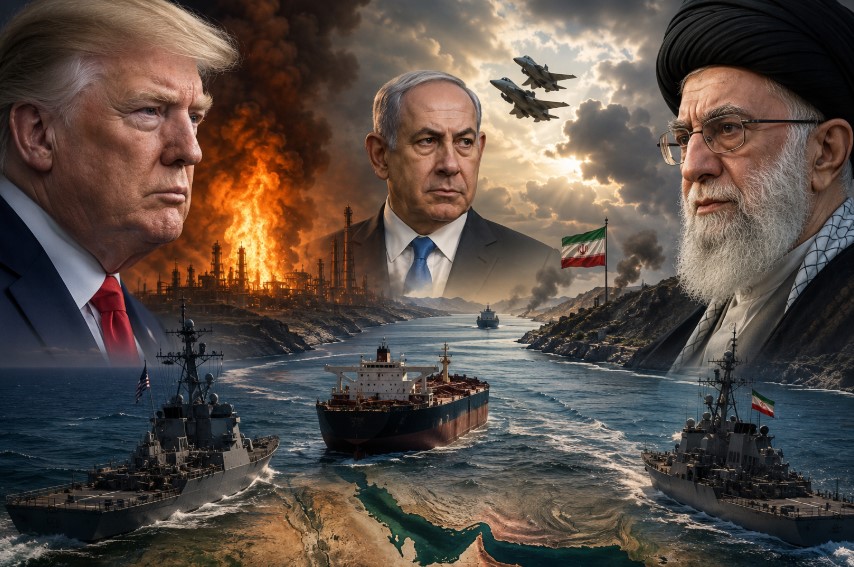
Trump has rejected Iran's response to a US proposal aimed at ending the ongoing conflict, calling it "totally unacceptable" in a Truth Social post that rattled global oil markets and raised serious questions about the path to peace.
The dismissal marks a sharp escalation in a diplomatic standoff that has paralyzed shipping through the Strait of Hormuz, a critical artery for roughly 20% of the world's oil and liquefied natural gas supply.
What Iran Proposed
Iran's semi-official Tasnim news agency revealed that Tehran's proposal, delivered through Pakistan acting as mediator, called for an immediate halt to hostilities on all fronts, an end to the US naval blockade of Iranian ports, compensation for war damage, and firm guarantees of Iranian sovereignty over the Strait of Hormuz.
Iranian President Masoud Pezeshkian reinforced Tehran's position on Sunday, stating that dialogue does not mean "surrender or retreat."
What the US Demanded
According to Axios, the US presented a one-page, 14-point memorandum that included the suspension of Iranian nuclear enrichment, lifting of existing sanctions, and restoration of free passage through the Strait of Hormuz. Many conditions are reportedly contingent on a final agreement.
Trump had previously warned that if Iran refused a deal, bombing would resume at a "much higher level and intensity."
Netanyahu's Nuclear Red Line
Israeli Prime Minister Benjamin Netanyahu added another layer of complexity. Speaking on CBS's 60 Minutes, Netanyahu declared that Iran's enriched uranium stockpile must be "taken out" before the war can be declared over.
"There are still enrichment sites that have to be dismantled," he said, signaling that Israel will not accept any arrangement that leaves Iran's nuclear infrastructure intact.
In a notable shift, Netanyahu also stated he wants Israel to stop receiving US military aid of $3.8 billion per year over the next decade, framing it as a move toward strategic independence.
Oil Prices and Global Shipping at Risk
The rejection immediately pushed oil prices higher. Iran has been blocking the Strait of Hormuz, where traffic has largely stopped. A bulk carrier near Doha was struck by an unknown projectile on Sunday, causing a small fire. Kuwait reported drone incursions. The UAE intercepted two Iranian drones.
Defence ministers from more than 40 nations are meeting Monday, co-chaired by UK and French counterparts, to coordinate a maritime protection mission once hostilities cease.
Key Takeaways
- Trump called Iran's ceasefire response "totally unacceptable"
- Iran demanded sovereignty over Strait of Hormuz and war compensation
- US demands include halt to nuclear enrichment and sanctions framework
- Netanyahu insists Iran's enrichment sites must be physically dismantled
- Oil prices rose sharply following Trump's rejection
- UK Royal Navy warship is being dispatched to the Middle East
What Happens Next
With both sides publicly hardening their positions, the window for a negotiated settlement appears narrow. The Strait of Hormuz remains closed to normal traffic. A broader international shipping coalition is forming, but Iran has already threatened a "decisive and immediate response" to any French or British naval presence in the strait.
Unless back-channel diplomacy via Pakistan yields a breakthrough, the risk of resumed large-scale strikes grows with each passing day.



Comments (0)
Leave a Comment
No comments yet
Be the first to comment