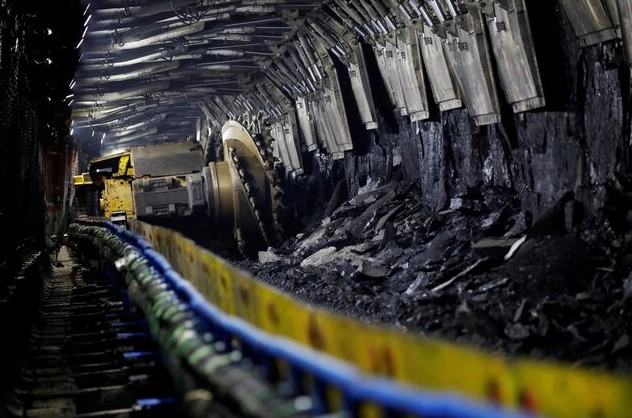
When a methane blast tore through the Liushenyu coal mine in Shanxi province on 22 May, killing 82 people and injuring more than 120, it did more than produce China's worst coal mining disaster in 15 years. It reopened a question the country had spent a decade trying to answer: can an economy racing toward clean energy still guarantee basic safety in the dirty industries keeping its lights on?
The answer, at Liushenyu, was plainly no. And the reasons why reveal something deeper than negligence at a single mine.
What Happened at the Liushenyu Coal Mine
The explosion struck the Tongzhou Group's privately operated mine in Qinyuan County, Changzhi City. Initial investigations exposed a catalogue of serious illegal violations: unregistered workers, secret tunnels dug beyond approved seams, inaccurate mine blueprints, and a systematic ban on worker tracking devices. That last detail is especially telling. Workers were reportedly barred from carrying trackers because management was illegally mining coal seams that had not received regulatory approval. Trackers would have exposed the operation. The mine had appeared on a 2024 national watchlist for "severe hazards" and had been penalised twice in 2025 for safety violations. None of that stopped production.
Why This Matters Beyond the Headlines
The disaster is best understood as a product of structural incentives, not simply criminal recklessness. China's coal sector is caught between two powerful forces pulling in opposite directions. On one side, the government is aggressively decarbonising. Coal-fired power generation declined last year for the first time in a decade. Sector profits fell 41.8 percent. On the other side, coal remains what Beijing officially calls the "ballast stone" of energy security, a strategic buffer that proved its value when conflict in the Middle East disrupted oil flows through the Strait of Hormuz and China's coal reserves cushioned the domestic economy from the worst impact.
That strategic value creates a perverse incentive structure. Operators squeezed by falling profits face pressure to cut costs. Safety systems are expensive. Regulatory compliance reduces output. When oversight is weak or corruptible, the rational calculation for a private operator becomes: produce more, record less, hide the rest. The secret tunnels at Liushenyu were not an aberration. They were the logical endpoint of a system where accountability had broken down.
Political and Strategic Calculations
The political exposure for Beijing is real. China's safety reform program after 2004 was a genuine achievement. Fatality rates fell more than 90 percent from 1990 levels. The government staked national credibility on that record. A disaster of this scale does not just embarrass provincial officials; it challenges the central government's narrative that China's industrial modernization can be managed safely.
Beijing's response has been swift in form: control measures placed on Tongzhou Group's leadership, other company mines suspended, and vows of accountability. But the harder question is systemic. The mine was flagged. It was penalised. It kept operating. That sequence suggests the regulatory chain between identifying hazards and enforcing consequences had significant gaps, possibly deliberate ones. Local officials and private operators often operate in close economic proximity, a dynamic that China's anti-corruption campaigns have reduced but not eliminated.
Economic and Security Fallout
The immediate economic impact is localised. But the signal to the broader coal sector is significant. Expect a wave of inspections, a short-term production slowdown across Shanxi's privately operated mines, and upward pressure on domestic coal prices. For Shanxi itself, which accounts for nearly 30 percent of China's national coal output, any sustained regulatory crackdown has macroeconomic weight.
The longer strategic consequence concerns China's energy transition timeline. If tighter safety enforcement reduces coal supply at a moment when renewables still cannot fully substitute, Beijing faces a painful trade-off between grid reliability and the human cost of continued mining. The government's own framing acknowledges this: coal is a backstop, not a legacy. But backstops need to be maintained safely, and that requires investment, not extraction of regulatory arbitrage.
Global Reactions and Diplomatic Signals
International response has been muted and largely predictable. Western governments have noted the disaster without formal comment. Energy analysts watching China's transition have flagged the incident as evidence that the pace of decarbonisation cannot outrun institutional capacity to manage legacy industries safely. For countries across the Indo-Pacific that track Chinese energy policy closely, including India, the disaster is a useful reminder that China's green transition carries domestic political costs that constrain how fast it can move.
What Happens Next
Three near-term scenarios are plausible. First, a concentrated enforcement surge clears the most egregious violators, coal output dips, prices rise briefly, and the system resets at a slightly higher baseline of compliance. Second, the enforcement drive stalls after initial headlines, and structural pressures reproduce the same conditions at a different mine within two to three years. Third, the disaster accelerates mechanisation and automation investment in Shanxi's mines, as Beijing uses the tragedy to push the industry toward the "fewer people, more safety" model that experts have long advocated.
The third scenario is the most strategically coherent. It is also the most expensive, and in a sector facing falling profits, capital investment requires either government subsidy or price support. Neither comes without political cost.
For the miners of Shanxi, the calculus has always been starker than any policy document: when there is no other work, the mine is the only option. That equation will not change until the economy beneath it does. The 82 people killed at Liushenyu were not victims of an unexpected catastrophe. They were the foreseeable cost of a system that had chosen not to prevent it.




Comments (0)
Leave a Comment
No comments yet
Be the first to comment