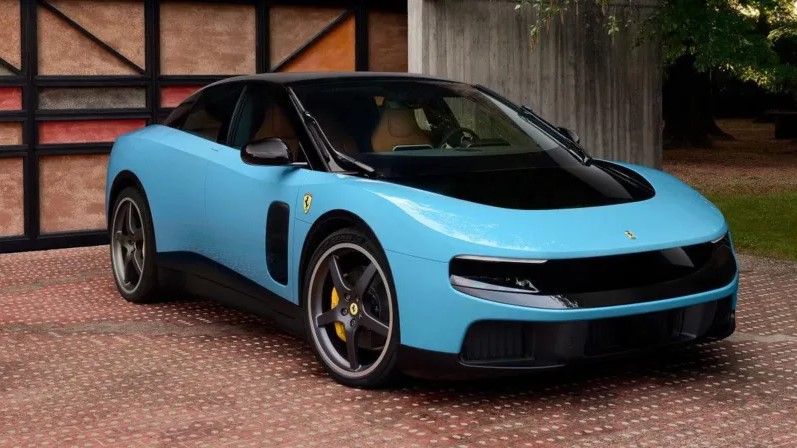
The Ferrari Luce EV backlash is not simply about a car people dislike. It is a window into the identity crisis of legacy luxury brands forced to compete with aggressive Chinese electric vehicle makers while holding onto emotional premiums built over decades. Ferrari's first fully electric car, the Luce, arrived to a storm of mockery, an 8% share price collapse, and a rebuke from Italy's own government. Understanding why requires looking past the design controversy.
What Happened
Ferrari unveiled the Luce, its debut electric vehicle, in a ceremony attended by Italian President Sergio Mattarella and Pope Leo. Designed in collaboration with Apple's former chief design officer Sir Jony Ive, the car carries a $640,000 price tag and seats five passengers. Within 24 hours, shares fell 8%, memes spread globally, and former Ferrari chairman Luca Cordero di Montezemolo called it a risk to the brand's legacy. Italy's deputy prime minister called it unrecognisable as a Ferrari.
Why This Matters Beyond Headlines
The Luce is not Ferrari's first controversial pivot. The Purosangue SUV, launched in 2022, faced similar identity-based criticism before posting strong sales. But the Luce operates in a different strategic context. The global EV market has been reshaped by Chinese manufacturers who have compressed the cost of battery production by at least 30%, according to the International Energy Agency. Brands like BYD have rolled out electric supercars, including the $250,000 Yangwang U9, which reaches 60mph in 2.3 seconds. Ferrari's $640,000 response must therefore justify not just speed and technology, but an irreplaceable cultural premium.
The risk is that neither loyal customers nor new EV buyers are convinced. Legacy fans reject the aesthetic departure. EV converts compare it unfavorably to cheaper, more innovative Chinese alternatives. That is a narrow market to sell into at that price.
Political and Strategic Calculations
Ferrari CEO Benedetto Vigna has spent five years repositioning the brand toward higher per-car margins rather than higher volumes. The Luce fits that logic: a single high-margin product that opens new customer segments without cannibalising the core supercar range. Vigna has reportedly received strong early interest from potential buyers, suggesting the commercial case may hold even if the cultural reaction does not.
The involvement of Jony Ive is itself a calculated signal. Ive's association with Apple's design language positions Ferrari as a technology brand, not merely a car brand. That matters if Ferrari's longer-term ambition is to compete with Tesla in the luxury lifestyle segment rather than with Lamborghini in the supercar space. Notably, Lamborghini has scrapped its EV programme entirely, reading demand signals differently.
Economic and Market Impact
The 8% share drop reflects genuine investor uncertainty, not just aesthetic displeasure. Ferrari's premium valuation on public markets has always rested on its perceived exclusivity and brand invincibility. A design that invites comparisons to the Nissan Leaf or Chinese EVs, even from casual observers, creates reputational risk that financial models struggle to price.
More structurally, the Luce highlights the cost asymmetry Ferrari faces. Chinese manufacturers operate with state subsidies and vertically integrated supply chains that make matching innovation at comparable price points nearly impossible for a Maranello-based artisan producer.
Global Reactions and Diplomatic Signals
The political dimension is unusual for a car launch. Italy's government criticism of the Luce reflects broader anxieties about industrial identity in the EV transition. For policymakers who see Ferrari as a national emblem, an electric car that looks "like anything but a prancing horse" is a cultural provocation, not just a product decision.
In Asia, where Ferrari's luxury positioning commands significant premiums, market analysts noted the Luce's price looks harder to justify given the rapidly improving quality of domestic EV alternatives. Singapore analyst James Wong acknowledged the interior design but questioned overall brand coherence.
What Happens Next
Three scenarios are plausible. First, the Luce sells quietly to a small cohort of ultra-wealthy early adopters, validating Ferrari's margin logic without requiring mass cultural acceptance. Second, continued negative press erodes brand equity enough to affect broader model sales, forcing a design revision or strategic retreat. Third, the controversy itself functions as intended marketing, generating more global visibility for Ferrari's EV ambitions than any conventional launch could have achieved. Given Ferrari's track record with the Purosangue, scenario one or three is more likely than scenario two.
Ferrari has always understood that controversy at launch does not determine commercial outcome. What the Luce ultimately reveals is a company betting that the Ferrari name is strong enough to survive a design that its most devoted customers do not recognise as their own. That is either visionary or reckless. Markets, and time, will decide which.


Comments (0)
Leave a Comment
No comments yet
Be the first to comment