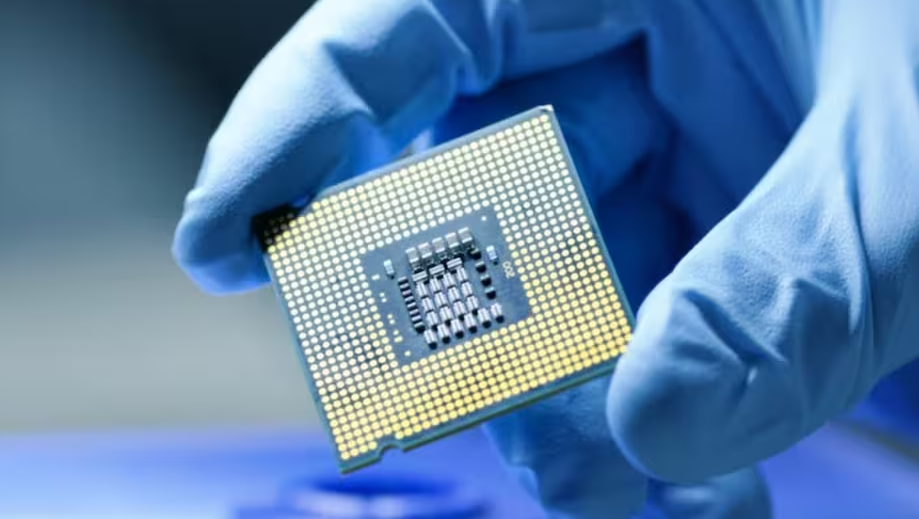
India has entered a new phase of its chip building ambitions with the Union Cabinet's approval of India Semiconductor Mission (ISM) 2.0. Backed by an outlay of roughly Rs 1.27 lakh crore, the programme moves the country's semiconductor push from setting up its first factories to building a full domestic ecosystem that covers materials, equipment, design, and skilled talent. For manufacturers, suppliers, and startup founders, this shift changes what opportunity in the sector actually looks like.
What Is ISM 2.0 and Why It Matters Now
ISM 2.0 was announced in the Union Budget 2026-27 and cleared by the Cabinet in mid-July 2026. It builds on India Semiconductor Mission 1.0, which ran on a Rs 76,000 crore outlay and helped bring the country's first fabrication and packaging plants off the ground. Speaking at a CII conference, MeitY Secretary S Krishnan called 2026 a landmark year for the country's chip journey, noting that three semiconductor facilities, including Micron, Tata's Sanand plant, and CG Power, have already started commercial production.
From ISM 1.0 to ISM 2.0: The Policy Shift
The first phase ISM 1.0 of the mission was mostly about capital subsidies for building fabs and assembly units. ISM 2.0 widens that scope considerably. It now funds semiconductor manufacturing equipment, specialty chemicals and materials, indigenous intellectual property, chip design and productisation support, workforce training, and supply chain resilience. In practical terms, the government is trying to fix the gaps around the fabs rather than just fund the fabs themselves.
The Numbers Behind the Mission
Some figures give a sense of scale:
- Total ISM 2.0 outlay stands at approximately Rs 1.27 lakh crore, up sharply from the Rs 76,000 crore committed under ISM 1.0.
- Twelve semiconductor manufacturing projects have been approved so far, representing a combined investment pipeline of about Rs 1.64 lakh crore.
- These projects include a silicon fab, a silicon carbide fab, a gallium nitride and Micro LED display fab, and nine packaging units.
- The mission targets 75 percent domestic self-sufficiency in semiconductor demand by 2030.
- Officials expect the programme to draw around Rs 4 lakh crore in investment and support roughly Rs 1 lakh crore in exports over its six year tenure, though these remain programme goals rather than guaranteed results.
How ISM 2.0 Reshapes Chip Manufacturing and Business Strategy
For companies already operating in India's electronics and manufacturing space, ISM 2.0 changes the calculus around where to locate new capacity and which parts of the supply chain to invest in.
New Fabs, Packaging Units and the Manufacturing Roadmap
Beyond the three fabs already under construction from ISM 1.0, the government is planning four to five more facilities, including a logic fab, a memory fab, a display fab, and two to three compound semiconductor fabs. Two additional units are expected to begin operations later in 2026, with twelve more projects at various stages of development. This buildout matters for businesses because it signals sustained, multi year demand for construction, testing equipment, cleanroom infrastructure, and specialty gases and chemicals supplied domestically.
The Push Toward Advanced Nodes
ISM 2.0 also sets a longer term technical roadmap. The Ministry of Electronics and Information Technology has set goals of 3 nanometre pilot production by around 2032 and 2 nanometre manufacturing by the mid 2030s, a shift that will eventually require moving from current deep ultraviolet lithography toward extreme ultraviolet systems. That timeline is measured rather than aggressive, but it gives equipment vendors and materials suppliers a fixed target to plan capacity around.
What It Means for Businesses Across the Value Chain
The expanded programme is expected to create openings well beyond the companies that actually operate fabs.
Opportunities for Equipment and Materials Suppliers
Businesses that stand to benefit include:
- Semiconductor equipment manufacturers and their component suppliers.
- Specialty chemical and gas producers serving fab grade requirements.
- EDA software and design tool providers.
- Assembly, testing, marking, and packaging (ATMP) operators.
- AI hardware and automotive chip developers building on domestic supply.
Companies evaluating India as a manufacturing base will need to weigh the new incentive framework against factors like state level policy support, logistics, and access to skilled labour, since ISM 2.0 funding is layered on top of, not a replacement for, these local considerations.
The Startup Opportunity: Design, Capital and the Road Ahead
Perhaps the most notable shift in ISM 2.0 is how directly it addresses the funding gap that has kept India from producing many globally competitive fabless chip design companies, despite a deep pool of chip engineering talent.
Chip Design Startups Get a New Funding Model
Under the earlier Design Linked Incentive scheme, 24 fabless chip design startups received grants and in kind support, together completing 16 tape outs, producing six commercialisation ready ASICs, and raising over Rs 400 crore in venture funding. ISM 2.0 aims to scale that cohort past 100 companies.
Equity Co-Investment and the DLI Scheme Expansion
Semiconductor startups face a different financial reality than software companies. Building a chip requires years of intellectual property development before any revenue arrives, and a single prototype tape out at a commercial foundry can cost close to Rs 2,000 crore and take over a year, often without the volume discounts larger firms receive. To address this, ISM leadership has proposed a 9 percent deployment linked incentive to offset prototype fabrication costs, and the government has signalled it is open to taking milestone based equity stakes in design startups alongside private venture capital, rather than only offering reimbursement style grants. Officials say the government does not intend to seek management control and plans to exit these stakes as startups mature.
Challenges and What to Watch
ISM 2.0's ambitions are large, but execution will determine how much of this reaches actual businesses. Detailed guidelines for the equity co-investment model are still awaited, and India's semiconductor ecosystem remains described by industry participants as fragmented across design, prototyping, packaging, and research institutions. Whether ISM 2.0 succeeds in connecting these pieces, rather than just funding them separately, will shape how many Indian fabless companies actually reach global customers over the next few years.




Comments (0)
Leave a Comment
No comments yet
Be the first to comment