
Before becoming India’s top startup, Byju’s began with a teacher filling halls. Byju Raveendran used simple tricks to teach math. Soon, cheap data and smart phones took off in India. The firm launched its main app in 2015. Millions of students joined right away.
By early 2022, the firm reached a $22 billion value. Today, that vast value is down to zero. The firm faces court fights, debt, and ruin. This story shows how wild growth and bad debt can crush a top market leader.
How Unlimited Success Fuelled Hyper-Growth
During the global pandemic, online learning saw huge demand. Top global investors poured cash into the firm. This led bosses to chase fast growth instead of long-term safety.
Instead of fixing its main app, the firm bought many rival firms. It spent $950 million on Aakash, $600 million on Great Learning, and $300 million on WhiteHat Jr.
To fund its global push, the firm took on a $1.2 billion loan. These rapid buys caused total confusion and drove up costs. When schools opened their doors again, demand for web tutoring dropped. This exposed a weak business model built only on temporary gains.
The Breakdown in Governance and Financial Reality
As growth slowed down, financial and legal troubles grew. Reports were late, money checkers quit, and key board members left.
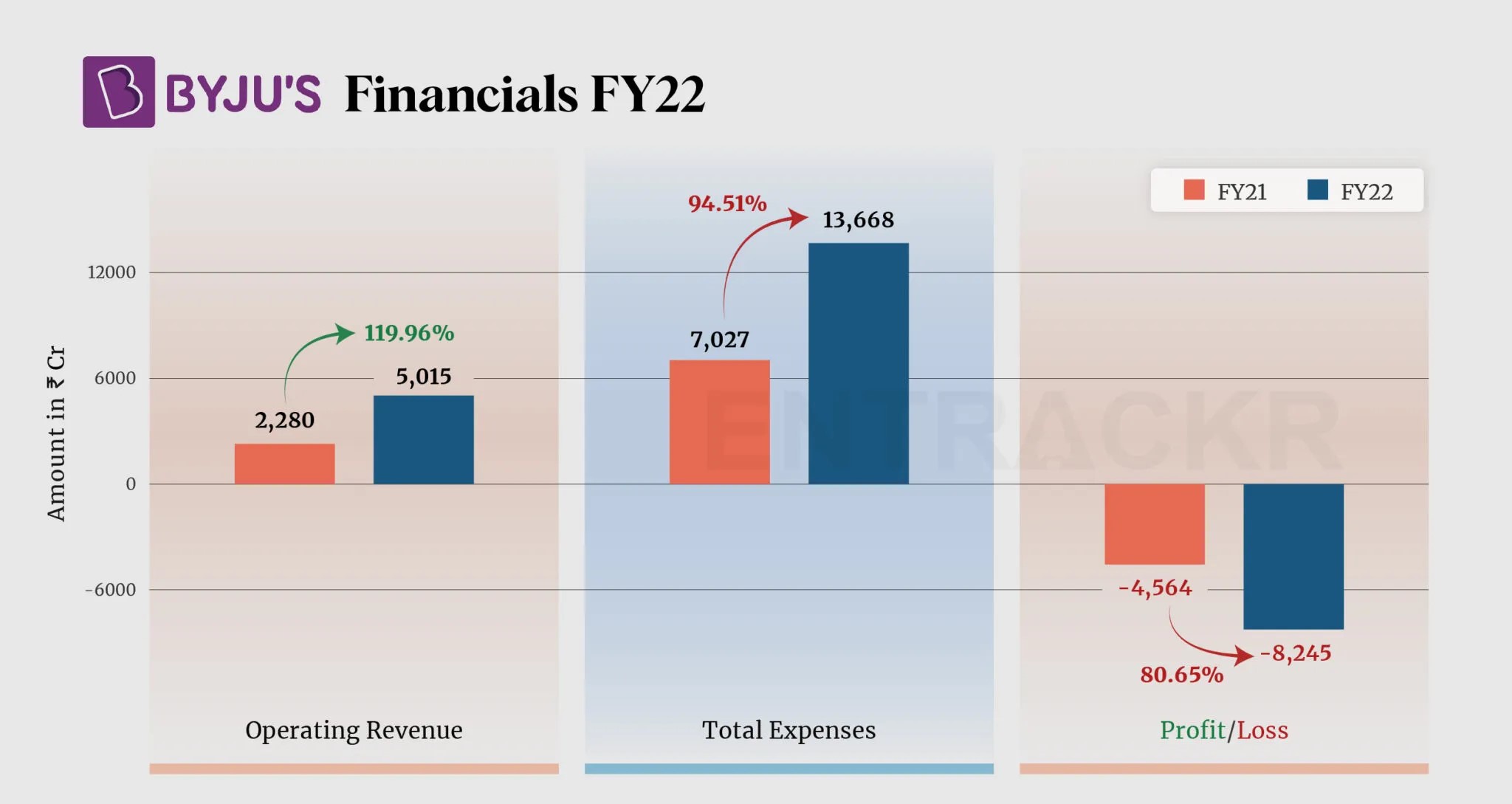
The firm spent cash much faster than it made cash. For the 2022 business year, sales grew, but net losses soared above ₹8,000 crore (about $1 billion). This proved that high sales did not bring real profits.
Lenders eventually took the firm’s U.S. branches to court for unpaid loans. This triggered bankruptcy proceedings back in India. Founder Byju Raveendran once had a multi-billion-dollar net worth on paper. In late 2024, he stated that his company was worth zero. He went from pledging his own homes to pay staff salaries to facing serious court battles across the globe.
Key Lessons From Byju's Collapse
The fall of India’s top startup holds clear lessons for the tech world:
Value Is Not Cash: Paper value built on pitch decks cannot replace real cash flow.
Debt Brings Real Risk: High debt without steady cash to pay it back will crush a firm when markets turn bad.
Rules Matter: Late money reports and board members leaving will break trust fast.
Buying Firms Is Hard: Buying up rivals adds big costs if the core business cannot run them well.
The collapse of Byju's shows a big shift in how tech firms are judged. It marks the end of an era where growth was chased at all costs.
Explore the More Startup-related story and facts: Read More..



Comments (0)
Leave a Comment
No comments yet
Be the first to comment