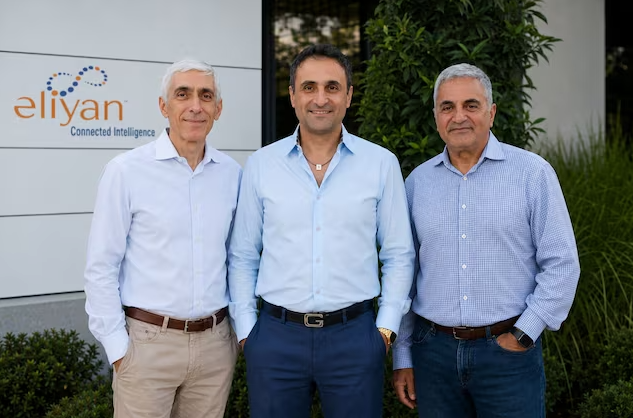
Santa Clara based chip interconnect startup Eliyan has crossed the billion dollar valuation mark, closing an oversubscribed $145 million Series C round that officially makes it a unicorn. The funding, announced on 29 July 2026, points to a shift in where investors see the next real bottleneck in AI infrastructure, not in building faster processors, but in moving data fast enough to keep them fed.
Inside Eliyan's $145 Million Series C
The round was led by Seligman Ventures, with participation from new and existing investors including two strategic backers drawn from networking and optical technology.
Who Backed the Round
The financing brought in Cisco Investments and Lumentum as new strategic investors, both companies with deep footprints in networking and optical hardware. As part of the deal, Seligman Ventures Managing Partner Umesh Padval, who previously served on the board of Mellanox before its acquisition by Nvidia, is joining Eliyan's board of directors. The strategic mix of investors signals confidence in Eliyan's relevance not just to chipmakers, but to hyperscalers, memory suppliers, and optical module providers building the next generation of AI data centers.
From Startup to Unicorn in Under Five Years
The $145 million round pushes Eliyan's valuation to $1 billion less than five years after the company was founded. That trajectory places it among a small group of infrastructure focused, rather than compute focused, AI startups to reach unicorn status so quickly, reflecting how much investor attention has shifted toward the plumbing that connects AI chips rather than the chips themselves.
What Problem Eliyan Is Actually Solving
To understand why investors are excited, it helps to understand the specific bottleneck Eliyan is targeting inside modern AI data centers.
The Data Center Bottleneck Nobody Talks About
Modern AI accelerators can process information far faster than data can be delivered to them, leaving expensive GPUs sitting idle rather than running at full capacity. As companies build ever larger clusters of AI accelerators to power large language models and increasingly complex agentic applications, this connectivity gap becomes a bigger drag on performance and cost efficiency than the processors themselves.
NuLink and NuGear: Eliyan's Core Technology
Eliyan's answer comes in the form of two silicon proven product families:
- NuLink PHYs, which handle high-speed physical layer connectivity between chips.
- NuGear chiplets, which provide scalable connectivity building blocks for AI systems.
Together, these are designed to address what the company describes as the I/O, memory, and power walls facing AI scale-up and scale-in networks, spanning die-to-die, chip-to-chip, and rack-to-rack interconnect needs.
Why Eliyan's Expansion Into Optical Interconnects Matters
Beyond its existing electrical interconnect business, Eliyan is using the new capital to expand into electro-optical interconnect technology, a shift that reflects where the AI infrastructure market is heading next.
Electrical to Electro-Optical: The Next Frontier
As AI data centers demand dramatically higher bandwidth while trying to keep energy consumption in check, electro-optical connectivity is emerging as a critical complement to traditional electrical interconnects. Eliyan says its expanded platform will span the full continuum of AI infrastructure connectivity, from intra-package electrical links to system level optical fabrics supporting increasingly heterogeneous, co-packaged compute architectures.
Commercial Roadmap and Revenue Expectations
Eliyan's plans extend well beyond product development into near-term commercialization. Key elements of its roadmap include:
- Initial chiplet product shipments expected to begin in 2026.
- Revenue projected to grow from low millions of dollars in 2025 to hundreds of millions by the end of 2027.
- A licensing and chiplet sales model aimed at hyperscalers and semiconductor companies.
- Long design cycles that, once secured, tend to produce sticky, multi-year revenue relationships.
That business model, built on design wins with major chip developers and data center operators, mirrors the trajectory of earlier interconnect companies like Mellanox, which solved a similar structural bottleneck before its acquisition by Nvidia.
What This Means for the Broader AI Infrastructure Market
Eliyan's unicorn milestone is a signal to the wider industry that connectivity, not just raw compute power, is becoming a defining constraint on how fast AI systems can scale. As data centers continue to add larger clusters of accelerators, companies solving the interconnect and bandwidth problem are increasingly seen as essential infrastructure providers rather than niche component suppliers. Investors backing Eliyan appear to be betting that the next wave of AI performance gains will come as much from moving data efficiently as from building faster chips.




Comments (0)
Leave a Comment
No comments yet
Be the first to comment