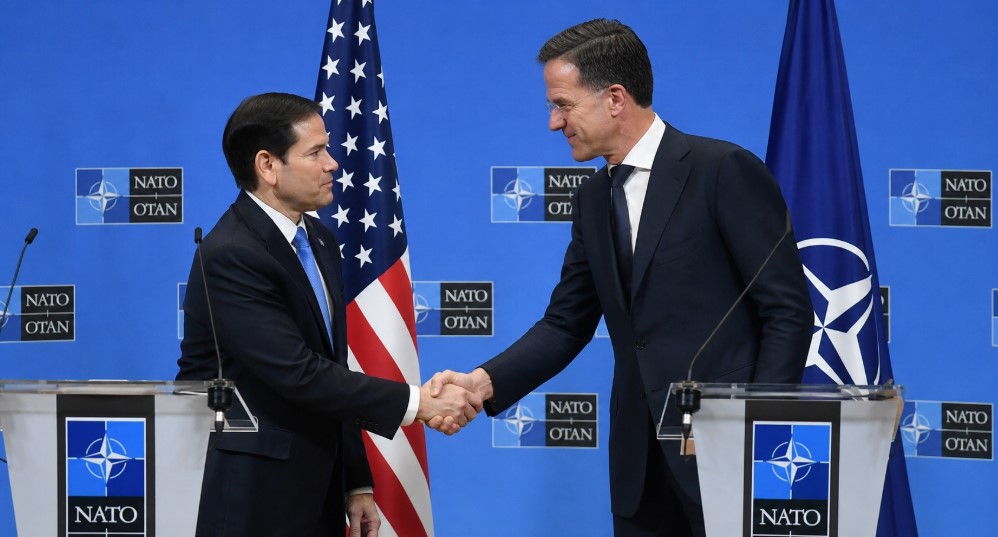
The NATO dependence debate has reached a new level of internal contradiction, and the alliance is struggling to conceal it. NATO Secretary General Mark Rutte recently urged European members to dramatically reduce their reliance on American military guarantees, calling it a strategic necessity for the decades ahead. Within the same window of time, Washington announced the deployment of an additional 5,000 troops to Europe. Both things are true. Both cannot lead to the same destination.
What Happened
Rutte's public appeal for European strategic autonomy arrived not as abstract diplomacy but as a direct warning: Europe cannot continue outsourcing its security to a partner whose domestic politics have become increasingly hostile to foreign commitments. The statement reflected months of quiet alarm inside Brussels over the durability of US engagement, especially in a post-Trump political climate that has normalized skepticism of NATO obligations.
Simultaneously, the Pentagon confirmed fresh troop deployments to Eastern Europe, framed as a signal of deterrence to Russia and reassurance to nervous frontline states like Poland and the Baltic nations. The optics of both moves arriving together reveal the fundamental problem: Europe is being told to grow up strategically while being managed like a dependent client.
Why This Matters Beyond Headlines
The surface contradiction conceals a deeper structural problem. European defense architecture has been built around US logistics, intelligence infrastructure, nuclear deterrence, and command systems for over seven decades. You cannot dismantle that dependency through speeches. Rutte knows this. Washington knows this. What neither side can say publicly is that European strategic autonomy, as a genuine capability rather than a political aspiration, remains at least a decade away under the most optimistic timelines.
The 5,000 additional troops are not just deterrence. They are also a signal that Washington still holds the keys. Every fresh deployment deepens the dependency that Rutte publicly warns against. This is not hypocrisy as much as institutional inertia: the alliance's mechanisms pull toward integration while its rhetoric gestures toward separation.
Political and Strategic Calculations
For Rutte, the statement serves multiple audiences. It reassures European governments wary of another US election cycle producing a president less committed to Article 5. It also builds political capital within Europe's growing defense-industrial lobby, which sees strategic autonomy as both a security imperative and an economic opportunity worth hundreds of billions in procurement.
For Washington, the troop deployment is calculated to maintain leverage. A Europe genuinely capable of defending itself without US assets is a Europe that negotiates differently on trade, technology regulation, and geopolitical alignment. American strategic interest has never been purely altruistic. Keeping Europe militarily dependent keeps it politically aligned.
Russia reads this dynamic clearly. Moscow's sustained pressure on Ukraine's frontlines is partly designed to keep NATO's internal cohesion under stress, forcing the dependency question into the open in ways that divide rather than unite alliance members.
Economic and Security Impact
Defense spending commitments across Europe are rising. Germany, Poland, Sweden, and the Baltic states are accelerating procurement timelines. But spending more on defense does not automatically translate into operational independence. European armies still rely on US satellite systems, shared intelligence platforms, and American-manufactured platforms for critical capabilities.
The security risk here is specific: a gap period during which Europe has increased its financial commitment but not yet built genuine autonomous capability. During that window, deterrence could weaken without a credible European force to replace the American backstop, particularly if Washington's political winds shift again after 2026.
Global Reactions and Diplomatic Signals
China has observed this debate with considerable interest. Any fracture in transatlantic cohesion reduces the coordinated pressure Beijing faces on technology controls, Taiwan policy, and trade disputes. Russia benefits from the optics of division even if NATO's actual military posture remains strong. Smaller NATO members, especially those along the eastern flank, are deeply uncomfortable with the strategic autonomy rhetoric. For them, it reads less as empowerment and more as potential abandonment.
What Happens Next
Three scenarios compete for plausibility. In the first, European defense investment accelerates sufficiently by the early 2030s to create genuine burden-sharing capacity, gradually rebalancing the alliance. In the second, political fatigue and fiscal pressure slow European rearmament, leaving the dependency intact while the rhetorical calls for autonomy grow louder and less credible. In the third, a deterioration in Eastern European security forces a crisis that settles the question by default, pulling American forces deeper into a role Europe was supposed to be outgrowing.
The NATO dependence debate is not new. What is new is the honesty with which senior alliance figures are admitting that the current architecture is unsustainable, while doing nothing structurally to change it. That gap between statement and reality is where the real risk lives.



Comments (0)
Leave a Comment
No comments yet
Be the first to comment