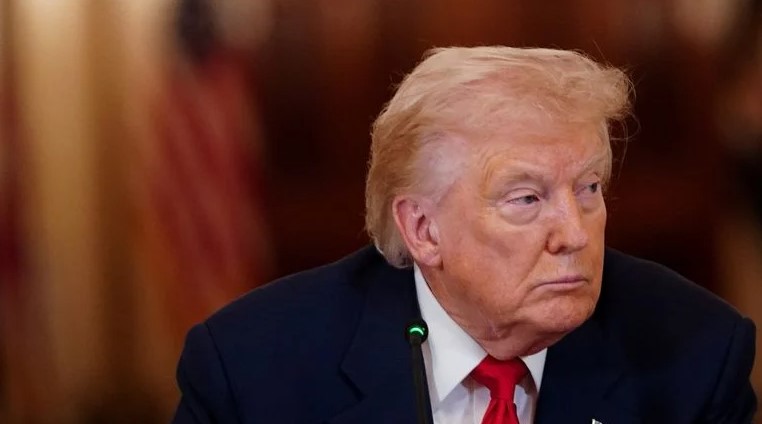
With oil prices surpassing $100 per barrel and nearly 1,000 oil tankers stranded, U.S. President Donald Trump has intensified pressure on NATO allies and China to help reopen the Strait of Hormuz, warning the alliance faces a “very bad future” if it refuses to contribute naval forces.

At the same time, the Israeli military announced its first ground operations in southern Lebanon since the conflict began, marking a major escalation as the war expands beyond Iran.

Key Indicators of the Escalation

Brent Crude: ~$105 per barrel
Global Oil Blocked: ~20%
Tankers Stranded: ~1,000
Lebanese Displaced: 800,000+
War Duration: 16 days

Two Fronts Open in the Expanding Middle East War

The war involving the United States, Israel, and Iran entered its third week on March 16, 2026, with simultaneous escalations across the region. President Trump intensified diplomatic pressure on NATO and major Asian economies to deploy naval forces to reopen the Strait of Hormuz, the world's most critical oil shipping lane. At the same time, the Israel Defense Forces confirmed that troops from its 91st Division had launched “limited and targeted” ground operations against Hezbollah positions in southern Lebanon. Together, these developments significantly widen a conflict that began on February 28, 2026, when the United States and Israel launched coordinated airstrikes against Iran under Operation Epic Fury. The operation targeted military installations, nuclear facilities, and Iran's senior leadership, killing Iranian Supreme Leader Ali Khamenei. Iran responded by closing the Strait of Hormuz and launching missile and drone attacks across the Gulf region.

Background: How the War Began

The roots of the conflict stretch back several years.

Diplomatic tensions intensified during stalled nuclear negotiations in Geneva and a previous 12-day air conflict in 2025. In January 2026, Iranian security forces killed thousands of protesters during the largest anti-government demonstrations since the Iranian Revolution.

Following those events, President Trump warned that military action against Tehran was possible. Nuclear talks resumed in February 2026 and reportedly made substantial progress before collapsing. On February 28, joint U.S. and Israeli strikes killed Khamenei and multiple senior Iranian officials. Within days, Iran retaliated by closing the Strait of Hormuz.

Conflict Timeline

January 2026
Iranian security forces kill thousands of protesters. President Trump warns military action is possible. Nuclear talks begin.

February 28, 2026
United States and Israel launch Operation Epic Fury. Supreme Leader Khamenei is killed.

March 2, 2026
Iran’s Islamic Revolutionary Guard Corps announces closure of the Strait of Hormuz. Tanker traffic collapses.

March 5, 2026
Iran says the strait is closed only to the United States, Israel, and Western allies.

March 13 to 14
Drone strikes hit Dubai airport while Israeli air raids intensify over Beirut.

March 15, 2026
Trump calls on China, the United Kingdom, France, Japan, and South Korea to deploy naval forces.

March 16, 2026
Israeli troops begin ground operations in southern Lebanon while new strikes hit Tehran.

Why Trump Is Pressing Allies on Hormuz

President Trump’s strategy combines economic pressure with alliance politics. Speaking to reporters aboard Air Force One, he argued that the United States relies less on Gulf oil than many Asian and European economies.

“I think China should help too because China gets 90 percent of its oil from the straits.”

President Donald Trump

Trump’s argument is that countries benefiting most from the waterway should help secure it. The pressure also reflects domestic political considerations. The war has already cost billions of dollars and American casualties, increasing scrutiny at home. Sharing responsibility with allies could spread both the financial and military burden. There is also a practical military reason. Iran has reportedly begun laying naval mines in the Strait of Hormuz, making reopening the route technically complex. Mine clearing operations require specialized vessels including minesweepers, escort destroyers, and air support.

Trump’s NATO Warning

President Trump has long approached NATO commitments from a transactional perspective. His warning that the alliance could face a “very bad future” if allies do not assist with Hormuz represents one of his most direct threats toward the alliance during this crisis.

However, several NATO governments were not consulted before the United States launched the initial strikes against Iran.Edward Fishman of the Council on Foreign Relations told CNBC that many European allies are far more dependent on Gulf oil imports than the United States but were not involved in the decision to strike Iran.

Why Some Allies Are Refusing

Several European governments have declined to participate in any naval operation. Germany issued the strongest response.

“This war has nothing to do with NATO. It is not NATO’s war.”

German Foreign Minister Johann Wadephul added that NATO has made no decision to assume responsibility for securing the Strait of Hormuz. The reluctance reflects three major concerns.

First, NATO’s Article 5 applies when a member state is attacked. Iran has not attacked NATO territory.

Second, several countries were not consulted before the strikes on Iran.

Third, governments are facing domestic economic pressure due to rising energy costs.

The United Kingdom has already introduced emergency support measures for households dependent on heating oil. Japan faces constitutional limits on overseas military deployments under its pacifist legal framework. China has called for de-escalation but has not committed any naval assets.

Expert Analysis

Barbara Slavin of the Stimson Center offered a skeptical assessment of China’s potential involvement.

“I do not think China is going to send warships to reopen the Strait of Hormuz. Iranian oil is flowing to China quite nicely because Iran is only blocking shipments linked to the United States and Israel.”

The Strait of Hormuz: The World’s Most Important Oil Chokepoint

The Strait of Hormuz connects the Persian Gulf to the Arabian Sea between Iran and Oman. At its narrowest point it is only 33 kilometers wide. Under normal conditions roughly 20 million barrels of oil per day pass through the waterway. That represents about one fifth of the global oil supply. Asian economies depend heavily on this route. China, India, Japan, and South Korea account for roughly 75 percent of the oil shipments moving through the strait. Since Iran’s closure announcement on March 2, tanker traffic has nearly stopped. Around 1,000 oil tankers remain stranded outside the waterway. Iran has also reportedly struck port facilities in Oman, including Duqm and Salalah. The International Energy Agency has authorized a release of 400 million barrels from global strategic reserves to stabilize markets.

Israel Opens the Lebanon Front

On March 16, the Israel Defense Forces confirmed the start of limited ground operations in southern Lebanon targeting Hezbollah positions. The main fighting is taking place near Khiam, close to the Israeli border. More than 800,000 Lebanese civilians have been displaced since the conflict began.

Israeli officials told Axios that the United States supports the operation but that Israel agreed not to strike Beirut’s international airport. Military planners say a larger ground offensive may be possible once Israeli air power currently focused on Iran becomes available.

“Israel believes Hezbollah is at one of its weakest points ever, with its Iranian money and arms pipeline significantly disrupted.”

Why the Lebanon Front Opened Now

The latest escalation follows the collapse of a ceasefire on March 2, 2026, when Hezbollah fired rockets into Israel in response to the killing of Ali Khamenei. Israel responded with a large air campaign and began massing forces along the northern border. Approximately 450,000 Israeli reservists have now been mobilized for the broader conflict.

The Global Economic Impact

The crisis has triggered a major shock to global energy markets. Brent crude oil is currently trading between $104 and $105 per barrel, after briefly exceeding $110 earlier in March. Natural gas prices in Europe surged following Iranian drone attacks on Qatar’s Ras Laffan Industrial City. The impact is particularly severe for energy importing countries in South and Southeast Asia, including India, Sri Lanka, Pakistan, and Bangladesh. Iranian strikes have also disrupted operations at Dubai International Airport and targeted energy infrastructure in Saudi Arabia and the United Arab Emirates.

What Happens Next: Four Possible Scenarios

1. Multinational Naval Coalition

A coalition involving the United Kingdom, France, and India could escort several commercial ships each day through the strait, partially restoring oil flows.

2. Bilateral Negotiations

India has already secured safe passage for two gas tankers through direct talks with Tehran. Similar agreements could reopen parts of the shipping lane.

3. U.S. Escalation

President Trump has threatened strikes on Kharg Island, which could cripple Iranian exports but risk prolonging the blockade.

4. Diplomatic Breakthrough

Iran’s foreign minister has confirmed that several countries are negotiating for safe passage. A broader diplomatic settlement remains possible but unlikely in the short term.