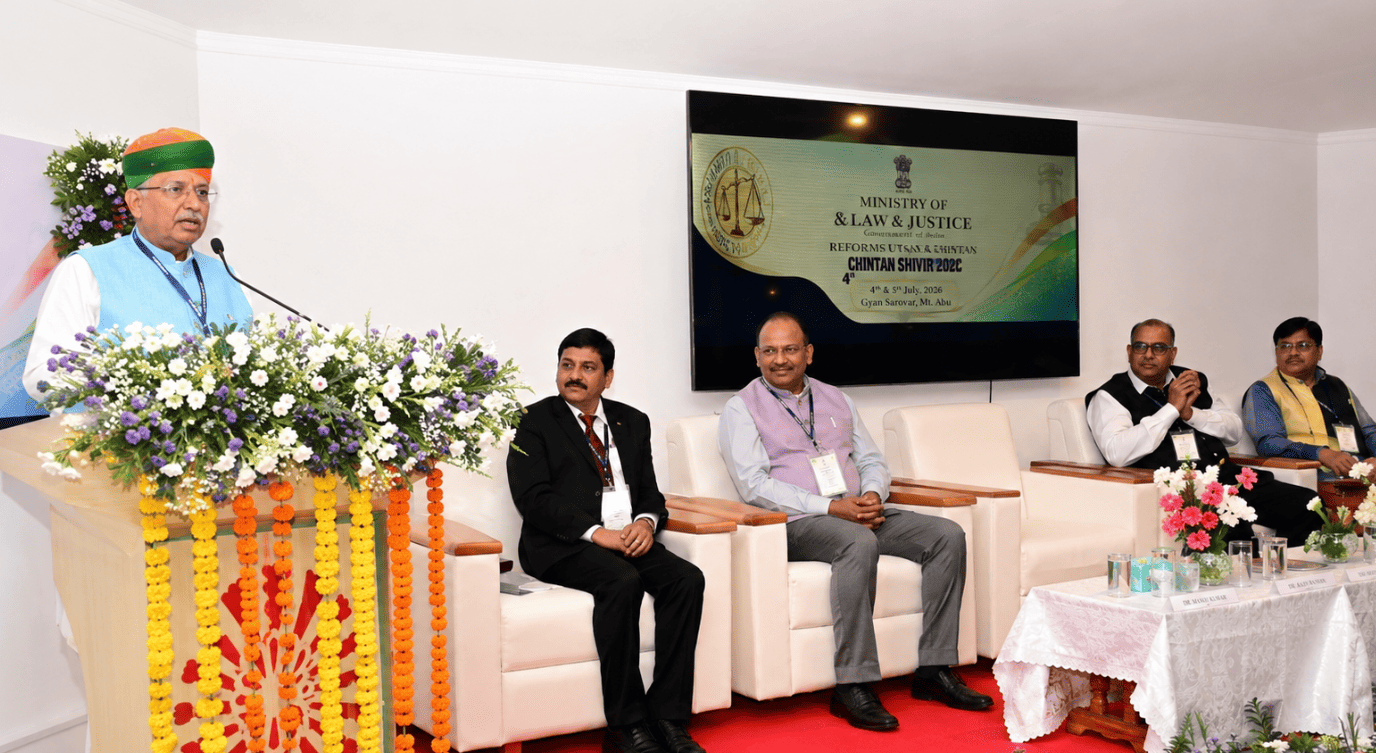
India's Ministry of Law and Justice released a new reform pledge, the Sankalp Patra, at the conclusion of a two-day Reforms Utsav and Chintan Shivir held on July 4 and 5, 2026, at Gyan Sarovar in Mount Abu, Rajasthan. The document outlines a collective commitment from senior officers of the Legislative Department and the Department of Legal Affairs to build a more accessible, technology-driven legal system aligned with the government's Viksit Bharat @2047 vision.
Union Minister of State for Law and Justice Arjun Ram Meghwal inaugurated the event, while Dr. Rajiv Mani, Secretary of the Legislative Department and Department of Legal Affairs, released the Sankalp Patra during the valedictory session. The initiative signals a structured push to modernize how laws are drafted, delivered, and made accessible to citizens across the country.
What the Sankalp Patra Commits To
The Sankalp Patra functions as a resolution document rather than a legislative bill, capturing the reform priorities that emerged from two days of structured deliberation among senior legal officers. It sets out a shared direction for institutional change across India's legislative and legal affairs machinery.
Core commitments outlined in the document include:
- Upholding constitutional values and the rule of law in all administrative functions.
- Making laws and legal processes simpler, clearer, and more citizen-centric.
- Applying evidence-based, consistent standards to legislative drafting.
- Responsibly integrating technology and artificial intelligence into legal governance.
- Building a culture of continuous reform and institutional collaboration.
Why a Resolution Document, Not a Bill
Unlike a legislative proposal, the Sankalp Patra carries no immediate legal force. Its value lies in setting an internal accountability benchmark for the officers who drafted it, translating broad policy language into specific commitments that can guide future rulemaking and administrative reform within the ministry.
Inside the Reforms Utsav and Chintan Shivir
The two-day gathering combined leadership addresses with focused breakout sessions covering legal governance, legislative reform, digital transformation, and institutional capacity building. Dr. Manoj Kumar, Additional Secretary of the Legislative Department, opened the sessions by outlining the goals and expected outcomes for participating officers.
Senior officials used the sessions to exchange practical ideas on improving legislative drafting quality, streamlining legal service delivery, and identifying where digital tools could reduce procedural delays. These deliberations were compiled into a vision document containing specific reform proposals and implementation measures for the ministry to pursue going forward.
Technology and AI as Reform Priorities
A recurring theme across the sessions was the responsible use of artificial intelligence and digital infrastructure to modernize legal institutions. Officers discussed how automation and digital case management could support faster legislative drafting and reduce administrative bottlenecks, while stressing that technology adoption must remain grounded in accountability and citizen trust.
Placing the Sankalp Patra in India's Broader Legal Reform Push
The pledge builds on a period of sustained legal modernization in India, including the rollout of the Bharatiya Nyaya Sanhita and related criminal law codes that replaced colonial-era statutes. Officials have consistently framed these changes as part of a longer transition toward a legal ecosystem that is simpler to navigate and less burdened by procedural backlog.
India's courts continue to face significant case pendency, and reform advocates have long argued that legislative clarity at the drafting stage can reduce downstream litigation and delay. The Sankalp Patra's emphasis on clear, citizen-centric lawmaking reflects this ongoing effort to address structural inefficiencies before they reach the courtroom.




Comments (0)
Leave a Comment
No comments yet
Be the first to comment