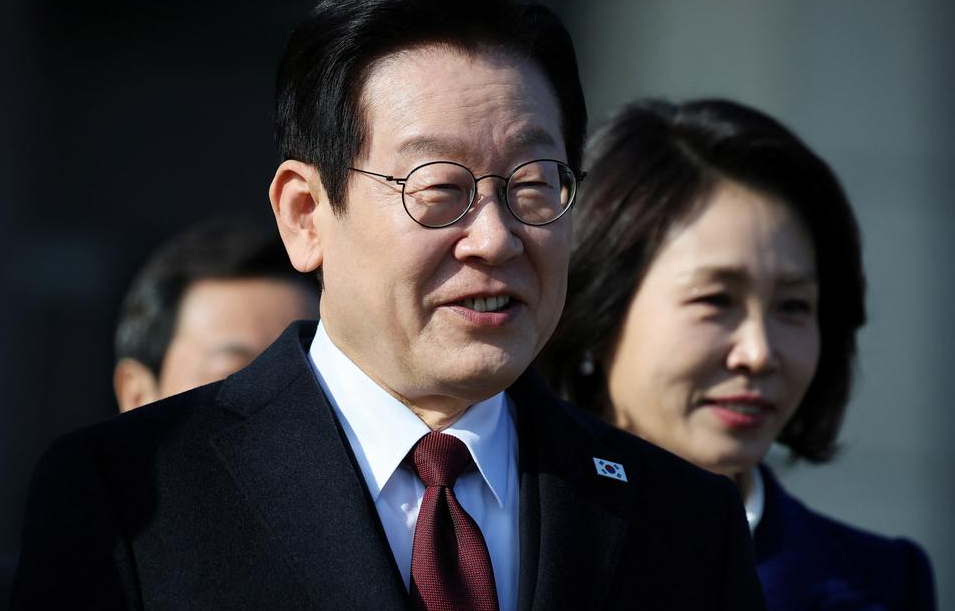
South Korea began enforcing a revised law on Tuesday, July 7, 2026, that allows courts to impose steep punitive damages on news outlets and large social media accounts for spreading false or manipulated information. The law marks one of the strictest platform accountability frameworks introduced by a major democracy and has triggered sharp pushback from journalist groups, opposition lawmakers, and the United States government.
Under the revised statute, courts can award damages up to five times proven losses against news organizations and large YouTube channels found to have circulated false information to cause harm or generate profit. Repeat violators who distribute content more than twice after a court ruling can face fines of up to 1 billion won, roughly 656,000 dollars, from the country's media regulator.
How the Law Works and Who It Targets
The legislation amends South Korea's information and communications network act, replacing a reliance on general defamation statutes with a dedicated legal framework for online falsehoods. It applies to news organizations and to social media channels with significant reach, including YouTube creators.
Platforms with more than one million daily users carry the heaviest compliance burden. These companies must:
- Build reporting systems that let users flag false or manipulated content.
- Remove flagged content or suspend accounts once a valid report is received.
- Publish transparency reports every six months detailing complaints and actions taken.
Naver and Kakao, South Korea's dominant domestic platforms, have already begun updating their moderation systems in line with regulatory guidance. It remains unclear how foreign platforms such as YouTube and Meta will adapt their global content policies to meet the new requirement.
Why Platforms, Not Courts, Make the First Call
The most contested feature of the law is procedural. Platform operators, not judges, decide whether a reported piece of content qualifies as false or manipulated before any removal or suspension takes effect. The Korea Media and Communications Commission has argued this keeps enforcement in private hands rather than under direct government control, and the law exempts reporting done in the public interest from damages claims.
Critics counter that shifting the first judgment to platforms creates a structural risk. A wrong call, in either direction, still produces real consequences for publishers and creators before any court reviews the case.
The Political and Technological Backdrop
The law follows a period of intense disinformation activity in South Korea, driven partly by the fallout from a brief martial law order imposed by then President Yoon Suk Yeol in 2024. Yoon was later impeached, convicted of rebellion, and sentenced to life in prison, a ruling he has appealed. During the crisis, unsubstantiated election fraud claims spread widely on YouTube, along with baseless allegations of foreign interference in the electoral system.
A separate high-profile case added urgency to the legislative push. A YouTuber was indicted for using AI-generated audio to falsely claim that an actor had an inappropriate relationship with a deceased actress, a claim that triggered a major public scandal and forced the actor to pause his career. The episode illustrated how generative AI tools can accelerate the spread of fabricated claims at a scale traditional moderation systems were not built to handle.
A Global Pattern of Platform Regulation
South Korea's approach fits into a broader international trend of governments tightening rules around online content and platform liability. Other countries have pursued different models for the same underlying problem of scaled disinformation:
- India has relied on direct platform crackdowns during periods of unrest.
- China has rewritten its domestic platform rulebook around content accountability.
- Australia has steadily raised penalties for platforms that fail to act on harmful content.
Concerns From Journalists and Civil Liberties Groups
The Journalists Association of Korea has warned of an unavoidable chilling effect, arguing that the mere possibility of a five-fold damages claim could push outlets toward softer coverage of officials and large businesses. The Seoul Foreign Correspondents' Club has raised similar concerns about the law's impact on the free flow of information.
A law professor at Duksung Women's University cautioned that platforms could effectively become online censors, over-removing lawful content simply to avoid liability exposure. The main opposition party has echoed this concern, warning that investigative journalism could be curtailed if platforms adopt overly cautious moderation defaults.
The United States has also weighed in. A senior State Department official criticized the law shortly after it passed in December, arguing that civil remedies for victims are preferable to giving platforms broad discretion that could enable viewpoint-based censorship.


Comments (0)
Leave a Comment
No comments yet
Be the first to comment