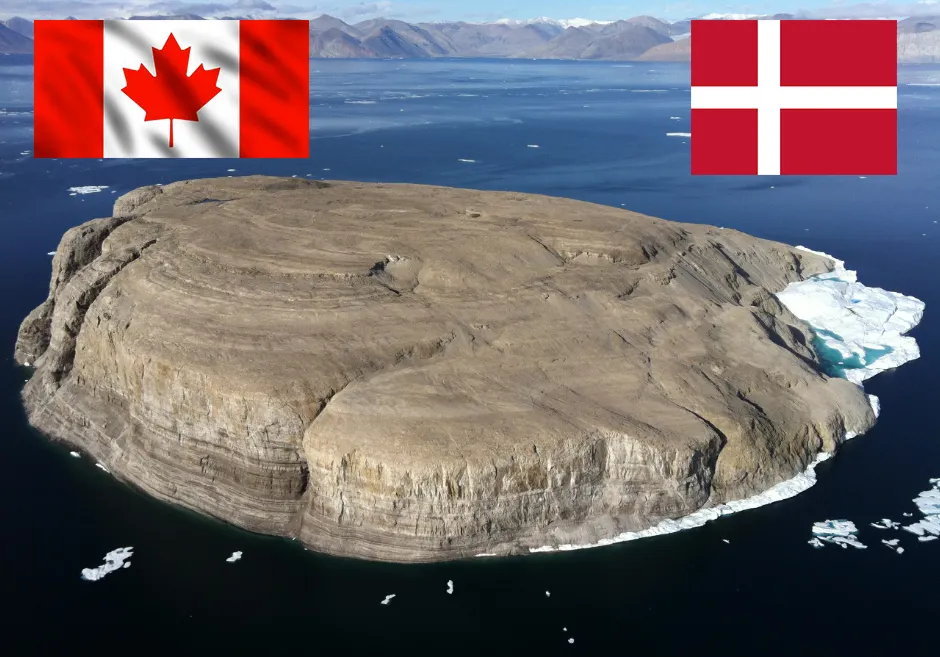
Deep in the icy waters of the Nares Strait sits a tiny, barren rock that triggered one of the most unusual border conflicts in modern history. Measuring just 1.3 square kilometers, Tartupaluk, known internationally as Hans Island, contains no trees, no soil, no precious oil reserves, and zero permanent residents. Yet for nearly fifty years, this windswept Arctic outcrop sat at the very center of a high-latitude standoff between two NATO allies. Known around the world as the Hans Island whisky war, the conflict was defined not by military aggression or heavy artillery, but by decades of playful trolling, flag-swapping, and the exchange of top-shelf liquor.
Where other nations deployed warships and harsh diplomatic threats to secure territory, Canada and the Kingdom of Denmark fought with bottles of Canadian Club whisky and Danish schnapps. What began as an unresolved drafting anomaly during cold war border negotiations eventually grew into a national media sensation. Sailors and cabinet ministers regularly boarded helicopters, flew to the frozen islet, tore down their rival's flag, and left behind a bottle of local spirits alongside a friendly note claiming ownership.
The decades-long Hans Island territorial dispute finally reached its peaceful conclusion when officials unveiled a groundbreaking diplomatic accord. By signing the Canada-Denmark Arctic border agreement, both nations agreed to split the contested rock roughly down the middle. In doing so, they brought an end to fifty years of friendly rivalry and established the very first land border sharing Canada with Europe.
A Barren Rock in the Nares Strait: How the Dispute Began
To understand why two peaceful democratic nations spent half a century arguing over a frozen piece of limestone, one must look at the unique geography of the Far North. Hans Island rests directly in the middle of the Kennedy Channel, a narrow strip of water within the Nares Strait that separates Canada's Ellesmere Island from northern Greenland. The island earned its Greenlandic name, Tartupaluk, meaning "kidney-shaped," from the Indigenous Inuit who used the surrounding frozen waters as hunting grounds for polar bears and marine life for generations.
During the nineteenth century, European and American Arctic explorers named the island after Hans Hendrik, a skilled Greenlandic Inuit hunter and translator who guided several high-profile polar expeditions. Official territorial claims, however, emerged much later. Canada rooted its claim in an 1880 transfer of Arctic territories from Great Britain, which included lands previously managed by the Hudson's Bay Company. Denmark argued that Hans Island belonged to Greenland, an autonomous territory within the Danish Realm, based on long-standing usage by local Inuit and historical treaty rights.
The issue lay dormant until 1973, when Canadian and Danish negotiators gathered under United Nations auspices to map out a comprehensive continental shelf boundary through the Nares Strait. The negotiators successfully mapped out 127 boundary coordinates across hundreds of miles of ocean. However, when the line reached Hans Island, both sides realized that the island sat squarely in the middle of the narrow 35-kilometer strait. Because the rock fell within the 12-nautical-mile territorial waters of both Canada and Greenland, neither nation was willing to concede its claim.
Rather than letting the entire international agreement stall, diplomats made an unusual choice. They drew the continental shelf line right up to the southern shore of Hans Island, stopped the line completely, and then picked it up again on the northern shore. They left a 1.2-kilometer gap in the map, turning Hans Island into a legal no-man's-land and setting the stage for decades of political comedy.
Flags, Schnapps, and Canadian Club: The Tactics of the Whisky War
For eleven years following the 1973 treaty, the legal ambiguity remained a minor footnote in polar diplomacy. That changed dramatically in 1984 when a Canadian energy company sent researchers to conduct offshore studies around the island. Prompted by news of Canadian activity on the rock, Tom Høyem, the Danish Minister for Greenland Affairs, chartered a helicopter and flew directly to Hans Island.
Høyem landed on the icy ground, planted the Dannebrog (the red-and-white Danish flag), and buried a bottle of traditional Danish schnapps at the base of the flagpole. Beside the bottle, he placed a handwritten note reading, "Velkommen til den danske ø" (Welcome to the Danish island).
When Canadian authorities learned of the Danish minister's visit, they responded in kind. A unit of Canadian troops traveled to the island, replaced the Danish flag with the Canadian Maple Leaf, and swapped the remaining Danish alcohol for a bottle of Canadian Club whisky. They left their own wooden welcome sign declaring, "Welcome to Canada."
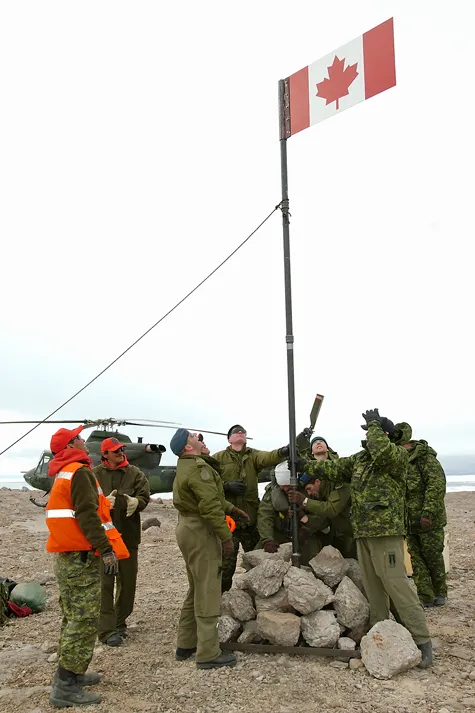
Image Source: eaves.ca
This playful ritual laid the groundwork for the Hans Island whisky war. Over the next thirty-eight years, naval crews, coast guard personnel, scientists, and politicians from both countries routinely visited the island to continue the tradition. Each expedition followed the same informal rules:
- Pull down the opposing nation's flag with care.
- Raise your own national flag on the standing pole.
- Retrieve the liquor left behind by the previous visitors.
- Deposit a fresh bottle of domestic spirits for the next landing party.
The dispute even spilled onto the internet during the mid-2000s. In 2005, creative Canadian citizens bought Google search advertisements that displayed messages asserting Canadian sovereignty over Hans Island whenever users searched for the topic. Danish campaigners quickly countered by purchasing their own Google ads asserting that the island was undeniably Danish.
Despite the persistent flag-swapping, both nations made sure the rivalry remained lighthearted. Defense officials from both Ottawa and Copenhagen frequently stressed that the contest was entirely friendly. Whenever Canadian or Danish officers met at diplomatic summits, they often joked about the state of their alcohol reserves in the Arctic, making the standoff one of the most amicable territorial disputes ever recorded.
Geopolitical Shifts and the Push for Resolution
While the exchange of liquor provided humorous headlines, serious geopolitical considerations lingered beneath the surface. As global temperatures rose and Arctic sea ice began to melt at accelerated rates, the region gained new commercial interest. Opening sea lanes in the Northwest Passage and potential access to underwater resources transformed Arctic boundary security into a major policy priority.
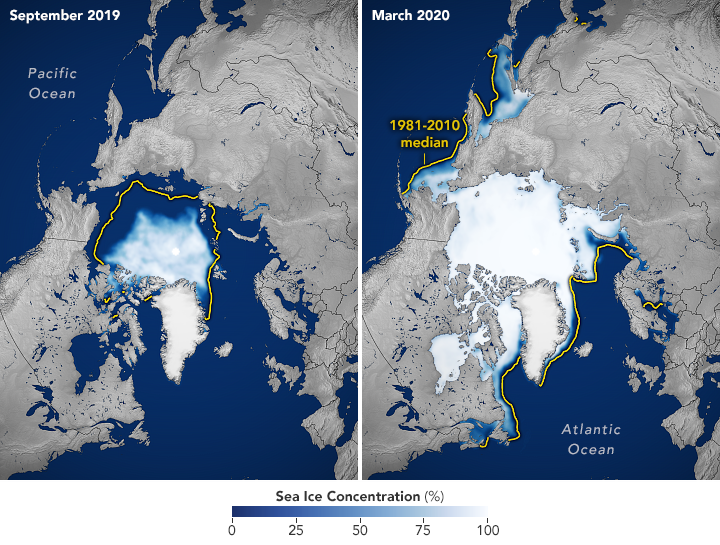
Image Source: science.nasa.gov
In 2018, recognizing the need to modernize their northern borders, Canada and Denmark established a joint diplomatic task force. The team included government negotiators, legal specialists, and Indigenous representatives from Nunavut and Greenland. The inclusion of Inuit leaders was vital, as traditional hunting rights and freedom of movement across the frozen waters were central to local communities on both sides of the strait.
The push for a final resolution gained urgent momentum in early 2022. Following Russia's invasion of Ukraine, Western democratic allies sought to send a clear message to the international community. At a time when sovereign borders were being violently challenged elsewhere in the world, Canada and Denmark wanted to demonstrate that territorial disputes could be resolved peacefully through international law, compromise, and mutual respect.
The Historic Canada-Denmark Arctic Border Agreement
On June 14, 2022, ministers from Canada, Denmark, Greenland, and Nunavut gathered in Ottawa for a landmark ceremony. They officially signed the Canada-Denmark Arctic border agreement, formally ending the long-running Hans Island territorial dispute.
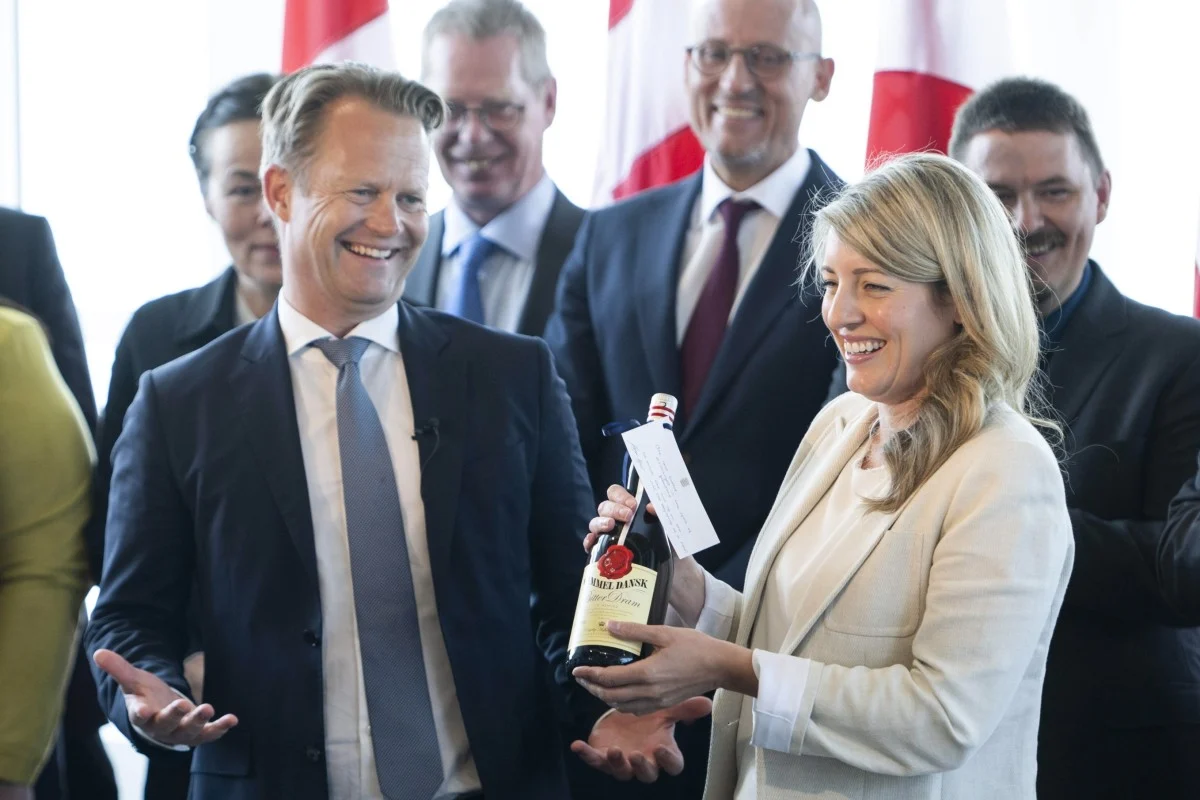
Image Source: www.scmp.com
The terms of the historic treaty were pragmatic and fair:
Dividing the Island: A natural legal boundary was drawn along a prominent geological ravine running north-to-south across Tartupaluk. Denmark (on behalf of Greenland) received roughly 60 percent of the island, while Canada (as part of the territory of Nunavut) received approximately 40 percent.
Creating New Land Borders: The division created a 1.28-kilometer land border. Consequently, Canada gained its second-ever international land border (adding Denmark alongside the United States), while Denmark gained its second land border (adding Canada alongside Germany).
Protecting Indigenous Rights: The agreement explicitly guarantees that Inuit communities in both Nunavut and Greenland retain full access to the entire island for traditional hunting, fishing, and cultural activities.
Maritime Boundaries: The treaty resolved maritime shelf claims stretching across 3,000 kilometers from the Lincoln Sea in the far north down to the Labrador Sea.
During the signing ceremony, Canadian Foreign Minister Mélanie Joly and Danish Foreign Minister Jeppe Kofod exchanged final bottles of liquor, officially closing the book on the decades-old conflict. The Danish Parliament (Folketing) formally ratified the agreement in December 2023, cementing the border into international law.
Conclusion
The story of Tartupaluk proves that even stubborn territorial rivalries can end in genuine friendship. For nearly fifty years, Canada and Denmark transformed what could have been a tense border standoff into a celebrated tradition of lighthearted diplomacy. By replacing threats with bottles of whisky and schnapps, both nations kept communication channels wide open until negotiators were ready to forge a lasting solution.
The final division of Hans Island achieved far more than drawing a line on a map. It established a vital precedent for Arctic governance, protected Indigenous rights, and proved that democratic states can settle complex territorial claims through compromise. In an era marked by shifting international alliances and rising global tension, the resolution of the whisky war stands out as a clear reminder that peace, humor, and respect remain the most powerful tools in global diplomacy.



Comments (0)
Leave a Comment
No comments yet
Be the first to comment