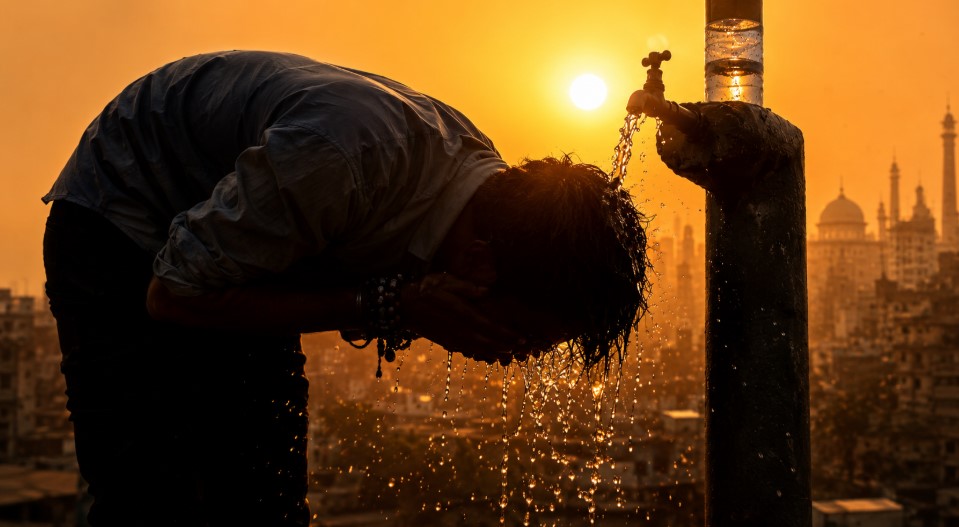
The India Pakistan heatwave 2026 is not a weather event. It is a stress test of governance, inequality, and climate inaction playing out across one of the most densely populated regions on Earth. Temperatures exceeding 46°C have been recorded across multiple states and provinces since mid-April. That figure alone is alarming. But the real danger is invisible on most weather dashboards.
What Happened
Sustained extreme heat arrived weeks earlier than normal this year, beginning around April 15. Several areas recorded temperatures running 5 to 8 degrees Celsius above seasonal averages. At least 37 deaths have been confirmed in India and 10 in Pakistan, though researchers who study heat mortality consistently find official counts represent a fraction of actual fatalities. The economic toll is already visible in record electricity demand straining India's grid and worsening drought conditions spanning over a million square kilometres.
Why This Matters Beyond Headlines
The thermometer reading is only the first layer. What makes this heatwave structurally dangerous is humidity. When heat and moisture combine, the human body's primary cooling mechanism, sweating, stops working effectively. Scientists measure this through wet-bulb temperature. New research has revised what was once considered a survivable threshold. Older adults outdoors at 35°C and 90% humidity face the same physiological risk as those exposed to 45°C at 30% humidity. Healthy young adults are at risk of dying in 45°C heat with humidity as low as 40%. Parts of the subcontinent have likely crossed these thresholds during this event.
Climate attribution research from World Weather Attribution estimates the April heatwave was made roughly three times more likely and approximately 1°C hotter by climate change. At current warming levels of around 1.4°C globally, events of this severity are expected roughly once every five years. Under projected 2.6°C warming by 2100, that frequency compresses to once every two or three years, with temperatures running more than two degrees hotter.
Political and Strategic Calculations
Neither India nor Pakistan has built public health infrastructure proportional to the heat risk their populations face. Cooling centers exist in some cities but remain inaccessible to informal workers and rural communities. Labour protections for outdoor workers, including construction laborers, farmers, and delivery riders, remain largely unenforced during heat emergencies. Meanwhile, both governments face political pressure not to shut down economic activity during extreme heat, creating a structural gap between known risk and policy response.
Urban heat islands compound this failure. Cities trap heat in concrete and release it overnight, denying residents the nocturnal temperature drop that allows bodies to recover. Wealthier residents access air conditioning. The urban poor cannot.
Economic and Security Impact
Power grids across India recorded historic peak demand during this period. Extended blackouts in heat conditions are not merely inconvenient. They are dangerous. Agricultural output is at risk as drought expands and field workers face dangerous conditions during harvest seasons. Long-term, repeated heatwave shocks reduce labour productivity, damage food security, and accelerate internal migration from rural areas toward already-strained cities.
Insurance and infrastructure sectors face rising exposure. Heat risk is rarely priced accurately into urban development, labour contracts, or public health budgets across South Asia.
Global Reactions and Diplomatic Signals
International climate bodies have noted the event, and World Weather Attribution has published rapid attribution findings. However, the global response has been largely analytical rather than material. Multilateral climate finance commitments to heat adaptation in South Asia remain significantly below assessed need. This is a policy gap that will widen as frequency of events increases.
What Happens Next
The monsoon typically reaches southern India in early June and covers the country by mid-July, bringing temporary relief. Pakistan typically sees monsoon arrival in early July. But relief is seasonal, not structural. The longer trajectory points toward more frequent, more intense events. Without meaningful investment in heat action plans, cooling infrastructure, early warning systems, and labour protections, the human cost will compound with each cycle.
The 2026 heatwave is a preview, not an anomaly.



Comments (0)
Leave a Comment
No comments yet
Be the first to comment