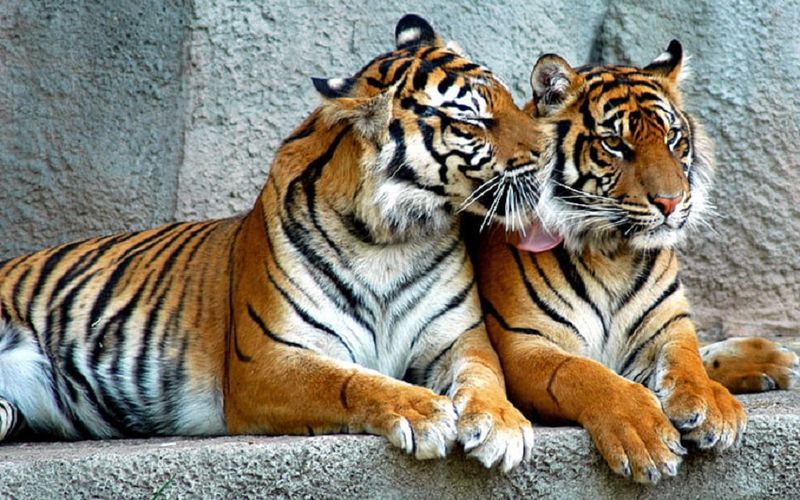
In the forests of Madhya Pradesh's Malwa-Nimar region, a quiet ecological miracle is unfolding. Kheoni Wildlife Sanctuary, long dismissed by conservationists as little more than a transit corridor for wandering tigers, has emerged in early 2026 as a thriving breeding ground for the Royal Bengal Tiger. The transformation, anchored by the remarkable story of a dominant tiger pair known as Yuvraj and Meera, signals one of India's most compelling wildlife conservation turnarounds in recent memory.
The sanctuary's revival matters not just for Madhya Pradesh, but for the entire framework of tiger corridor conservation in central India.
From Corridor to Core: Kheoni's Unlikely Rise
For decades, Kheoni was referenced in conservation circles almost apologetically, as a "quiet corridor," a stretch of forest that tigers passed through on their way between Ratapani and the distant Melghat Tiger Reserve in Maharashtra. Spanning just 134.7 square kilometres, the sanctuary appeared too small and too peripheral to sustain a permanent tiger population.
That narrative has been decisively overturned. According to forest department data, Kheoni's resident tiger population has now swelled to approximately a dozen individuals. What was once a rare sighting, celebrated by a weary forest guard as a lucky break, has become a routine feature of the morning safari. Tigers in Kheoni have reportedly grown so habituated to human presence in designated zones that they are now frequently spotted resting directly on safari tracks.
Strategic analysts and wildlife experts suggest this behavioral shift indicates a broader ecological stability. Tigers become bold and visible in areas where prey is abundant and threats are minimal. Kheoni, it appears, now meets both conditions.
Yuvraj, Meera and the Cubs That Changed Everything
At the heart of this conservation success story is a single breeding pair. Yuvraj and Meera, identified as the sanctuary's dominant tigers, have provided what wildlife biologists call a "biological seal of approval" for the forest's overall health. Their ability to breed successfully within Kheoni's boundaries confirms that the habitat has crossed a critical threshold in prey base density, territorial security, and ecological balance.
The excitement reached a new peak last month when the Dewas forest department officially confirmed what camera trap operators had suspected: Meera had delivered a healthy litter of three cubs, now approximately four months old.
Superintendent Vikash Mahorey, speaking to reporters, described the cubs as the current stars of the sanctuary. "During the initial months, Meera remained elusive and vigilant to protect her young," Mahorey said. "Now that they are consuming solid food and exploring, they are the stars of the sanctuary." Camera trap footage confirming the cubs feeding on prey independently has been described by officials as a landmark moment in Kheoni's modern conservation history.
DFO Amit Singh framed the development in broader ecological terms, emphasizing that successful tiger breeding at this scale is only possible in forests with a robust and stable prey base. "Such growth is only possible with a healthy prey base and a secure environment," Singh noted, adding that the sanctuary's management has prioritised both in recent years.
Biodiversity Beyond the Tiger
While the tiger story commands headlines, Kheoni's ecological renaissance extends considerably further. According to early reports from field researchers and the forest department, the sanctuary has recently recorded a rare sighting of Wild Dogs, also known as Dholes, adding a significant new dimension to its predator hierarchy. The presence of Dholes alongside tigers and leopards signals a multi-layered, functionally complete predator guild, a strong indicator of ecosystem health.
The sanctuary is also home to leopards, sloth bears, hyenas, jackals, and the four-horned antelope, known locally as the Chousingha, one of India's most distinctive and rarely encountered ungulates. Birdwatchers have documented over 165 species within Kheoni's boundaries, including the Indian Paradise Flycatcher, Madhya Pradesh's state bird, and the elusive Sirkeer Malkoha. This avian richness further reinforces the sanctuary's credentials as a biodiverse hotspot rather than a single-species destination.
Historically, a 1982 expansion of Kheoni's boundaries to incorporate jungles within the Sehore district is now credited as a foundational decision that enabled the current population growth. Conservation planning made decades ago is, quite literally, bearing fruit today.
The Corridor Vision: Omkareshwar and Beyond
The Madhya Pradesh government is now moving to capitalise on Kheoni's momentum. Plans are underway to establish the Omkareshwar Wildlife Sanctuary as an adjoining protected area, to be formally attached to Kheoni. This expansion is designed to serve as a critical bridge in the tiger corridor that links the forests of central Madhya Pradesh to Maharashtra's Melghat Tiger Reserve.
The strategic logic is well-grounded. As Meera's cubs mature over the next two to three years, they will inevitably seek independent territories. Without a connected corridor providing safe passage, these young tigers face the dangerous prospect of venturing into human-dominated landscapes, dramatically increasing the risk of conflict and mortality. The proposed Omkareshwar linkage would create a continuous forested stretch, enabling safe dispersal, facilitating genetic exchange between isolated tiger populations, and reducing the pressure on Kheoni's core habitat.
Strategic analysts suggest this approach reflects a broader and more sophisticated shift in Indian wildlife policy, one that is moving beyond the protection of individual sanctuaries toward the management of functional, interconnected tiger landscapes.
A Model for Conservation
The Kheoni story offers a quietly powerful lesson for conservation practitioners and policymakers across South Asia. A small, overlooked sanctuary, written off as peripheral by previous generations of wildlife managers, has been transformed through consistent habitat protection, prey base management, and thoughtful corridor planning into a self-sustaining breeding population.
This indicates a broader geopolitical and ecological truth: nature is remarkably resilient when given the space and security to recover. The three cubs currently exploring Kheoni's forest floor under Meera's watchful eye are not just an exciting camera trap moment. They are the living proof that MP's first wildlife sanctuary has genuinely come full circle.
For India's broader Project Tiger ambitions, Kheoni's striped rebirth arrives as both a validation and an inspiration.




Comments (0)
Leave a Comment
No comments yet
Be the first to comment