
Daily Walk Is a Great Start, But It May Only Be Half the Picture
For millions of people around the world, a daily walk is the cornerstone of their fitness routine. It is simple, free, low-impact, and easy to fit into a busy schedule. Health campaigns have long championed the "10,000 steps a day" goal, and walking's benefits, from improved mood to better cardiovascular health, are well documented. But a growing body of research is now raising an important question: Is walking alone enough to keep us truly healthy?
The answer, according to health and fitness experts, is increasingly: not quite. While walking remains one of the best habits you can build, new findings suggest that without the addition of strength or resistance training, you may be leaving significant health benefits on the table.
What New Research Says
Recent studies published in major health journals have reinforced a key message: combining aerobic activity like walking with muscle-strengthening exercise produces far better outcomes than either activity alone.
A large-scale analysis tracking adults over several years found that those who engaged in both aerobic exercise and strength training had significantly lower risks of mortality from cardiovascular disease and cancer compared to those who only walked or only lifted weights. Another study found that walking-only groups showed limited improvements in body composition, while those who added resistance training experienced measurable gains in lean muscle mass and reductions in body fat.
In short, walking keeps your heart healthy and your joints mobile. But your muscles, bones, and metabolism need a different kind of challenge to thrive.
Why Strength Training Matters
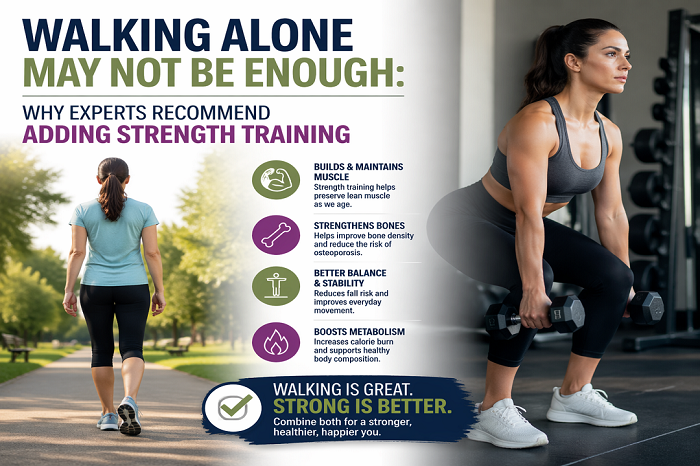
Strength training, also called resistance training, involves exercises that make your muscles work against a force. This includes anything from lifting weights to doing push-ups. Here is why it matters so much:
Improved Muscle Strength From around age 30, adults naturally begin to lose muscle mass, a process called sarcopenia,. Without deliberate effort to build and maintain muscle, this loss accelerates with age, leading to weakness, fatigue, and reduced independence. Strength training directly counteracts this decline.
Better Metabolism Muscle tissue burns more calories at rest than fat tissue does. Building even modest amounts of lean muscle raises your resting metabolic rate, which means your body becomes more efficient at managing blood sugar levels and body weight over time.
Bone Health Support Weight-bearing and resistance exercises stimulate bone-forming cells, increasing bone density and significantly reducing the risk of osteoporosis, a condition that affects hundreds of millions of people globally, particularly women after menopause.
Reduced Risk of Chronic Disease Strength training has been shown to lower the risk of type 2 diabetes, hypertension, and certain metabolic conditions. It improves insulin sensitivity and helps regulate cholesterol levels, complementing the cardiovascular benefits of regular walking.
Improved Balance and Injury Prevention Stronger muscles and connective tissue provide better joint stability and coordination. This is especially critical for older adults, where improved balance dramatically reduces the risk of falls, a leading cause of injury and hospitalisation in people over 65.
How to Combine Walking With Strength Training
The good news is that you do not need a gym membership or expensive equipment to get started. Here are practical ways to bring strength training into your routine:
- Bodyweight exercises such as squats, lunges, push-ups, and planks require no equipment and can be done at home or in a park.
- Resistance bands are affordable, portable, and highly effective for working multiple muscle groups, including arms, shoulders, legs, and back.
- Light weightlifting with dumbbells or kettlebells, even in short 20–30 minute sessions, can produce meaningful gains in strength and muscle tone.
- Combined walks: Try adding brief strength intervals during your walk: stop every ten minutes for a set of squats or lunges before continuing.
- Short dedicated sessions: Aim for two to three strength-focused workouts per week, on alternate days to allow muscle recovery.
You do not need to overhaul your entire routine. Even modest additions of resistance exercise, as little as 60 minutes per week spread over two or three sessions, have been shown to produce significant health improvements.
Expert Recommendations
Leading health organisations, including the World Health Organization (WHO) and the American College of Sports Medicine, recommend that adults engage in:
- At least 150–300 minutes of moderate aerobic activity (such as brisk walking) per week
- Muscle-strengthening activities targeting all major muscle groups on two or more days per week
Fitness professionals emphasise that the key is consistency, not intensity. Beginners should start slowly, focusing on proper form before increasing weight or resistance. Rest days are essential: muscles grow and repair during recovery, not during the workout itself. Anyone with existing health conditions should consult a doctor or certified trainer before starting a new exercise programme.
Who Benefits the Most
While everyone stands to gain from combining walking with strength training, certain groups have the most to gain:
- Adults over 30, who face accelerating muscle and bone loss without active resistance training
- Office workers and those with sedentary lifestyles, who spend long hours seated and need targeted muscle activation to counter postural imbalances and metabolic slowdown
- Older adults (60+), for whom strength training is one of the most powerful tools for maintaining independence, mobility, and fall prevention
- Beginners and casual exercisers, who may not realise that walking, while a wonderful habit, is only one component of a well-rounded fitness routine
For these groups, even a modest investment in strength training can produce life-changing results over time.
Conclusion: A Stronger Walk Forward
Walking will always be one of the most accessible and beneficial forms of exercise available. It requires no special skill, no equipment, and no gym. But on its own, it addresses only part of what our bodies need to remain strong, resilient, and disease-resistant as we age.
The emerging consensus among health researchers and fitness professionals is clear: combining regular walking with consistent strength training is not just advisable; it is increasingly considered essential for long-term health. Whether you are a seasoned walker looking to level up or someone just beginning their fitness journey, adding two to three sessions of resistance exercise each week could make a profound difference to how you feel, move, and age.
The goal is not perfection. It is progress: one step, and one rep, at a time.




Comments (0)
Leave a Comment
No comments yet
Be the first to comment