Introduction: The Democratic Festival of India

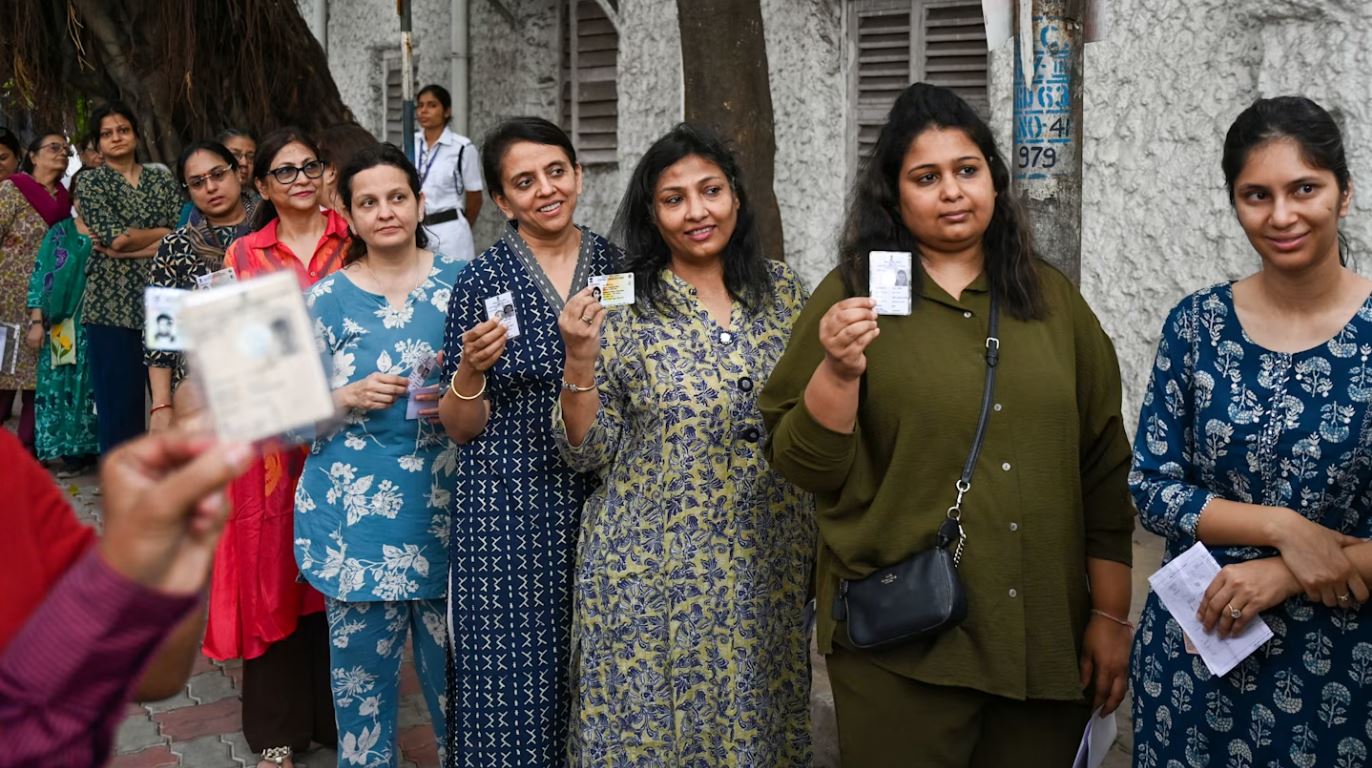
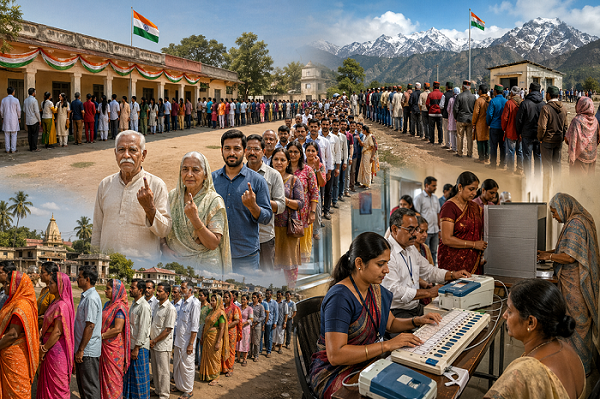
Every few years, India transforms itself into the world's most spectacular democratic festival. Polling booths in remote hill villages, coastal fishing hamlets, urban apartment blocks, and sun-scorched agricultural plains simultaneously become temples of civic participation. The Five State Election Turnout Analysis for the 2026 Assembly Elections, covering Tamil Nadu, West Bengal, Kerala, Assam, and Puducherry, offers one of the most revealing windows into the health, depth, and direction of Indian democracy. Voter turnout is not merely a statistical footnote in election reporting; it is the living pulse of a republic. When turnout rises, it signals public trust in the process. When it dips, it demands urgent introspection from political parties, civil society, and election administrators alike.

India, home to the largest democratic electorate on earth, conducted these five assembly elections against a backdrop of rapid socioeconomic change, growing political awareness among women and youth, expanding digital infrastructure, and the ever-watchful machinery of the Election Commission of India. These five states, stretching from the Gangetic plains of West Bengal to the tropical coasts of Puducherry, collectively represent more than 250 million voters. Their electoral choices carry consequences not only for state governance but for the broader direction of national politics. This article presents a comprehensive, data-driven analytical review of turnout trends, Election Commission innovations, political landscapes, campaign strategies, predictive outcomes, and the human stories that give elections their democratic soul.

Overall Voter Turnout Trends Across Five States

Macro-Level Turnout Picture

The 2026 assembly elections recorded an aggregate voter turnout that was broadly consistent with recent historical averages, though notable variations existed at the state level. West Bengal led all five states with the highest participation, driven by intense political competition and deeply mobilised grassroots structures. Kerala and Tamil Nadu followed closely, reflecting two distinct but equally vigorous political cultures. Assam demonstrated solid improvement over its 2021 figures, while Puducherry, constrained by its smaller electorate, showed the highest volatility in percentage swings.

A consistent national pattern emerged: rural constituencies outperformed urban ones in turnout. Densely packed cities such as Chennai, Kolkata, Thiruvananthapuram, Guwahati, and Puducherry town recorded significantly lower participation rates than semi-urban and rural seats. Urban voter apathy, driven by work pressures, migration patterns, and a growing sense of alienation from identity-based mobilisation, remained a structural challenge for all five electoral administrations.

Female voter turnout recorded its most impressive performance to date across all five states, in several cases matching or exceeding male turnout. This trend, building steadily since the 2014 national election cycle, has fundamentally altered the calculus of campaign strategy. Youth voter participation, particularly among first-time voters between 18 and 21 years of age, showed a modest but meaningful uptick, attributed in part to the Election Commission's aggressive awareness campaigns on college campuses and social media platforms.

Voter Turnout Comparison Across Five States

State

Previous Election Turnout (%)

Current Turnout (%)

Change (%)

Urban Turnout (%)

Rural Turnout (%)

Tamil Nadu

74.0

78.2

+4.2

71.3

82.5

West Bengal

78.3

81.6

+3.3

74.1

85.4

Kerala

77.7

80.4

+2.7

73.6

84.2

Assam

75.1

77.8

+2.7

68.9

81.6

Puducherry

72.8

75.3

+2.5

69.4

79.7

Chart 1: State-wise Voter Turnout Trend Analysis

Tamil Nadu   ████████████████████░░░  78.2%
West Bengal █████████████████████░░ 81.6%
Kerala █████████████████████░░ 80.4%
Assam ████████████████████░░░ 77.8%
Puducherry ███████████████████░░░░ 75.3%
0% 50% 100%

Insights: West Bengal's extraordinarily high rural turnout reflects the state's tradition of booth-level party organisation, which functions as an informal voter mobilisation infrastructure. Kerala's steady upward trend underscores a long-established culture of civic engagement rooted in high literacy and trade union networks. Tamil Nadu's jump of 4.2 percentage points is the most significant in this cycle, possibly linked to strong welfare scheme competition between major alliances. Assam and Puducherry, while registering lower absolute numbers, both improved on their last recorded performance, suggesting gradual strengthening of democratic habits in these geographies.

Election Commission of India Activities and Innovations

The Architecture of a Billion-Voter Democracy

The Election Commission of India stands as one of the republic's most consequential constitutional bodies. Managing elections across five states simultaneously demands extraordinary logistical, technological, and administrative precision. In the 2026 cycle, the ECI deployed a comprehensive suite of initiatives designed to improve voter awareness, reduce electoral malpractice, enhance transparency, and make polling accessible to every eligible citizen regardless of geography or physical ability.

Voter awareness campaigns under the Systematic Voters' Education and Electoral Participation (SVEEP) programme were executed at an unprecedented scale. District-level officers conducted community outreach through folk performances, school programmes, radio broadcasts in regional languages, and targeted campaigns in low-turnout constituencies identified from previous election data. First-time voter registration drives specifically targeted college campuses, industrial clusters, and migrant worker communities in peri-urban zones.

The deployment of Voter Verifiable Paper Audit Trail (VVPAT) machines alongside Electronic Voting Machines (EVMs) across all constituencies addressed persistent public concerns about vote counting accuracy. Webcasting of the polling process from sensitive booths allowed real-time monitoring by ECI observers, state government officials, and accredited media representatives. The Expenditure Monitoring Division closely tracked campaign finance, deploying flying squads and static surveillance teams to intercept cash, liquor, and other inducements, which historically depress the quality of democratic participation even as they temporarily inflate the appearance of enthusiasm.

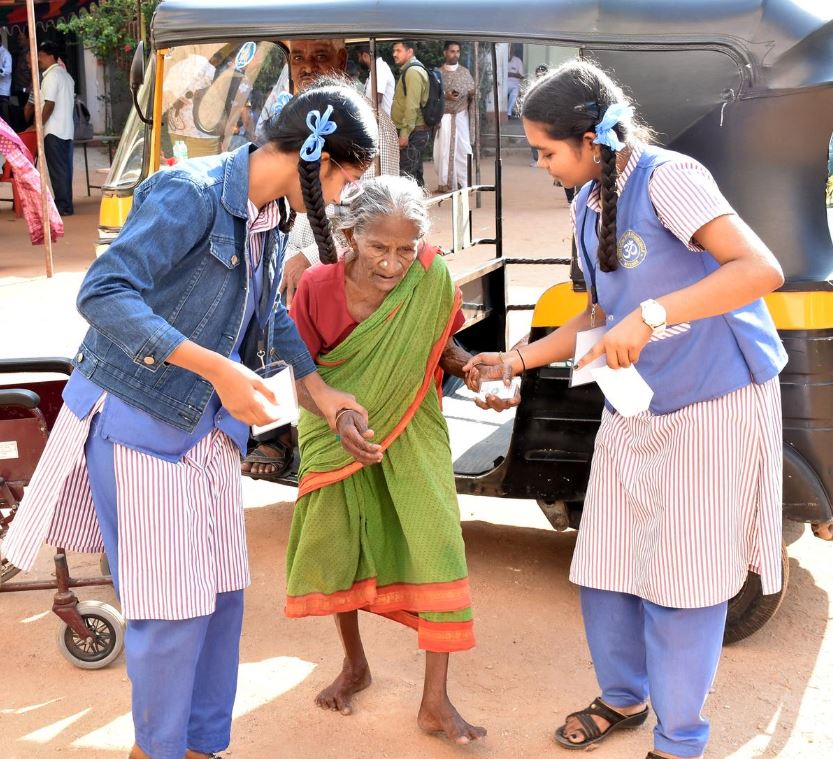
Accessibility for differently-abled voters and senior citizens received enhanced attention. Every polling station was required to maintain ramp access, wheelchair availability, braille ballot guides, and dedicated queues for elderly and physically challenged voters. In remote forested areas of Assam and the island clusters off West Bengal's delta coast, special polling parties undertook multi-day journeys on foot and river boats to ensure no eligible citizen was structurally disenfranchised.

Key ECI Initiatives and Their Impact

Initiative

Purpose

Impact on Voters

State Example

SVEEP Awareness Campaign

Increase voter registration and participation

Raised first-time voter turnout by estimated 3-5%

Tamil Nadu, Kerala

VVPAT-EVM Deployment

Ensure vote count transparency

Reduced post-election disputes and mistrust

All five states

Webcasting of Sensitive Booths

Real-time monitoring of polling irregularities

Deterred booth-capture attempts significantly

West Bengal, Assam

Expenditure Monitoring Division

Track and limit illegal campaign spending

Seized cash and materials worth hundreds of crores

Tamil Nadu, Puducherry

Accessible Polling Infrastructure

Enable elderly and disabled voter participation

Expanded effective franchise to marginal voters

Kerala, Assam

Digital Voter Helpline (1950)

Address voter queries and complaints

Resolved thousands of voter list discrepancy cases

All five states

Remote Polling Parties

Reach voters in geographically difficult areas

Ensured enfranchisement in forest and delta zones

Assam, West Bengal

Rise of Women and Youth Participation

The New Electoral Demographics

Perhaps the single most transformative development in Indian elections over the last decade has been the sustained and accelerating rise in female voter participation. In the 2026 five-state elections, women matched or exceeded male turnout in Kerala and Tamil Nadu, and narrowed the gap significantly in West Bengal and Assam. This is not an accidental demographic shift; it is the product of deliberate policy incentives, growing female economic participation, expanding access to government welfare schemes specifically targeting women, and an increasingly assertive civic consciousness among female voters across age groups.

Welfare politics has been central to this mobilisation. Schemes offering direct benefit transfers for cooking gas, cash assistance for daughters' education, subsidised rations, and free public transport for women have created a material stake in electoral outcomes that did not exist in the same way a generation ago. Female voters, particularly in rural and semi-urban constituencies, have come to understand that their vote directly translates into household-level economic security.

Youth voter participation, while still trailing adult cohort turnout, showed encouraging improvement. Social media platforms served as the primary source of political information for voters under 30, and the ECI leveraged Instagram, YouTube, and regional digital content creators to deliver voter registration reminders and polling date information in formats that resonated with this demographic. Voter influencer campaigns featuring local athletes, musicians, and content creators showed measurably stronger engagement than traditional poster-and-pamphlet methods.

Gender and Youth Participation Trends

State

Male Turnout (%)

Female Turnout (%)

Youth Turnout (18-25) (%)

First-Time Voters (%)

Tamil Nadu

77.8

78.7

72.4

69.3

West Bengal

80.9

82.4

75.1

71.8

Kerala

79.6

81.3

74.8

70.6

Assam

78.4

77.2

68.9

65.2

Puducherry

75.8

74.8

67.3

63.9

Women outperformed men in turnout in Tamil Nadu, West Bengal, and Kerala, a development with profound implications for campaign messaging, candidate selection, and policy promises. Parties that failed to address female voter priorities in welfare delivery, safety, and health infrastructure faced measurable electoral costs. Youth turnout, while the lowest segment across all states, improved over previous cycles, suggesting that sustained civic education investment is beginning to bear fruit.

State-by-State Political Landscape Analysis

Tamil Nadu Political Outlook

Tamil Nadu's political landscape in 2026 is defined by the two-front competitive structure that has characterised the state since the 1980s. The Dravidian movement's philosophical legacy continues to dominate the electoral imagination, with both major fronts anchored by Dravidian parties whose welfare credentials, linguistic identity positioning, and caste coalition-building remain the primary determinants of electoral outcomes.

The ruling alliance entered the election cycle with the advantage of incumbency welfare delivery, particularly its flagship schemes in women's empowerment, free bus travel, and augmented ration entitlements. However, anti-incumbency sentiment in select urban constituencies, concerns about administrative governance quality, and the opposition's aggressive targeting of perceived corruption allegations created genuine competitive pressure. Key swing regions in the Kongu belt, the Cauvery delta districts, and the northern coastal constituencies remained genuinely contested.

Leadership personality continues to play an outsized role in Tamil Nadu elections. The charisma and credibility of alliance leaders directly influence ticket distribution enthusiasm at the booth level. Regional parties within each alliance also calibrate their caste vote consolidation role, making the arithmetic of seat-sharing negotiations critical to overall performance.

Prediction: The ruling alliance is likely to retain power with a reduced but workable majority, supported by strong female voter loyalty, welfare scheme recall, and incumbent administrative advantage. The opposition will likely improve its seat count but fall short of majority formation. Confidence Level: Medium-High.

West Bengal Political Outlook

West Bengal presents the most intensely contested electoral battlefield among the five states. The state's political culture, shaped by decades of Left Front dominance followed by the Trinamool Congress's transformative rise, is marked by extraordinary grassroots organisation, high emotional investment in electoral outcomes, and significant competitive mobilisation in every assembly segment.

Minority-community voting blocs in the Murshidabad, Malda, and South 24 Parganas districts retain their decisive influence on outcome formation. Border district dynamics, particularly in districts adjacent to Bangladesh, add a layer of identity-based sensitisation that national parties have consistently attempted to leverage. The ruling party's booth-management infrastructure remains formidable, though challenger alliances have invested significantly in counter-organisation.

Development delivery, particularly in infrastructure, employment, and welfare transfers, has been the ruling party's primary defence against anti-incumbency. Whether the pace of visible development matches voter expectation in the state's smaller towns and semi-urban zones will be the critical variable.

Prediction: The incumbent alliance is likely to retain its majority position, particularly given its booth-level organisational depth and welfare mobilisation advantage. However, close contests in urban and semi-urban constituencies and competitive pressure in swing districts make the final margin uncertain. Confidence Level: Medium.

Kerala Political Outlook

Kerala's bipolar electoral structure, alternating between the Left Democratic Front and the United Democratic Front across successive assembly cycles, creates a distinctive political rhythm unlike any other Indian state. The state's high literacy, strong trade union culture, remittance economy, and robust public health and education systems produce a voter base that assesses governance performance with unusual sophistication.

The historical pattern of alternation, in which the in-power front rarely returns to office consecutively, constitutes a powerful prior. However, structural factors sometimes override this pattern when one front delivers exceptional governance performance or when the opposition is seen as insufficiently prepared to form a credible government. Youth employment, healthcare quality, and infrastructure investment are the dominant policy themes.

Swing constituencies in the central districts and Northern Kerala's competitive mixed-religion demographic zones will determine whether the historical alternation pattern holds or whether an incumbent government defies precedent.

Prediction: The historical alternation pattern suggests a swing toward the opposition front, though the ruling front's governance record in social welfare metrics provides some protection against a clean sweep outcome. A narrow victory for the opposition alliance is more probable than a comfortable one. Confidence Level: Medium.

Assam Political Outlook

Assam's electoral politics is shaped by a complex intersection of identity, development, and demographic anxieties. The ruling alliance has effectively consolidated a broad Hindu voter base across the Brahmaputra valley while leveraging visible development infrastructure projects, flood management investment, and welfare transfers. The opposition's challenge lies in assembling a sufficiently broad coalition across ethnic, linguistic, and religious community lines to mount a competitive challenge.

Voter geography in Assam is distinctive: the river island constituencies, the tea garden belt, the Barak valley districts, and the hill areas each have specific political dynamics that require targeted campaign approaches. Tea garden workers, historically a swing demographic, have been courted aggressively by both alliances through wage and welfare promises. The state's large youth population and concerns about employment availability beneath surface-level infrastructure growth constitute genuine latent discontent.

Prediction: The ruling alliance is likely to retain government, aided by consolidated identity-based mobilisation, visible infrastructure delivery, and a fragmented opposition. However, competitive seats in the tea belt and certain valley constituencies introduce outcome uncertainty. Confidence Level: Medium-High.

Puducherry Political Outlook

Puducherry's electoral politics operates on a scale that amplifies individual constituency-level factors to a degree unseen in larger states. With only 30 assembly constituencies, the formation of a government can turn on the outcome of three to five genuinely marginal seats. Coalition complexity is the defining feature of Puducherry governance: no single party has historically held an independent majority, and post-election alliance negotiations have produced some of India's most intricate government formation processes.

The Union Territory's unique administrative structure, with a Lieutenant Governor exercising significant parallel authority, creates governance frustration that voters periodically channel into anti-incumbency expression regardless of the elected government's actual performance. Welfare scheme delivery, infrastructure quality, and the perceived competence of local leaders dominate voter decision-making.

Prediction: A hung assembly is the most likely outcome, with government formation depending on post-election coalition negotiations. The front with stronger central party support and more convincing local alliance arithmetic is marginally better positioned to form a stable government, though the margin is narrow. Confidence Level: Low-Medium.

Campaign Strategies in Modern Elections

The Transformation of Electoral Outreach

Indian election campaigns in 2026 operate in a fundamentally transformed information environment compared to even a decade ago. The dominance of smartphones, cheap mobile data, and social media platforms has redistributed the attention economy in ways that challenge traditional campaign methods while creating powerful new opportunities for voter outreach.

Major alliances across all five states deployed structured digital war rooms staffed by data analysts, content creators, multilingual social media managers, and advertising technology specialists. Constituency-level voter profiling, drawing on voter roll data, survey research, and social media sentiment analysis, enabled campaigns to deploy micro-targeted messaging to specific demographic segments with unprecedented precision. A welfare scheme beneficiary in a rural Tamil Nadu constituency, a first-time voter in a Kolkata suburb, and a minority-community voter in an Assam river island each received digitally tailored political communication designed to address their specific perceived priorities.

Traditional campaign methods retained their importance in mobilising older voters and in rural areas where social media penetration remains partial. Public meetings, rallies, door-to-door canvassing, and the mobilisation of local self-help groups and community networks continued to be indispensable tools for final-week voter activation. Regional language content, including songs, short films, and comedy skits featuring local cultural idioms, proved particularly effective on YouTube and Instagram in reaching voters who might be resistant to overtly political messaging.

The Election Commission's expenditure monitoring operations created genuine constraints on cash-intensive campaigning, pushing parties toward digital advertising investment as a more auditable (and harder to interdict) form of campaign spending. This shift has, paradoxically, accelerated the professionalisation of Indian political communication.

Predictive Analysis of Likely Winners

Predicted Electoral Outcomes

State

Likely Leading Party/Alliance

Key Reasons

Confidence Level

Tamil Nadu

Incumbent DMK-led Alliance

Welfare scheme delivery, female voter loyalty, incumbency advantage

Medium-High

West Bengal

Incumbent TMC-led Alliance

Booth-level organisation, welfare transfers, minority bloc consolidation

Medium

Kerala

Opposition UDF-led Alliance

Historical alternation pattern, governance fatigue, youth employment gap

Medium

Assam

Incumbent BJP-led Alliance

Identity consolidation, infrastructure delivery, fragmented opposition

Medium-High

Puducherry

Hung Assembly, coalition negotiations

Small assembly size, no single majority, fragmented party landscape

Low-Medium

Challenges Faced During Elections

Logistical, Environmental, and Informational Obstacles

Conducting free and fair elections across five geographically diverse states presents challenges that test every layer of the administrative system. In 2026, election managers confronted an unusually demanding combination of environmental, logistical, and informational challenges simultaneously.

Extreme heat conditions in Tamil Nadu and Assam during polling days required the deployment of water distribution facilities, shade infrastructure, and medical response teams at polling stations across affected constituencies. High humidity in coastal Kerala added physical discomfort for both voters and polling officials during extended queuing periods. In West Bengal's delta districts, residual flooding from pre-election seasonal rains damaged road access to certain remote polling stations, requiring last-minute alternative transport arrangements.

Security management in sensitive constituencies, particularly in West Bengal and Assam, required extensive central paramilitary force deployment alongside state police, with detailed micro-management of force positioning to deter intimidation while avoiding the appearance of suppressive over-policing. The ECI's sensitive booth identification system, drawing on past violence incident data and local intelligence inputs, guided security allocation with measurable effectiveness.

The spread of election misinformation through WhatsApp groups and local social media accounts represented a persistent and difficult-to-counter challenge. Manipulated videos, false claims about candidate withdrawals, fabricated EVM malfunction reports, and inflammatory audio clips circulated rapidly in the final days of the campaign period. The ECI's Media Certification and Monitoring Committee, working with platform content moderation teams and state-level rapid response cells, attempted to identify and flag misleading content, though the distributed nature of messaging applications made comprehensive intervention practically impossible.

Voter list accuracy issues, including deleted entries, incorrect addresses, and name discrepancies, generated complaints across all five states on polling day. The ECI's grievance redressal mechanisms, including the 1950 helpline and district-level election officer offices, processed thousands of individual complaints, resolving most within hours but leaving some voters unable to cast their ballots due to unresolvable documentation disputes.

Human Stories Behind the Ballots

Democracy at the Individual Level

Behind every aggregate turnout percentage lies the texture of individual human decisions to participate in the democratic process, often against significant odds.

In a remote constituency in Assam's Majuli district, the world's largest river island, 84-year-old Padmavati Bora walked forty minutes on a bamboo path to her polling booth, supported by her granddaughter. She had voted in every election since 1962. For her, the act of voting was not political statement but an expression of national belonging. "I was here when this country became free," she said. "I will not miss the chance to choose."

In a coastal fishing village in Tamil Nadu's Nagapattinam district, a group of twenty-three women fishers who had formed a self-help group under a state welfare scheme arrived at their polling station together at 7 in the morning, before the men of the village. Their group decision to vote early and collectively was a quiet assertion of collective civic power that would have been unthinkable in the same village a generation ago.

In North Kolkata's dense urban lanes, a 19-year-old college student cast her first ballot after spending three days helping her neighbours verify their voter registrations on the Election Commission's mobile application. She had studied political science for two years and understood the mechanics of representation in granular detail. Yet the act of standing in the queue, holding the VVPAT-printed slip, and pressing the button produced, she admitted, an emotion she had not anticipated: "It felt real in a way that no classroom discussion ever did."

In Puducherry, a 71-year-old retired government employee arrived at his polling station using a wheelchair provided by the ECI accessibility programme. He had feared that his reduced mobility would prevent him from exercising his franchise for the first time in his adult life. The presence of a dedicated accessible queue and a patient polling official who brought the EVM to his level allowed him to vote with full dignity.

These stories do not resolve the macroscopic analytical questions about turnout determinants and electoral outcomes. But they are the molecular level at which democracy actually exists: in individual acts of civic will, performed by human beings in specific circumstances, shaped by specific histories.

Why These Five States Matter Nationally

Political Consequences Beyond State Borders

The outcomes of five simultaneous state assembly elections carry implications that extend far beyond the boundaries of each state. For national political parties, assembly election results function as mid-term feedback on the central government's performance, as laboratories for testing electoral strategies, and as platforms for launching or consolidating leadership narratives at the national level.

Tamil Nadu's 234-seat assembly and its approximate 60 million voters represent a major bloc in national political arithmetic. The state sends 39 members to the Lok Sabha. A government that controls Tamil Nadu's assembly commands significant institutional influence over central resource allocation negotiations, federal policy consultations, and southern regional coalition formation. Tamil Nadu's strong regional party culture also means that national parties must negotiate rather than dictate electoral alliances, producing coalition dynamics that shape the national political centre.

West Bengal, with 294 assembly seats and approximately 75 million voters, is the most numerically significant state in this cycle. The state sends 42 members to the Lok Sabha, making it the third-largest contributor after Uttar Pradesh and Maharashtra. West Bengal's electoral outcome will be interpreted as a referendum on the governing party's national expansion strategy into states outside its traditional geographic strongholds. The result will influence national party positioning, leadership authority, and future strategic decision-making.

Kerala's assembly election outcome matters for the Indian left's national credibility and organisational coherence. A strong performance by the Left Democratic Front would reinforce the argument that progressive welfare-state governance models remain electorally viable in India. A UDF victory would raise questions about the ability of explicitly left-wing governance to retain public confidence across multiple consecutive terms in a high-development state.

Assam's election outcome holds significance for northeastern India's broader stability and political integration. The state's results influence how the central government approaches border security, identity-based legislation, and development investment across the entire northeastern region. They also shape the political climate in smaller northeastern states whose own parties maintain close alliances with whichever force controls Assam's assembly.

Puducherry, despite its tiny size, functions as a testing ground for the management of Union Territory governance, central-state power sharing tensions, and small-party coalition dynamics that offer lessons applicable to other similarly structured polities.

Conclusion: The Spirit of India's Democratic Festival

India's democracy is not a static institution; it is a continuously reinvented civic practice performed by hundreds of millions of ordinary people across an extraordinary diversity of cultures, languages, geographies, and life circumstances. The Five State Election Turnout Analysis presented in this article reveals a republic whose citizens have not merely maintained their democratic commitment but are deepening it in measurable ways: through rising female participation, incremental youth engagement, improved electoral administration, and the steady embedding of voting as a habit across previously marginal communities.

The challenges are real and they demand attention. Urban voter apathy, misinformation ecosystems, caste and identity mobilisation as substitutes for policy deliberation, and the persistent gap between electoral enthusiasm and governance accountability all represent structural weaknesses that no single election cycle can fully resolve. But the direction of movement in these five states, assessed honestly and without partisan distortion, is toward greater participation, greater institutional competence, and greater voter sophistication.

India's democratic festival is not merely a spectacle. It is the mechanism through which 1.4 billion people exercise their collective agency over the terms of their governance. Every ballot cast in a remote Assam village, every first vote placed by a Tamil Nadu college student, every queue joined by a physically challenged voter in Puducherry, is a small act of civilisational self-determination. In the aggregate, these acts constitute something remarkable: the largest exercise of human democratic will on earth. The numbers in any turnout analysis are, ultimately, a measure of that will.