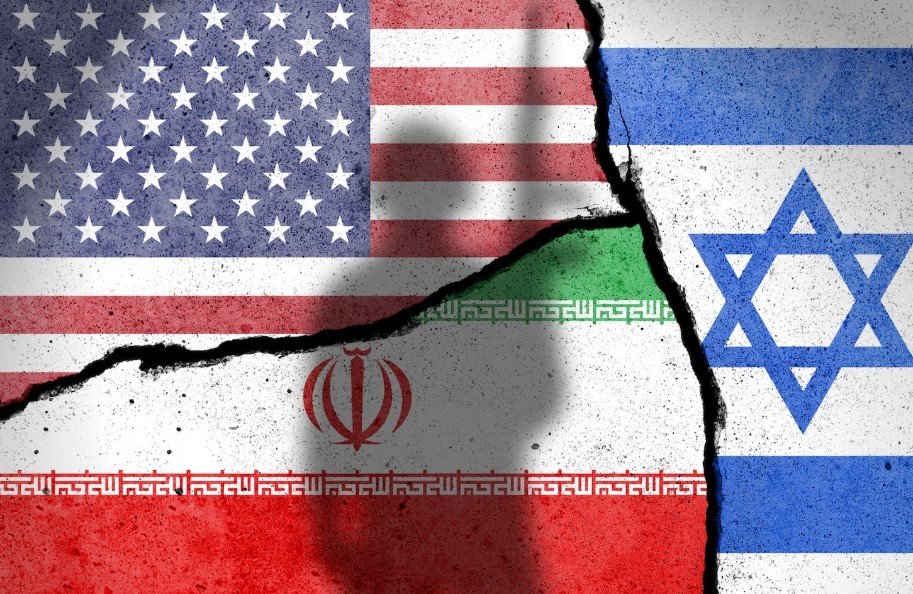
The War That Changed the Middle East
The US–Israel Iran War erupted on 28 February 2026, when US and Israeli forces launched Operation Epic Fury, marking the most significant direct confrontation in modern Middle East history. The strikes followed months of failed nuclear negotiations, violations of non-proliferation obligations flagged by the IAEA, and a wave of domestic unrest in January 2026 that exposed internal fragility within the Islamic Republic. The opening phase of the operation assassinated Supreme Leader Ayatollah Ali Khamenei in Tehran. Within hours, the conflict spread across the region.
As of 18 March 2026, Day 18 of the war:
- More than 2,300 people have been killed
- The Strait of Hormuz is effectively closed to international shipping
- Iran has launched retaliatory strikes across nine countries
This is no longer a proxy conflict. It is an open-ended war of attrition reshaping global energy markets, alliances, and the regional balance of power.
Key Fact
US Central Command reports that American forces have struck more than 5,000 targets inside Iran since February 28. Operations have used over 20 weapons systems, including Tomahawk cruise missiles, F-35 aircraft, MQ-9 Reaper drones, and THAAD missile defence systems.
From Containment to Confrontation
How the Conflict Escalated
The current war follows a decade of rising tensions centred on Iran’s nuclear ambitions, US sanctions, and Israel’s long-standing red line against a nuclear-armed Tehran. In June 2025, the so-called Twelve-Day War saw US and Israeli strikes target nuclear facilities at Natanz, Fordow, and Isfahan. That conflict ended under a fragile ceasefire mediated by Oman. The 2026 campaign represents a strategic shift. Instead of limiting damage to infrastructure, the US-Israeli coalition pursued leadership decapitation. By eliminating senior figures, including Khamenei, the coalition removed the diplomatic pathways that had previously enabled de-escalation. Iran’s new Supreme Leader, Mojtaba Khamenei, now leads a government that views the war as existential.
Ground Reality
A Region Under Fire
The human cost continues to rise.
- Iran reports 1,444 deaths, including more than 200 children killed in a strike on a girls’ school in Minab
- Lebanon has recorded 912 deaths amid renewed Israeli strikes on Hezbollah
- Thirteen US soldiers and 20 civilians in Gulf states have been killed
Iran has closed the Strait of Hormuz, disrupting a critical global oil route and triggering immediate price shocks. The Islamic Revolutionary Guard Corps has launched attacks on at least 27 US military positions across the Middle East. American bases and financial institutions have been declared legitimate targets. Despite heavy damage to its military infrastructure, Iran shows no sign of backing down.
Analyst View
“The Iranian regime perceives that it is in an existential conflict, and it does not appear to be interested in an immediate off-ramp.”
Atlantic Council, March 2026
What Happens Next?
Four Possible Scenarios
Scenario 1: Full Middle East War
The most dangerous trajectory. Iran’s strikes across multiple Gulf states risk triggering a broader regional conflict. Hezbollah escalation in Lebanon, increased Houthi attacks in the Red Sea, and activation of proxy networks in Iraq and Syria could draw the entire region into direct war.
Consequences could include:
- Severe disruption of global oil supply
- A surge in energy prices
- A major global economic shock
This scenario would also strain NATO cohesion. Public statements from US leadership questioning the role of allies have already raised concerns about alliance unity.
Scenario 2: Regime Change in Iran
A goal openly discussed in parts of Washington and Tel Aviv. Sustained military pressure combined with domestic dissatisfaction has created a volatile internal environment. Public sentiment data suggests growing anger toward the regime. However, history suggests external force rarely produces stable political transitions.
Key risks include:
- A power vacuum in Tehran
- Loss of control over nuclear materials
- Fragmentation of state authority
The IAEA estimates that 440 kilograms of 60 percent enriched uranium at Isfahan may still be intact.
Scenario 3: Nuclear Escalation
The most existential risk. Despite heavy strikes, Iran’s enriched uranium stockpile has not been fully secured. A weakened or successor regime could accelerate nuclear development as a deterrent. Concerns have already been raised in Washington about the absence of a clear plan to secure nuclear materials.
Potential outcomes include:
- Rapid nuclear development by a successor government
- Permanent US military presence in the region
- Increased global nuclear proliferation risks
Scenario 4: Diplomatic Settlement
The most hopeful but least likely in the near term.
A settlement would require:
- Verifiable nuclear disarmament
- An end to proxy warfare
- New regional security guarantees
In return, Iran would receive sanctions relief and an end to military operations. The 2025 ceasefire demonstrated that diplomacy is possible. However, the removal of prior leadership complicates any renewed negotiations. Future mediation may depend on third parties such as China or Turkey.
The Global Stakes
Markets, Alliances, and Power Shifts
The closure of the Strait of Hormuz has immediate global consequences. Approximately one fifth of the world’s oil supply passes through this corridor. Disruption has already driven price spikes and intensified inflationary pressures. Asian economies remain particularly exposed due to dependence on Gulf energy imports.
At the geopolitical level:
- Russia and China have called for restraint but avoided decisive involvement
- Ukraine has warned of reduced Western attention to its conflict
- European allies are reassessing transatlantic relations after being excluded from US planning
Analysis
A War Ahead of Its Diplomacy
Eighteen days into the conflict, the US-Israeli campaign has achieved key tactical goals.
- Iran’s supreme leader has been killed
- Nuclear infrastructure has been significantly degraded
- Proxy networks have been disrupted
However, tactical success does not equal strategic success.
Critical questions remain unresolved:
- Who governs Iran next
- What happens to the nuclear stockpile
- What the post-war framework will look like
The 440 kilograms of enriched uranium at Isfahan remain unaccounted for.
Critics argue that the campaign has moved faster than diplomatic planning. Iran’s strategy appears to rely on time. A prolonged conflict could strain Western political systems, test public support, and shift the balance through endurance rather than immediate victory.
Bottom Line
The US-Israel war on Iran is the most consequential Middle East conflict in decades. Its outcome will not be determined by military force alone. The decisive factor will be the creation of a credible diplomatic framework, one that has yet to emerge. Until then, the region and the global economy remain locked in a state of uncertainty.


Comments (0)
Leave a Comment
No comments yet
Be the first to comment