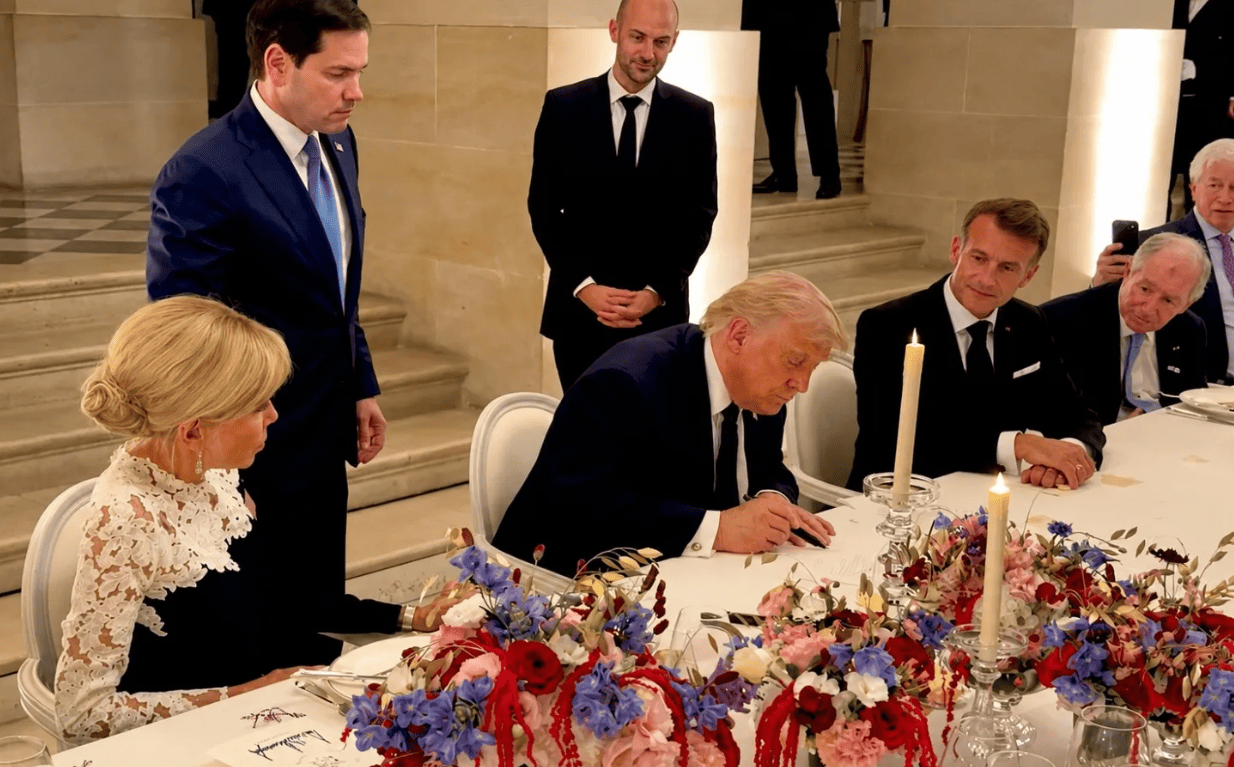
President Donald Trump and Iranian President Masoud Pezeshkian have electronically signed a memorandum of understanding intended to end the war between the United States, Israel, and Iran. The agreement, confirmed Wednesday, calls for an immediate halt to military operations on all fronts, including Lebanon, and sets a 60-day window for follow-up talks toward a more permanent settlement.
Pakistani Prime Minister Shehbaz Sharif, who helped mediate the negotiations, said the memorandum took effect once both presidents signed it. The deal arrives after more than three months of fighting that began on February 28, disrupting Middle East oil markets and drawing in Lebanon's Hezbollah on Iran's side.
What the Memorandum of Understanding Includes
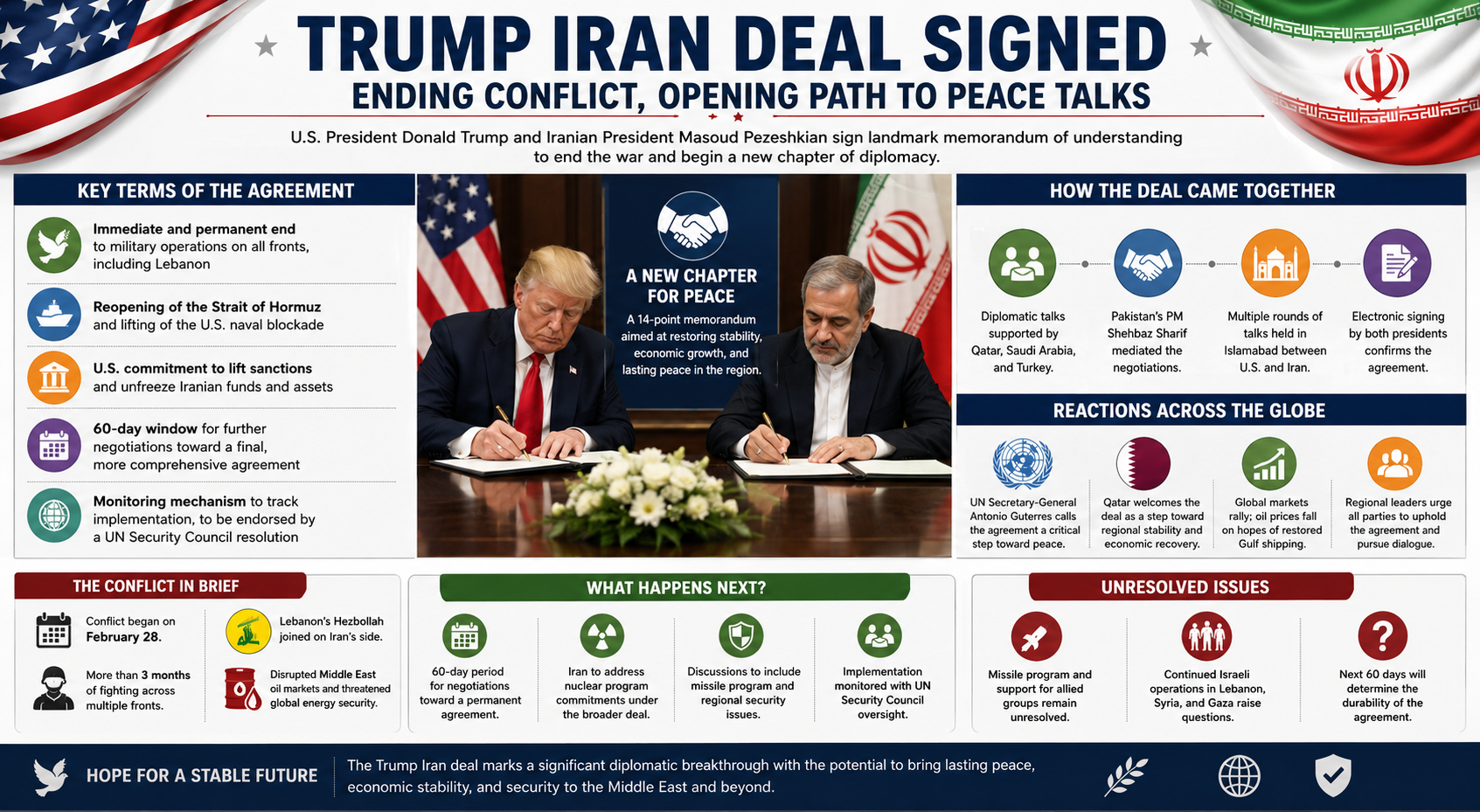
The 14-point agreement outlines a series of immediate and longer-term steps. Iran is permitted to resume oil exports once the memorandum is signed, and the United States has agreed to lift the naval blockade in response. The Strait of Hormuz, a critical corridor for global oil shipping, is set to reopen, with Iran committing its best efforts to ensure safe passage for commercial vessels for 60 days at no charge.
Key terms of the agreement include:
- An immediate and permanent end to military operations on all fronts, including Lebanon
- Reopening of the Strait of Hormuz and lifting of the U.S. naval blockade
- A U.S. commitment to lift sanctions and unfreeze Iranian funds and assets
- A 60-day window for further negotiations toward a final, more substantive agreement
- A monitoring mechanism to track implementation, to be endorsed by a binding United Nations Security Council resolution
U.S. officials say the broader framework also addresses Iran's nuclear program, with Tehran expected to forgo developing or acquiring nuclear weapons. Iran has maintained it never sought a weapons program, though U.S. officials have pointed to uranium enrichment levels they describe as well beyond civilian use.
How the Deal Came Together
Diplomatic momentum built over several weeks, with Qatar, Saudi Arabia, and Turkey supporting talks alongside Pakistan's mediation. Negotiators from the U.S. and Iran met repeatedly in Islamabad, where Iranian Parliament Speaker Mohammad Bagher Ghalibaf led talks for Tehran. An initial framework was announced in mid-June, with Trump writing on social media that the deal was complete.
A formal signing process followed in stages. U.S. officials said Vice President JD Vance and Ghalibaf carried out an early digital signing, witnessed by Trump, ahead of a planned ceremonial signing in Switzerland. Trump later told reporters he and Pezeshkian had signed the agreement directly while he attended a G7-related reception hosted by French President Emmanuel Macron at Versailles.
Reactions From Tehran, Washington, and the Region
Iran's leadership framed the outcome as a negotiating win. Ghalibaf told state media the deal demonstrated that the United States and Israel had failed to achieve their original war aims, adding that Tehran entered the talks "from a position of strength." Trump, in turn, said his administration's approach differed from past nuclear diplomacy, noting that any release of frozen Iranian funds would be conditional on compliance.
Israeli officials responded with caution. Defense Minister Israel Katz said the deal reflected American interests and reiterated that Israeli forces would continue operating in Lebanon, Syria, and Gaza despite the agreement's terms. Lebanon has been one of the more difficult elements of the deal, since Iran has said any settlement requires Israeli withdrawal from southern Lebanon, while Israel has signaled it intends to maintain a presence there.
International reaction was largely positive. United Nations Secretary-General Antonio Guterres called the agreement a critical step toward a peaceful resolution. Qatar's foreign ministry welcomed it as a step toward regional stability and economic recovery. Markets responded as well, with stock indexes in Japan and South Korea reaching new highs and oil prices falling on expectations of restored Gulf shipping.
Unresolved Questions Going Forward
Several elements of the agreement remain unsettled heading into the 60-day negotiation period. The memorandum does not appear to fully resolve Iran's missile program or its support for allied armed groups across the region, issues that are expected to feature in the longer-term talks. Continued strikes in Lebanon despite the announced ceasefire have also raised doubts about how durable the truce will be in practice.
Officials on both sides have signaled the coming weeks will test whether the framework can hold. Vance described the agreement as a new chapter in the relationship but cautioned that trust between the two governments would need to be rebuilt gradually.


Comments (0)
Leave a Comment
No comments yet
Be the first to comment