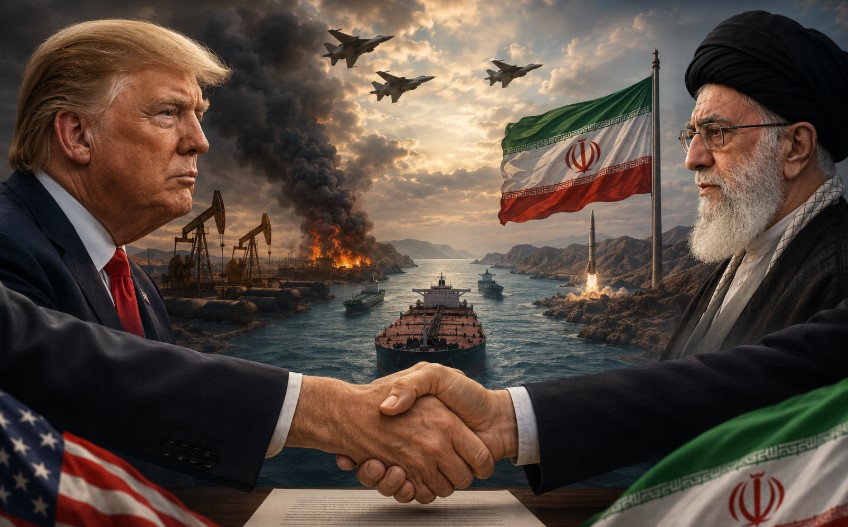
Washington believes a 14-point deal could stop the conflict, reopen Hormuz, and freeze Iran's nuclear ambitions, but Tehran warns it still has "its finger on the trigger."
A World Holding Its Breath
The Iran US peace proposal that has quietly circulated between Washington and Tehran via Pakistani mediators may be the most consequential document of 2026. And the world is watching every word.
Speaking to reporters at the White House on Wednesday, President Donald Trump offered his most optimistic assessment yet of the ongoing negotiations. "We've had very good talks over the last 24 hours, and it's very possible that we'll make a deal," he said. He later told PBS that the war has a "very good chance of ending" though he made clear the alternative was grim.
The stakes could not be higher. A fragile ceasefire has been in place since April 8, but it has never felt stable. Both sides have maintained competing blockades in the Strait of Hormuz, the narrow waterway connecting the Persian Gulf to the Arabian Sea.
Why the Strait of Hormuz Changes Everything
Nearly 20 percent of all global oil and gas exports pass through the Strait of Hormuz. When that corridor chokes, energy markets feel it immediately. Since Iran began blocking most commercial shipping in late February, gasoline prices in the United States have surged, and Trump is acutely aware that Republican voters will punish his party at the November midterm elections if prices remain elevated.
Oil markets jolted sharply when Axios reported Wednesday that the two sides were "getting close" to agreement on the 14-point framework. Stock indices jumped and crude prices fell on the news. The message from financial markets was blunt: a deal reopens the arteries of global energy supply.
What the 14-Point Proposal Actually Says
According to reporting by Axios and confirmed in broad strokes by Iranian state media, the framework under discussion would require Iran to halt uranium enrichment for at least 12 years and commit to not developing a nuclear weapon. In return, the United States would lift sanctions on Iran and release billions of dollars in frozen Iranian assets. Both sides would dismantle their competing blockades, and the Strait of Hormuz would reopen to all shipping within 30 days of signing.
Iran's 14-point counterproposal, submitted to Pakistan last week, broadly mirrors these terms but insists on resolving the war and the shipping standoff first, with nuclear talks deferred to a later phase. Washington has resisted that sequencing. The nuclear issue remains the most stubborn gap between the two capitals.
Iran's Warning: "Finger on the Trigger"
Tehran is not playing from a position of weakness, and its officials have made that unmistakably clear. Senior Iranian parliament member Ebrahim Rezaei dismissed the reported US framework as "more of an American wishlist than a reality." His warning carried real menace. "Iran has its finger on the trigger and is ready; if they do not surrender and provide the necessary concessions, we will deliver a harsh and regrettable response," Rezaei said.
Iran's Foreign Ministry spokesperson Esmaeil Baqaei said Thursday that Tehran is still reviewing the proposal and would present its response through Pakistani mediators. There was no immediate timeline offered.
Israel, Hezbollah, and the Regional Equation
Israeli Prime Minister Benjamin Netanyahu said he would speak with Trump on Wednesday, adding that both leaders agreed that all enriched uranium must be removed from Iran. Netanyahu has been unambiguous about his red lines since the war began with US and Israeli strikes on February 28.
The Lebanon dimension adds another layer of complexity. Iran's 14-point proposal calls for ending all hostilities, including in Lebanon, where Hezbollah remains armed and restless. Any durable agreement must account for that front.
A Pakistani government official, speaking to the media before Trump's Wednesday statement, said the prospect of a proposal to end the war was "very likely in the coming days." Pakistan has played a quiet but critical role throughout, shuttling documents between two governments that refuse to speak directly.
The Nuclear Red Line
Trump's position on nuclear enrichment has been consistent and non-negotiable: Iran cannot have nuclear weapons. "If we get there, they can't have nuclear weapons," he told reporters plainly.
A 12-year moratorium on enrichment would represent a significant concession by Tehran, which has enriched uranium to levels with no plausible civilian application and has repeatedly obstructed international inspectors. For Washington and Jerusalem, this is the core issue. For Tehran, agreeing to it without robust security guarantees amounts to strategic disarmament under coercion.
Conclusion: The Distance Between a Deal and a Disaster
The emergence of the Iran US peace proposal marks the clearest diplomatic opening since this conflict began. But clarity and resolution are not the same thing. Trump has stated bluntly that if Iran does not agree, "the bombing starts" at a "much higher level." Tehran, for its part, refuses to be dictated to.
The world now stands at an exact midpoint between diplomacy and catastrophe. A signed agreement would reopen one of the planet's most critical trade routes, stabilize global oil prices, and pause a nuclear escalation that has alarmed capitals from London to Beijing. A breakdown would do the opposite. The next 48 hours may determine which direction history moves.


Comments (0)
Leave a Comment
No comments yet
Be the first to comment