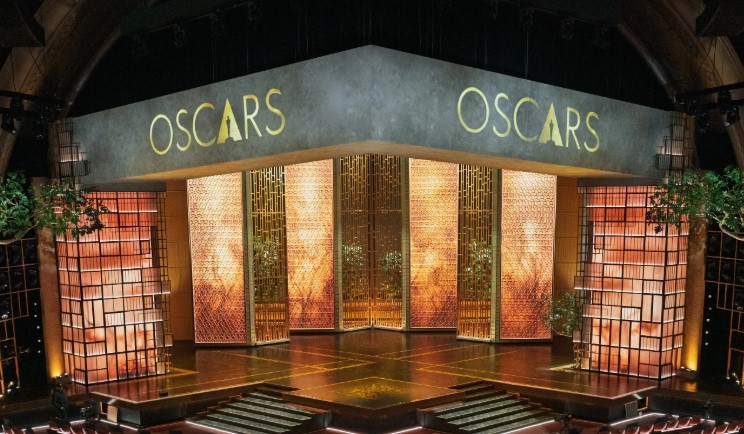
On March 15, 2026, two casting directors walked onto the stage at the Dolby Theatre in Hollywood to accept the very first Oscar ever awarded for their craft. It was a moment three decades in the making and the opening chapter of what promises to be a significant reshaping of how the film industry recognizes its unsung architects.
The Academy of Motion Picture Arts and Sciences has introduced the Academy Award for Achievement in Casting, making the 98th ceremony the first to feature 24 competitive categories. Alongside it, a second major announcement is already confirmed: Achievement in Stunt Design will debut at the 100th Oscars in 2028. Together, these two additions represent the most consequential expansion of the Academy Awards in a generation.
Quick Facts
• 25 years since the last new competitive Oscar category was introduced (2001)
• 24 total competitive categories at the 98th Academy Awards, 2026
• 30+ years the stunt community lobbied before gaining Academy recognition
What Is It: Best Casting, A New Award, A Very Old Craft
Casting directors are the professionals who translate a script's characters into real human beings. They work with directors and producers to identify, audition, and ultimately select every member of a film's acting ensemble from the lead to the smallest supporting role. It is one of the earliest and most consequential creative decisions in filmmaking, yet until 2026, it had never received its own Oscar.
The Academy's official criteria require nominees to demonstrate significant engagement and collaboration with a film's director and producers in the creative consideration and selection of the actors who comprise the acting ensemble. In practice, this means recognizing the full scope of the craft: the chemistry-building, the risk-taking on unknown talent, and the interpretive work of matching a performer's specific energy to a role.
Key Fact:
Only one casting director had ever received an Oscar before 2026. Lynn Stalmaster, who cast films including Coming Home and Kramer vs. Kramer, received an honorary Academy Award in 2016. He remains the only casting director to have been Oscar-recognized prior to the new competitive category a striking illustration of how long the craft went unacknowledged.
Background and History: Thirty Years of Campaigning, One Vote
The journey to this moment was neither swift nor simple. The Academy rejected a casting category outright in 1999. The Casting Directors Branch of AMPAS was only established in 2013, giving approximately 160 professionals their own branch within the organization for the first time. From that platform, branch governor Richard Hicks and others spent years building the institutional case.
Timeline
• 1999:
Academy Board rejects a proposal for a casting category for the first time.
• 2013:
AMPAS establishes the Casting Directors Branch, giving the community a formal voice within the Academy.
• 2019-20:
BAFTA introduces its own Best Casting award, increasing pressure on Hollywood's Academy to follow suit.
• February 2024:
AMPAS Board of Governors approves the new category. Academy CEO Bill Kramer and President Janet Yang call it an exciting milestone.
• March 15, 2026:
The inaugural Oscar for Achievement in Casting is awarded at the 98th Academy Awards ceremony.
Quote: "We're finally at the moment where casting is recognized as a craft alongside all the others. It's something the casting community has been hoping for 30 years." - Richard Hicks, Governor, AMPAS Casting Directors Branch
How It Works: The Voting Process
Nominees for Best Casting are determined exclusively by the Casting Directors Branch. The process begins with a shortlist of ten eligible films, followed by bake-off screenings held in Los Angeles, London, and New York. At these events, Academy voters watch curated excerpts that illustrate each nominee's casting choices, paired with recorded Q&A sessions from the casting directors themselves.
Branch governor Hicks has emphasized that the bake-offs are designed to steer voters toward a deeper understanding of the craft away from simply rewarding the most visibly star-studded ensemble, and toward recognizing the subtler alchemy of well-matched performers. Final voting is then opened to all eligible Academy members across all branches.
First-Ever Best Casting Nominees : 98th Academy Awards (2026)
• Sinners - Francine Maisler
• Hamnet - Nina Gold
• Marty Supreme - Jennifer Venditti
• One Battle After Another - Cassandra Kulukundis
• The Secret Agent - Gabriel Domingues
Coming in 2028: Achievement in Stunt Design
If the casting award represents a long-overdue reckoning with creative labor, the incoming stunt category is something even more striking: recognition of a profession that has sustained physical harm in service of cinema for over a century. The Academy announced in April 2025 that the 100th Oscar ceremony in 2028 will include Achievement in Stunt Design after rejecting a Best Stunt Coordination proposal every single year from 1991 to 2012.
Director David Leitch, himself a former stunt performer who directed The Fall Guy (2024), a film that deliberately spotlighted the stunt community is credited as a key figure in accelerating the proposal. The ambition to get stunts recognized has been around for a couple of decades, Leitch has said. It just never got the traction it deserved. His advocacy, combined with a growing public conversation about stunt worker safety and the scale of modern action filmmaking, finally moved the needle.
Why This Matters Now: The global box office is increasingly driven by action and franchise films where stunt design is not incidental, it is the primary creative experience. Sequences in films like Mad Max: Fury Road, the Mission: Impossible series, or Everything Everywhere All at Once required months of choreographic design, engineering, and physical execution. The absence of an Oscar category has long signaled that the Academy considered this work craft rather than art. The 2028 category reverses that judgment entirely.
Is This Recognition Really Needed? Yes, Here's Why?
The question of whether awards create value or merely reflect it is perpetual. In this case, the evidence strongly suggests that recognition changes behavior. When BAFTA introduced Best Casting in 2019, it triggered a discernible shift in how British productions approached the process directors became more vocal about their casting directors' contributions in promotional materials, and the profession gained measurable leverage in pay negotiations.
The Oscar carries considerably more weight. The institutional signal sent by AMPAS affects film financing, credits, contracts, and the way studios value creative roles. For casting directors, who have historically struggled to be credited on marketing materials an Oscar category formalizes their status as co-authors of a film's success. For stunt professionals, recognition could directly influence safety protocols and financial structures in an industry where performers regularly risk their lives for takes that may or may not appear in the final cut.
There is also a pipeline argument. When a discipline has an Oscar, young professionals are more likely to enter it, more likely to receive mentorship, and more likely to be taken seriously by institutions. The downstream effects of visibility are real.
Current Scenario: 2026 and Beyond
The 98th Oscars took place against a backdrop of remarkable creative vitality. Ryan Coogler's Sinners entered the night with 16 nominations, the most in Academy history breaking records previously held by All About Eve, Titanic, and La La Land. Paul Thomas Anderson's One Battle After Another led the winners with six awards, including Best Picture. The ceremony's declared theme, humanity, was underscored by the creative team's explicit celebration of human craft over technological shortcutting a pointed message in an era of rising AI-generated content in the industry.
In that context, adding Best Casting feels not only overdue but culturally timely. The award affirms that the irreducible human judgment involved in selecting performers the intuition, experience, and collaborative intelligence of a casting director is precisely the kind of work the film industry should be honoring as automation reshapes creative workflows.
With Achievement in Stunt Design confirmed for 2028, the Academy is signaling a broader philosophical shift: that behind-the-scenes professionals who shape the audience's experience deserve the same platform as the actors and directors in front of them. For an institution nearly 100 years old, that is a meaningful evolution and one that, by most accounts, is only just beginning.


Comments (0)
Leave a Comment
No comments yet
Be the first to comment