After 65 years as a school curriculum body, NCERT has been elevated to a degree-granting university. The analytical question is not what changed on paper but what it signals for teacher quality, education research, and India's global academic standing.
Mission-Critical Facts at a Glance
Notification Date: March 30, 2026
Notified By: Ministry of Education, Dept. of Higher Education
Legal Basis: Section 3, UGC Act 1956
UGC Approval: January 2026
Category: Distinct / De Novo
Institutions Covered: HQ New Delhi + 6 constituent units

Why This Decision Is More Than a Bureaucratic Upgrade
The Ministry of Education issued the official notification on March 30, 2026, granting NCERT the status of an institution deemed to be a university under a distinct category, after the UGC approved an expert committee recommendation in January 2026. The legal mechanism used is Section 3 of the UGC Act, 1956, the same route through which institutions like TISS and BITS Pilani operate. But the "distinct category" label matters: it places NCERT in a protected academic space, separating it from conventional deemed universities while granting the same degree-granting authority.
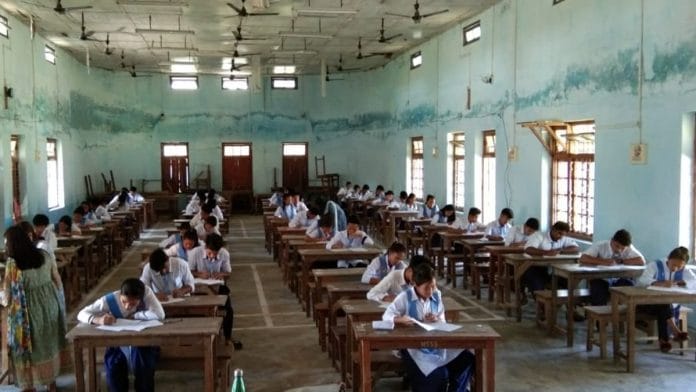
The practical shift is significant. Before this, NCERT's Regional Institutes of Education had to seek affiliation from other universities to offer B.Ed., M.Ed., and other programmes. They can now operate independently while maintaining regulatory compliance. This removes a long-standing structural dependency that slowed down programme innovation and limited the RIEs from developing locally relevant teacher education curricula.
The Six Institutions Now Inside This Framework
Institution | Location |
|---|---|
NCERT Headquarters | New Delhi |
Regional Institute of Education | Ajmer, Rajasthan |
Regional Institute of Education | Bhopal, Madhya Pradesh |
Regional Institute of Education | Bhubaneswar, Odisha |
Regional Institute of Education | Mysuru, Karnataka |
Regional Institute of Education | Shillong, Meghalaya |
Pandit Sunderlal Sharma Central Institute of Vocational Education | Bhopal, M.P. |
The NEP 2020 Connection: This Was Always the Plan
The move is closely linked to the broader reforms envisioned under the National Education Policy 2020, which emphasises multidisciplinary education, institutional autonomy, and research-led learning. NEP 2020 explicitly called for creating a stronger teacher education ecosystem grounded in research. Elevating NCERT to university status is, analytically speaking, a structural response to that policy demand rather than an isolated administrative decision.
The trajectory of this decision goes back three years. In 2023, Union Education Minister Dharmendra Pradhan had signalled the government's intention to expand NCERT's mandate. NCERT submitted its compliance report in November 2025, which was then reviewed by a UGC expert committee before final approval. That timeline reveals the deliberate nature of this upgrade. It was not a reactive policy move.
"The Ministry has directed NCERT to take steps towards launching research programmes, including doctoral and innovative academic courses, while diversifying into emerging fields in alignment with the National Education Policy 2020." - Ministry of Education, Official Notification, March 30, 2026
What NCERT Can Do Now That It Could Not Do Before
The new status empowers NCERT to independently design and launch undergraduate, postgraduate, doctoral, and diploma-level programmes, award degrees in its own name, expand research initiatives in pedagogy, curriculum development, and educational technology, and establish off-campus or offshore centres under UGC guidelines.
However, the autonomy has clear boundaries. The conditions prevent NCERT from engaging in any activities that are commercial and profit-making in nature. All academic courses must conform to norms prescribed by the UGC and relevant statutory bodies. NCERT will also need NAAC and NBA accreditation and must participate in NIRF rankings, bringing it under the same accountability architecture as other higher education institutions.

Does This Affect School Students Right Now?
The short answer is no, not immediately. NCERT's role in developing school textbooks, the National Curriculum Framework, and CBSE-aligned content continues without interruption. The university status opens a parallel, higher education layer on top of its existing school education responsibilities.
The long-term impact, however, is real. Better-trained teachers directly shape classroom quality. If NCERT's teacher education programmes become more rigorous and research-informed under this new framework, the downstream effect on student learning outcomes across government and CBSE schools could be substantial over the next five to ten years.
The Risks That Experts Are Watching
Some educationists have raised concerns about balancing institutional autonomy with regulatory oversight. Maintaining academic freedom, ensuring transparency in programme design, and preventing any dilution of NCERT's primary focus on school education will be critical. The risk of mission drift, where a historically school-focused body becomes distracted by the administrative load of running a university, is a legitimate concern that implementation will need to address carefully.




Comments (0)
Leave a Comment
No comments yet
Be the first to comment