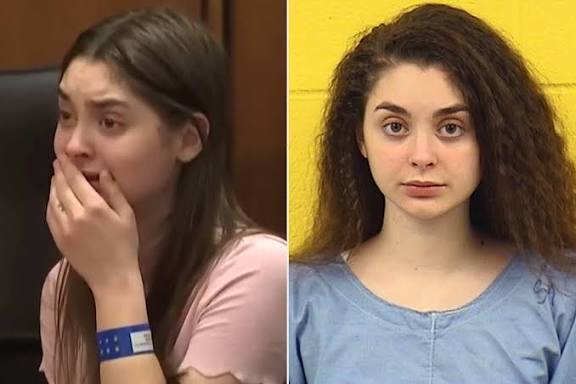
When a 2018 Toyota Camry slammed into the brick wall of a Strongsville, Ohio industrial building at close to 100 miles per hour in the early morning of July 31, 2022, local authorities initially approached the scene as a devastating traffic collision. As forensic technology, vehicle telemetry, and digital messaging records converged, prosecutor allegations shifted the narrative around the Mackenzie Shirilla crash from a sudden vehicular tragedy to a double homicide.
Public interest surrounding the case re-emerged following the release of the Mackenzie Shirilla crash documentary on Netflix. Titled The Crash, the film re-examines the evidentiary foundation that led to the convictions, raising a persistent public debate. Was the incident a tragic medical blackout or a calculated act. An analytical look at the trial record, forensic data, and appellate history clarifies how the judicial system reached its final conclusion.
Forensic Telemetry and the Evidentiary Record
In modern vehicular homicide prosecutions, black box event data recorders often provide the objective, moment-by-moment record that anchors the state's case.
Vehicle Telemetry vs. Medical Emergency Claims
The defense maintained that the driver suffered a sudden neurological episode related to postural orthostatic tachycardia syndrome, a blood pressure disorder that can cause fainting. Forensic analysis of the vehicle's event data recorder presented data prosecutors said contradicted the loss-of-consciousness defense.
- Accelerator pedal position: the recorder showed the accelerator engaged at 100 percent capacity for the final 4.6 seconds before impact, with the car reaching a peak speed of roughly 97 miles per hour.
- Braking activity: zero brake application was logged prior to the collision.
- Steering inputs: the vehicle briefly veered before the recorder showed a straight, sustained trajectory into the building rather than an uncontrolled drift.
- Reconnaissance history: phone location data placed Shirilla's phone at the same intersection three days before the crash, along what the court described as an obscure route not routinely taken by her.
The sequence investigators laid out to jurors and, ultimately, to the trial judge, answering who died in the Mackenzie Shirilla crash and why, ran as follows:
- A controlled turn onto Progress Drive.
- Continuous full accelerator engagement.
- Zero brake application recorded by the event data recorder.
- Impact with the brick building at close to 100 miles per hour.
- Forensic reconstruction that ruled out mechanical failure as a cause.
Digital Communications and State of Mind
To establish specific intent for murder charges rather than a lesser homicide charge, prosecutors submitted tens of thousands of text messages and recorded jail calls between the parties, drawn from a set that ultimately totaled roughly 93,000 messages reviewed during the trial. The communications detailed an escalating pattern of volatility, including messages in which Shirilla told Russo she would crash the car.
Under Ohio law, proving purpose requires showing that a person acted with a specific intention to cause a precise outcome. The combination of the earlier route scouting, the messages, and the sustained accelerator engagement gave the bench trial judge the factual basis prosecutors argued was needed to find intent beyond a reasonable doubt.
Trial Mechanics, Sentencing, and Post-Conviction Appeals
The procedural choices made by the defense shaped how this evidence was ultimately weighed in court.
Bench Trial Strategy and Judicial Findings
The defense elected to waive a jury trial, opting instead for a bench trial before Cuyahoga County Common Pleas Court Judge Nancy Margaret Russo, who is not related to victim Dominic Russo. In complex, evidence-heavy trials, a bench trial is sometimes chosen to keep the focus on technical and forensic standards rather than jury emotion.
After reviewing the evidence, Judge Russo delivered a guilty verdict on twelve felony counts on August 14, 2023, including four counts of murder, four counts of felonious assault, two counts of aggravated vehicular homicide, one count of drug possession, and one count of possessing criminal tools. The court described the driver's actions as controlled, methodical, and purposeful, and Shirilla was sentenced to life in prison with parole eligibility beginning in 2037, with her terms running concurrently. She is currently housed at the Ohio Reformatory for Women in Marysville.
Appellate Proceedings and Constitutional Challenges
Following the trial, post-conviction challenges have focused on several arguments.
Ineffective assistance of counsel: claims that trial attorneys did not fully present medical expert testimony regarding POTS and fainting disorders.
Juvenile transfer procedure: arguments that moving the case from juvenile court to adult court, given Shirilla's age of 17 at the time of the crash, deserved closer procedural review.
Sufficiency of the evidence: claims that prosecutors failed to fully disprove an alternative medical emergency explanation.
Ohio appellate courts have so far upheld the conviction, finding the trial court had sufficient credible evidence to support a finding of purposeful intent. The documentary's producers have said no major legal developments had occurred by the time filming concluded.
The 2026 Appeal and Family Response
Why is Mackenzie Shirilla trending again in 2026 traces back largely to this stretch of renewed legal activity. Shirilla's legal team filed a fresh appeal in May 2026, arguing that new medical evidence about possible blackouts had never been properly investigated by her original attorney. The Ohio Supreme Court rejected that appeal in June, partly on procedural grounds after a filing deadline was missed, and a subsequent request for reconsideration was also denied. Her attorneys have since pursued a habeas corpus petition, filed in late July 2026.
Family reaction has remained sharply divided.
Shirilla's parents, Natalie and Steven Shirilla, have been her most vocal defenders, maintaining publicly that no evidence proves the crash was intentional.
Mackenzie Shirilla sister Danielle Shirilla has largely stayed out of the public conversation.
Dominic Russo's sister, Christine Russo, has been critical of the documentary and has pushed for legislation informally known as Dom's Law, aimed at preventing Shirilla from profiting off the case after any eventual release.
Legal analysts following the habeas process note that this type of petition faces a high bar, since federal courts generally defer to state findings of fact unless a clear constitutional violation can be shown.
Conclusion
Re-examining the Mackenzie Shirilla crash documentary through a legal lens shows how digital forensics intersect with statutory definitions of criminal intent. Public debate continues to move between tragic misadventure and intentional violence, but the judicial record itself rests on physical telemetry, route data, and explicit digital communications that a court has already weighed and ruled on. As post-conviction appeals continue to test the case's procedural boundaries, it stands as a notable example of how modern vehicle data can be used to establish state of mind in a serious criminal prosecution.
TO explore the More Crime story and facts: Read More..



Comments (0)
Leave a Comment
No comments yet
Be the first to comment