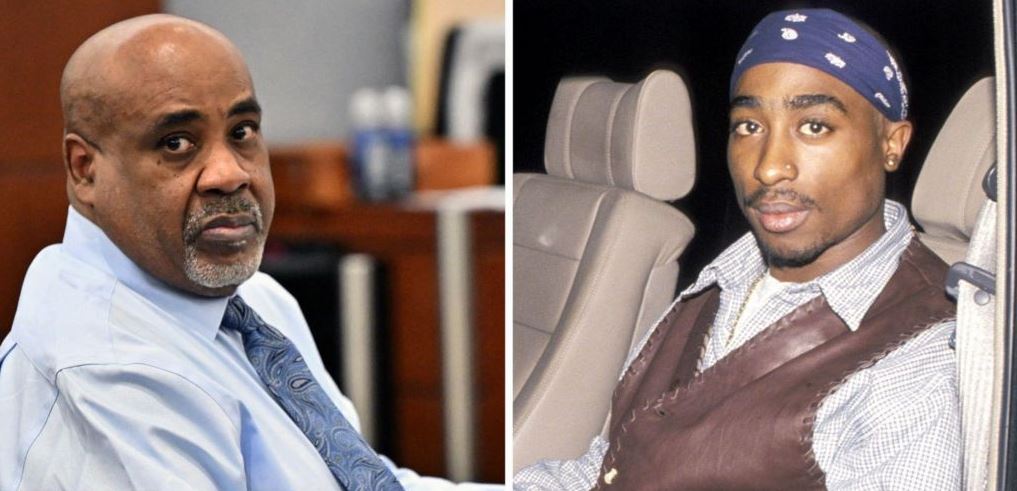
Nearly 30 years after Tupac Shakur was fatally shot in Las Vegas, the case has finally reached a courtroom. Duane “Keffe D” Davis, the only person ever charged in connection with the rapper’s killing, is now on trial in Clark County, Nevada.
Opening statements began on August 17, 2026. Davis has pleaded not guilty. Prosecutors allege that he helped organize the shooting as an act of revenge, while his defense argues that his past statements have been exaggerated or fictionalized.
The significance of the trial is not simply that an old murder case has returned to court. It is that prosecutors are now asking a jury to decide whether Davis's own words, combined with other evidence, are enough to establish his criminal responsibility beyond a reasonable doubt.
The Night Tupac Was Shot in Las Vegas
On September 7, 1996, Tupac was in Las Vegas after attending a Mike Tyson boxing match at the MGM Grand.
Earlier that evening, Tupac and members of his entourage were involved in a physical confrontation with Orlando “Baby Lane” Anderson, who was Davis's nephew. Prosecutors say that confrontation became the motive for the later shooting.
Later that night, Tupac was riding in a BMW driven by Marion “Suge Knight” when a white Cadillac pulled alongside them near the Las Vegas Strip. Gunfire followed.
Tupac was hit multiple times and died six days later, on September 13, 1996, at age 25. Knight survived the attack.
A Murder Investigation That Went Cold
Three other men were allegedly inside the Cadillac with Davis, including Anderson and DeAndrae “Freaky” Smith. All three are now dead, leaving Davis as the only surviving person from the group prosecutors associate with the shooting.
That did not mean investigators had no theories.
Instead, the difficulty was turning years of conflicting accounts, gang relationships and public speculation into evidence that could satisfy a criminal court.
The case changed when Davis began publicly discussing his connection to the events.
The investigation gained new momentum
Davis made statements about the shooting in interviews and later co-wrote the 2019 memoir Compton Street Legend. Prosecutors now rely heavily on those accounts.
In the memoir, Davis acknowledged being in the Cadillac and described obtaining the firearm that was later used during the attack. He has not admitted to personally firing the fatal shots.
Authorities arrested Davis in September 2023 and charged him with murder with a deadly weapon, alleging that he orchestrated the attack.
The Evidence That Put Keffe D Back in the Spotlight
The unusual feature of this prosecution is that some of its most important evidence comes from Davis's own statements.
Prosecutors argue that Davis repeatedly described his involvement over the years, effectively providing investigators with information that helped revive the dormant case. Reuters reported that prosecutors portray him as the person who organized the attack and obtained the firearm, rather than the individual who pulled the trigger.
A Nevada judge also ruled before trial that Davis's 2019 memoir could be presented to jurors. The defense had sought to prevent its use.
Inside the Prosecution’s Case
The prosecution's central theory is straightforward: the shooting was retaliation.
Prosecutors allege Davis wanted revenge after Tupac and his associates attacked Anderson at the MGM Grand. They say Davis then helped arrange the shooting from the white Cadillac.
The legal argument does not require prosecutors to prove that Davis personally fired the gun. He is being prosecuted under theories that can hold an alleged participant responsible for a killing even when that person was not the shooter.
- Davis's 2019 memoir
- His previous police interviews
- Media interviews and public statements
- Evidence concerning the MGM Grand confrontation
- Testimony about the white Cadillac
- Evidence concerning the alleged procurement of the firearm
- Statements from people connected to the investigation
The prosecution has described Davis as an alleged organizer or "on-site commander" rather than the gunman.
The Statements That Became Central to the Trial
A particularly important development came in July 2026, when Judge Carli Kierny ruled that a 2008 police interview with Davis could be used at trial.
That decision matters because the defense argued that Davis believed the interview was confidential and that he had been told he would not be prosecuted based on what he said.
The prosecution takes a different position, arguing that Davis later chose to discuss the same events publicly, including through his memoir.
The court's decision allows jurors to hear the disputed material. It does not mean the statements have been proven truthful.
The Defense Challenges the Prosecution’s Evidence
Davis has pleaded not guilty, and his defense is attacking the credibility of the prosecution's case.
A central defense argument is that Davis's public accounts should not automatically be treated as factual confessions.
His lawyers have argued that parts of his memoir were fictionalized or shaped for commercial purposes. They have also challenged the reliability and meaning of his previous statements.
That creates one of the trial's most important factual disputes.
Did Davis reveal the truth about Tupac's killing, or did he tell embellished stories that prosecutors are now interpreting as admissions?
The jury will have to evaluate the evidence rather than simply accepting either side's narrative.
The Questions the Jury Must Decide
The trial ultimately comes down to proof rather than decades of public theories.
Jurors must determine whether prosecutors have established Davis's criminal responsibility beyond a reasonable doubt.
They will have to consider:
- Whether Davis helped organize the shooting
- Whether his statements accurately describe his involvement
- Whether the prosecution's interpretation of those statements is credible
- Whether the evidence connects him to the alleged murder plan
- Whether prosecutors have met the required legal standard for conviction
The case may also include testimony from Suge Knight, who was with Tupac during the shooting and survived.
The Facts Established So Far
Several facts are already clear.
Tupac was shot in Las Vegas on September 7, 1996, and died six days later. Davis is the only person who has been formally charged in connection with the killing, and he has pleaded not guilty.
It is also established that Davis has publicly discussed his connection to the events and that prosecutors are using those statements as a major part of their case.
What has not been established is that Davis is legally responsible for Tupac's murder. That remains the question before the jury.
The trial therefore should not be described as proof that the Tupac murder has been solved. It is the first major courtroom test of the prosecution's theory in nearly three decades.
For a case surrounded by rumors, conspiracy theories and competing narratives, the distinction is crucial.
Conclusion
Nearly three decades after Tupac Shakur's murder, the case has moved from years of speculation into a courtroom where the evidence can finally be tested under the law. Duane “Keffe D” Davis is accused of helping organize the attack, but he has pleaded not guilty and has not been convicted.
The prosecution's case relies heavily on Davis's previous statements, his memoir and evidence surrounding the events in Las Vegas in 1996. The defense disputes the interpretation and reliability of that material.
For now, the Tupac murder case should not be described as officially solved. The decisive question is whether prosecutors can prove Davis's criminal responsibility beyond a reasonable doubt. Until the jury reaches a verdict, the distinction between allegation, evidence and proven fact remains central to the case.




Comments (0)
Leave a Comment
No comments yet
Be the first to comment