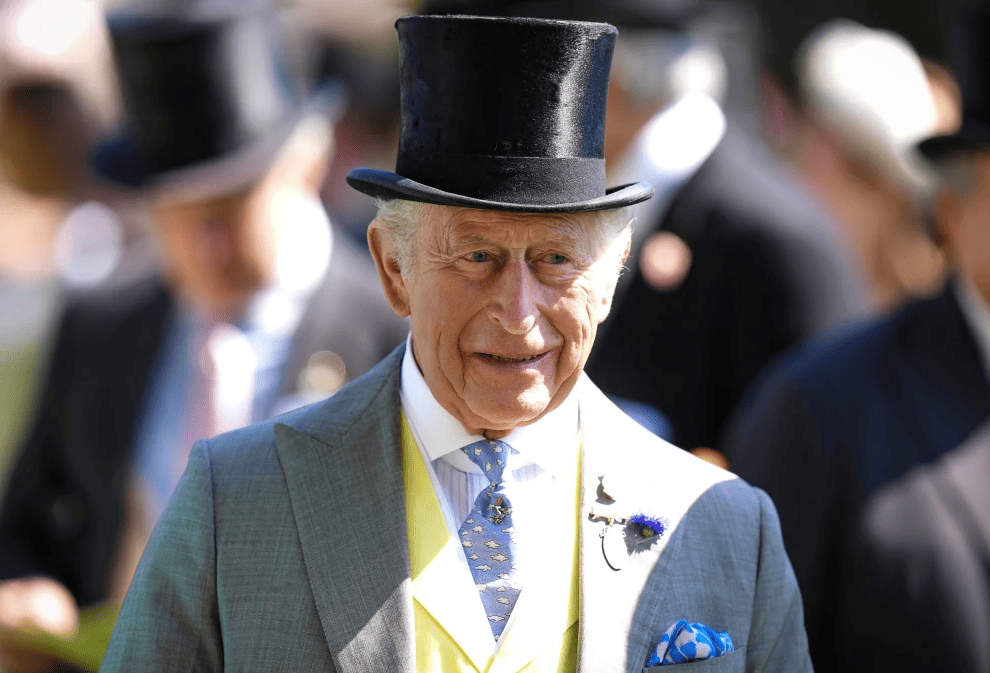
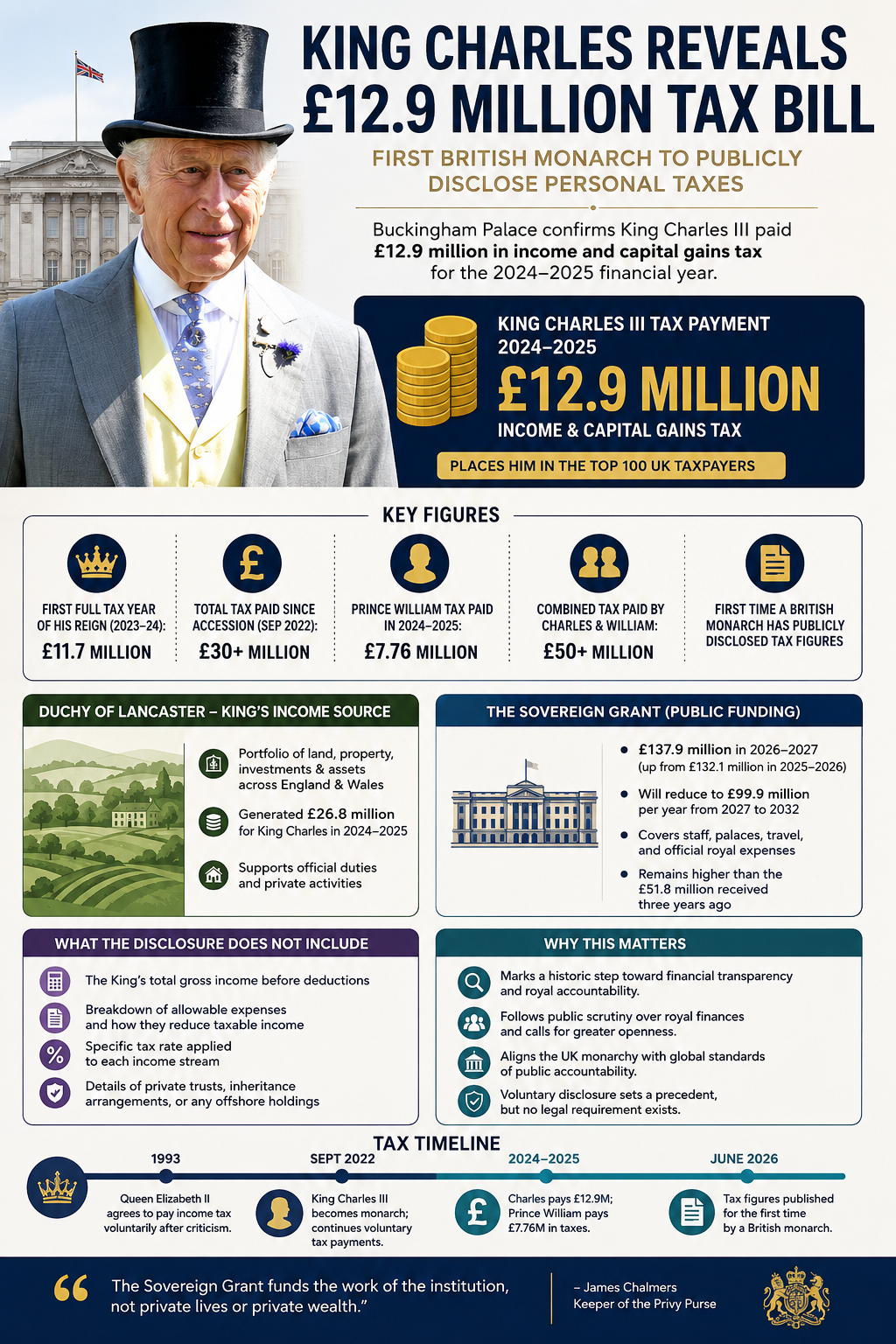
Buckingham Palace released its annual Sovereign Grant Report on June 26, 2026, confirming that King Charles III paid £12.9 million in personal income and capital gains tax during the 2024-2025 financial year. This is the first time a reigning British monarch has voluntarily published their personal tax figures. The decision places Charles among the UK's top 100 taxpayers for that period and reflects a calculated shift in how the monarchy manages its public image during a period of growing financial scrutiny.
What the Royal Tax Report Actually Shows
In the first full tax year of Charles's reign, 2023-2024, he paid £11.7 million. That figure rose to £12.9 million in 2024-2025, representing a year-on-year increase of roughly 10.3 percent. For context, UK wage growth excluding bonuses over the same period was 3.4 percent.
Key figures from the disclosure:
- Charles has contributed more than £30 million to the public coffers since his accession in September 2022.
- He received £26.8 million in private income from the Duchy of Lancaster in 2024-2025, a diversified portfolio of land, property, and investments.
- Prince William paid £7.76 million in income and capital gains tax in 2024-2025 and £8.34 million the previous year, totalling more than £20 million since he became heir to the throne.
- Together, Charles and William have paid more than £50 million in tax since Charles became King and William inherited the Duchy of Cornwall.
Duchy of Lancaster: The King's Core Private Income
The Duchy of Lancaster consists of land, commercial properties, agricultural assets, and investment portfolios across England and Wales. Profits from the estate form a significant part of the monarch's private income and help fund both official and private activities. The palace has not confirmed whether Charles pays at the 45 percent higher rate or disclosed how deductible expenses reduce his taxable income, which limits the public value of the disclosure.
Why This Step Matters for Royal Accountability in 2026
Neither the King nor the Prince of Wales is legally required to pay tax. The practice has continued voluntarily since 1993, when Queen Elizabeth II and the then Prince of Wales agreed to begin paying income tax following criticism over royal finances. Charles has now gone further by publishing exact figures for the first time in British history.
The decision comes after scandals involving Prince Andrew thrust royal family finances into the spotlight, prompting calls for greater accountability from the publicly funded institution. The Commons Public Accounts Committee wrote to the Crown Estate and Treasury in October 2025 seeking further financial details, and a new inquiry into the former prince's living arrangements is ongoing after it emerged he was paying only a peppercorn rent.
The Sovereign Grant Picture
Beyond private income, the monarchy draws significant public funding through the Sovereign Grant:
- The Sovereign Grant rose to £137.9 million in 2026-2027, up from £132.1 million in 2025-2026.
- From 2027 to 2032, the grant will drop to £99.9 million per year with no further refurbishment spending planned.
- The grant remains substantially above the £51.8 million received three years ago.
- Charles and Camilla will continue living at Clarence House after the £369 million Buckingham Palace refurbishment concludes next year.
What the Disclosure Does Not Include
The published figures leave several questions unanswered:
- The King's total gross income before deductions.
- A breakdown of allowable expenses and how they reduce taxable income.
- The specific tax rate applied to each income stream.
- Details of private trusts, inheritance arrangements, or any offshore holdings.
The latest disclosure did not include breakdowns of how the figures were calculated, meaning it does little to lift the veil on the true complexity of royal finances.
What Critics and Supporters Say About Royal Transparency
Graham Smith, chief executive of anti-monarchy campaign group Republic, told Newsweek the report was "deeply dishonest," stating that without knowing what Charles actually earns, it is impossible to judge whether the tax paid is appropriate.
Green Party MP Sian Berry is preparing a Freedom of Information amendment that would bring the King, the Royal Household, the Royal Archive, and the Duchies of Cornwall and Lancaster within disclosure laws, calling it "a huge step for transparency in what has been a shadowy institution for far too long."
Buckingham Palace, for its part, said the publication of the figures was a personal decision intended to encourage wider understanding of royal accountability. The Keeper of the Privy Purse, James Chalmers, stated that the Sovereign Grant is subject to Treasury oversight, independent audit, and strict value-for-money requirements, insisting it funds "the work of the institution, not private lives or private wealth."
Where This Fits in the Broader Governance Picture
Constitutional monarchies across Europe handle royal financial disclosure differently. The Netherlands and Sweden publish household accounts with varying levels of detail. The UK's move aligns Charles with a wider push in European democracies for publicly funded institutions to justify their costs in measurable terms. From a governance standpoint, voluntary disclosure without a legal framework remains a partial solution. If future monarchs choose not to publish, there is nothing to stop them.



Comments (0)
Leave a Comment
No comments yet
Be the first to comment