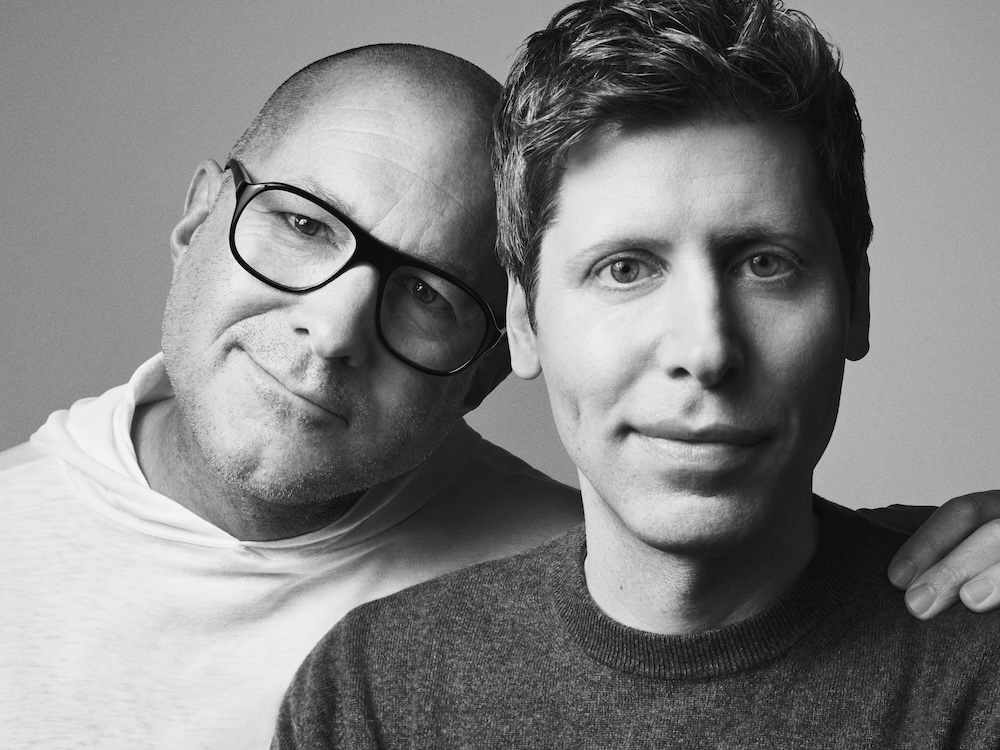
The Central Question: What Does AI Look Like?
The Jony Ive AI device project begins with a deceptively simple question that nobody in the technology industry has answered convincingly yet: what is the right physical form for artificial intelligence to live in?
The iPhone answered what mobile computing looks like. The MacBook answered what personal computing looks like. The iPod answered what portable music looks like. Each time, Jony Ive was the person who gave the answer its shape.
Now, as AI becomes the defining technology of the decade, there is no equivalent object. ChatGPT runs in a browser tab. Claude runs in a chat window. Gemini lives inside Google Search. All of them are software layers on top of hardware that was designed for something else entirely. As Sam Altman and Jony Ive wrote in their joint letter announcing the merger: "Despite this unprecedented capability, our experience remains shaped by traditional products and interfaces."
That gap between capability and physical experience is the design problem Ive has taken on. It may be the hardest of his career.
"I Have a Growing Sense That Everything Has Led to This Moment"
How the Partnership Between Ive and Altman Began
The collaboration started in 2024 when io Products, Inc. was founded by Jony Ive, Scott Cannon, Evans Hankey, and Tang Tan to develop hardware products using artificial general intelligence. In September 2024, the New York Times reported that Ive and LoveFrom were working with OpenAI on a device described as "less socially disruptive than the iPhone."
io raised USD 225 million from investors including Sutter Hill Ventures, the Emerson Collective, SV Angel, Maverick Ventures, and Thrive Capital before OpenAI acquired the company in May 2025 for USD 6.5 billion.
In their joint announcement, Ive said: "I have a growing sense that everything I have learned over the last 30 years has led me to this moment. While I am both anxious and excited about the responsibility of the substantial work ahead, I am so grateful for the opportunity to be part of such an important collaboration."
Altman's vision was equally direct: "What it means to use technology can change in a profound way. I hope we can bring some of the delight, wonder and creative spirit that I first felt using an Apple Computer 30 years ago."
These are not the words of a company launching a product. They are the words of two people who believe they are building a category.
What the Device Actually Is: The Smart Speaker, the Lamp, and the Glasses
Three Devices, One Vision
OpenAI is developing a smart speaker, a smart lamp, and considering AI glasses, according to The Information, with the speaker set to come out in early 2027.
The smart speaker has an integrated camera and is designed to learn information about who is using it and what is around them. It will include a facial recognition feature similar to Face ID, and users will be able to use it to make purchases. In an internal presentation, OpenAI employees were told that the speaker would observe users and suggest actions to help them achieve goals, such as suggesting an early bedtime ahead of a morning meeting.
The device is priced between USD 200 and USD 300, with a working prototype and finalised design already existing as of early 2026.
Altman has described the device as "peaceful," "an active participant," and something that would "make people feel joy." He also told employees it would be "the coolest piece of technology that the world will have ever seen." And critically, both Ive and Altman have said they do not want the device to have a screen.
"Peaceful" Is Doing a Lot of Work
The deliberate choice of "peaceful" as a design principle is worth examining analytically. The smartphone is not peaceful. It is engineered for engagement, attention, and notification. Every design decision in the modern smartphone optimises for time spent on the device.
The project increasingly resembles an attempt to define a third object in our lives: neither a smartphone nor a laptop, but a computational companion that activates when there is real value.
Ive's challenge is to design an object that is genuinely useful without being compulsively engaging. That is a more difficult design problem than making something beautiful. It requires restraint at every level of the product, and restraint is not something the technology industry has historically rewarded.
The Apple Alumni Network: Building the Next Apple Inside OpenAI
A Team Assembled From Silicon Valley's Best
One of the most analytically striking aspects of the OpenAI hardware project is who is building it.
Former Apple designer Evans Hankey is leading industrial design, with Ive making the final call on almost all design choices. Other former Apple employees working at OpenAI on hardware include Tang Tan and Scott Cannon. Eddy Cue's son Adam Cue is working on OpenAI software.
Engineer and interface designer Janum Trivedi joined the OpenAI x LoveFrom design team after previously working on SpringBoard at Apple, where he built Split View, Multitasking Drag and Drop, and iPad Pointer Gestures for iPadOS 15.
The hardware team at OpenAI is beginning to look like a reunion of Apple's product design and engineering core from its most innovative decade. Whether institutional culture transfers with the individuals is the unanswered question.
The Three Tensions That Could Derail the Project
Internal Design Conflicts, Legal Trouble, and the Weight of Expectation
Tension One: LoveFrom vs OpenAI Engineering
Some OpenAI staffers have complained that LoveFrom has been slow to revise its designs and shares little about its process with others working on devices within OpenAI. That division of responsibilities has also sparked tensions following the io acquisition, with complications integrating io members with OpenAI's existing hardware team.
This is a known pattern. Ive's design process at Apple was notoriously opaque and iterative, with the design studio functioning as a separate creative unit with authority over engineering. At OpenAI, the same dynamic creates friction because there is no Steve Jobs figure who has historically arbitrated between design authority and engineering urgency.
Tension Two: The "io" Trademark Collapse
A startup called Iyo sued OpenAI over the "io" trademark. OpenAI decided to abandon the "io" name entirely, and the company's lawyers confirmed it will not use the "io" brand for marketing or sale of any AI-enabled hardware products.
Losing a brand name at this stage of development is not trivial. The "io" branding had already appeared in a joint announcement letter signed "Sam and Jony" and in the official merger documentation. The replacement name and brand identity for the device family has not been confirmed publicly.
Tension Three: The Humane Lesson
The AI hardware space has one very visible cautionary example. Humane AI, founded by Apple veterans, launched its AI Pin in April 2024 to overwhelmingly negative reviews. Humane sold its assets to HP for USD 116 million in February 2025, less than one year after the AI Pin shipped.
The AI Pin failed because it was slower than a smartphone, had poor battery life, and required a subscription fee on top of the purchase price. Ive knows this history. His challenge is to deliver something compelling enough that the comparison never arises.
The Timeline: What to Expect and When
OpenAI Chief Global Affairs Officer Chris Lehane confirmed at Axios House Davos in January 2026 that OpenAI is "on track" to unveil its first device in the second half of 2026, though he did not commit to it going on sale in 2026.
Court filings from the Iyo trademark dispute confirm that OpenAI does not expect to ship its first hardware product to customers before the end of February 2027.
Manufacturing partner Foxconn is reportedly involved in production, with a potential move out of China toward Vietnam or the United States given supply chain risk considerations around export controls and trade tensions.
The realistic timeline for consumers: a formal product announcement in the second half of 2026, followed by a purchase availability date no earlier than Q1 2027.
"OpenAI Has the AI. Jony Ive Has the Product Language. What Remains Is Trust."
Why This Is Harder Than Designing the iPhone
At Apple, Ive designed hardware for software that already existed and had an established user relationship. People knew how to use a Mac. They understood a touchscreen phone. The design challenge was making the interaction beautiful and the hardware feel inevitable.
With the Jony Ive AI device, the user relationship itself does not yet exist. Nobody has an established intuition for how to interact with an ambient AI device that watches them, learns their patterns, and proactively suggests actions. The design must simultaneously teach the behaviour and make it feel natural.
What remains is to invent the rarest element: trust. If the device indeed arrives, it will not just be its functions that are assessed, but what it helps you avoid doing.
That is the real design brief. Not "make it beautiful." Not "make it smart." Make it trustworthy enough that people let it into their homes and their daily habits without feeling surveilled, manipulated, or replaced.
Jony Ive has designed icons. He has not yet designed trust. That may be the assignment that defines whether this project succeeds or joins a long list of AI hardware attempts that missed.
Conclusion: Jony Ive AI Device Is the Most Anticipated and Most Uncertain Gadget of the Decade
The Jony Ive AI device for OpenAI is the technology industry's most consequential design bet since the original iPhone. The partnership combines the world's most capable AI models with the designer who defined what consumer technology looks like for a generation.
The device exists. The prototype is finalised. The team is assembled. The timeline points to a 2026 unveiling and a 2027 sale.
What remains is the hardest part: convincing 8 billion people that AI deserves a physical presence in their homes. That is Jony Ive's toughest assignment yet. The world will find out if he solved it sometime before the end of this year.


Comments (0)
Leave a Comment
No comments yet
Be the first to comment