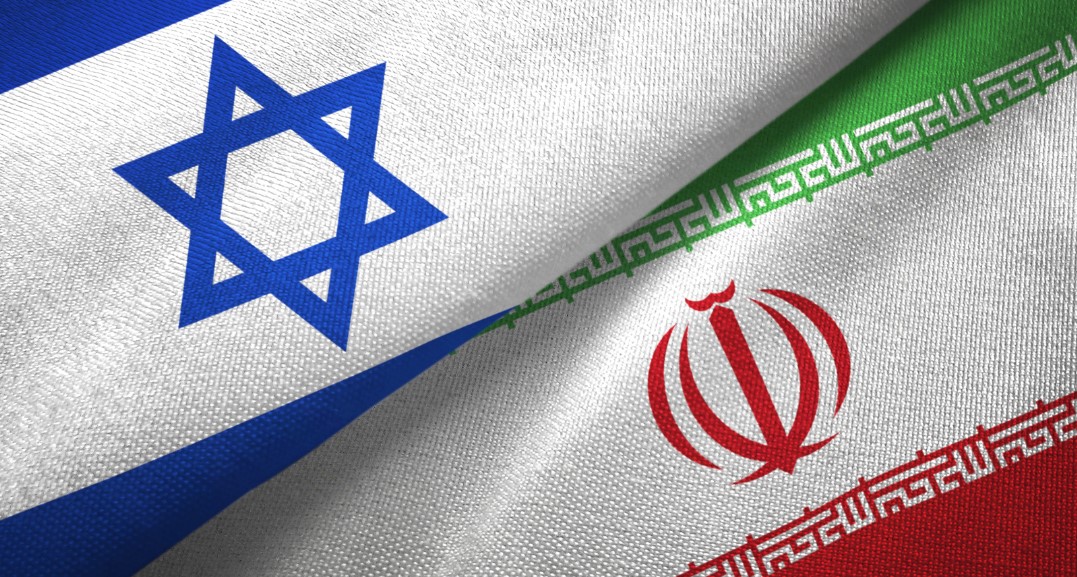
How Two Nations Went From Allies to Adversaries
To understand the war, one must first understand the hatred. Hatred this deep has a history.
When Israel and Iran Were Strategic Partners
It is difficult to imagine today, but for much of the twentieth century Israel and Iran were genuine strategic partners.
Under Shah Mohammad Reza Pahlavi, the two nations shared intelligence, traded energy, and even collaborated on a joint ballistic missile project known as Project Flower. Thousands of Israeli citizens lived in Tehran, and Israel’s national airline operated direct flights between the two capitals.
The partnership was built on a strategic concept known as the Periphery Doctrine, developed by Israeli Prime Minister David Ben-Gurion in the late 1950s. The idea was simple. Since Israel’s immediate Arab neighbors were hostile, the country would form alliances with non-Arab states on the outer edge of the Middle East.
Iran, Turkey, and Ethiopia became key partners.
Israeli intelligence agency Mossad helped train SAVAK, the Shah’s powerful secret police. Iranian oil flowed to Israel. Israeli military technology flowed back.
Key Fact
Iran was one of only two Muslim-majority countries to maintain de facto diplomatic relations with Israel during the 1960s and 1970s. The other was Turkey.
“The enemy of my enemy is my friend.”
That logic defined the relationship. Israel and Iran were united primarily by shared Arab adversaries, and little else was required.
The Revolution That Changed Everything
On January 16, 1979, the Shah boarded a plane and left Iran for the last time.
Weeks later, Ayatollah Ruhollah Khomeini returned from exile in Paris. Millions filled the streets of Tehran to welcome him home.
What followed was not merely a change of government. It was a complete transformation of the Iranian state.
Who Was Khomeini?
Khomeini’s political doctrine was known as Velayat-e Faqih, meaning “Guardianship of the Islamic Jurist.” According to this ideology, ultimate political authority should rest with a senior Islamic scholar.
His worldview divided the world into two camps.
- The oppressed
- The oppressors
In this framework, the United States became the “Great Satan.” Israel was portrayed as its instrument, a colonial implant and a usurper of Muslim holy land.
“Israel must be wiped off the map.”
First articulated by Khomeini, this phrase became a foundational doctrine of the Islamic Republic.
Anti-Zionism became state policy almost immediately.
The Israeli embassy in Tehran was handed to the Palestine Liberation Organization. The final Friday of Ramadan was declared Quds Day, an annual global event dedicated to opposition against Israel.
Within months, three decades of partnership disappeared.
Israeli citizens were expelled. Oil shipments ended. Military cooperation stopped almost overnight.
Why Iran Made Hatred State Policy
Iran’s hostility toward Israel is not simply a foreign policy stance. It is embedded within the ideological identity of the Islamic Republic.
Khomeini framed the Israeli-Palestinian conflict not as a territorial dispute but as a broader struggle between Islam and its enemies.
Jerusalem, known as Al-Quds in Arabic, is Islam’s third holiest city. Its control by a Jewish state was presented by the Iranian leadership as a profound religious and political insult.
Important Distinction
Iranian officials insist their opposition targets Zionism as a political ideology, not Judaism as a religion.
Critics often argue that this distinction functions primarily as political rhetoric.
The Proxy Strategy
Championing the Palestinian cause also served Iran’s strategic interests.
By presenting itself as the most uncompromising defender of Palestinian rights, Iran gained influence across the Arab world and counterbalanced suspicion toward Shia-majority Iran from Sunni Arab states.
This strategy produced what became known as the Axis of Resistance, a network of allied militant and political groups across the region.
These include:
• Hezbollah in Lebanon
• Hamas in Gaza
• Palestinian Islamic Jihad
• Shia militias across Iraq
• Iranian-aligned groups operating in Syria and Yemen
Together they form a network that surrounds Israel without requiring direct Iranian military confrontation.
Anti-Israel rhetoric also serves a domestic function within Iran.
From the Green Movement protests of 2009 to the Woman, Life, Freedom uprising of 2022, hostility toward Israel provides the regime with a unifying narrative that can override internal divisions.
America’s Role in Shaping the Conflict
No explanation of the Israel-Iran rivalry is complete without examining the role of the United States.
In 1953, the CIA and British intelligence services helped orchestrate a coup that removed Iran’s democratically elected Prime Minister Mohammad Mosaddegh and restored the Shah to power.
For Khomeini and his supporters, this event became enduring proof of American imperial interference.
Throughout the 1960s and 1970s, Washington supplied the Shah with weapons, intelligence support, and political backing. Meanwhile, SAVAK, the security service trained with American assistance, became notorious for imprisoning and torturing dissidents.
In revolutionary memory, this history made the United States an unforgivable enemy.
Israel, as Washington’s closest ally in the region, was viewed as complicit.
“America cannot expect to control a dictator for twenty-five years and then be surprised when the people revolt.”
Over time, Khomeini fused these grievances into a single ideological narrative.
The United States became the Great Satan.
Israel became the Little Satan.
Within this worldview, a strike against Israel was also a strike against American dominance in the Middle East.
The 1979–1981 hostage crisis, during which 52 American diplomats were held in Tehran for 444 days, made diplomatic reconciliation between Washington and Tehran nearly impossible.
Israeli-Iranian hostility hardened alongside the U.S.–Iran conflict.
Every new development in U.S.–Israel cooperation strengthened this perception in Tehran.
Even the Abraham Accords, which normalized Israel’s relations with several Arab Gulf states, were interpreted in Iran as further confirmation of a regional alliance aligned against it.
Why This History Matters Before the War Begins
The hostility between Israel and Iran is often described as an ancient religious conflict.
In reality, it is not.
Within living memory, the two countries cooperated closely as strategic partners.
The rupture came from a specific revolution, a specific ideology, and a geopolitical environment shaped heavily by American power.
The conflict was not inevitable.
Understanding this history matters for three reasons.
First, it demonstrates that the relationship between the two nations could once have taken a very different path.
Second, it explains why Iranian hostility cannot easily be negotiated away. The ideology is embedded in the identity of the ruling system.
Third, it clarifies the stakes of the modern confrontation.
This is not simply a bilateral dispute. It is a struggle involving regional power, American influence, and the future direction of political Islam.
For the Reader
Every missile fired, every proxy battle, and every diplomatic maneuver in the conflict ahead takes place within this historical framework.
A rivalry that did not arise from ancient hatred, but from a revolution that deliberately made hatred one of its central pillars.



Comments (0)
Leave a Comment
No comments yet
Be the first to comment