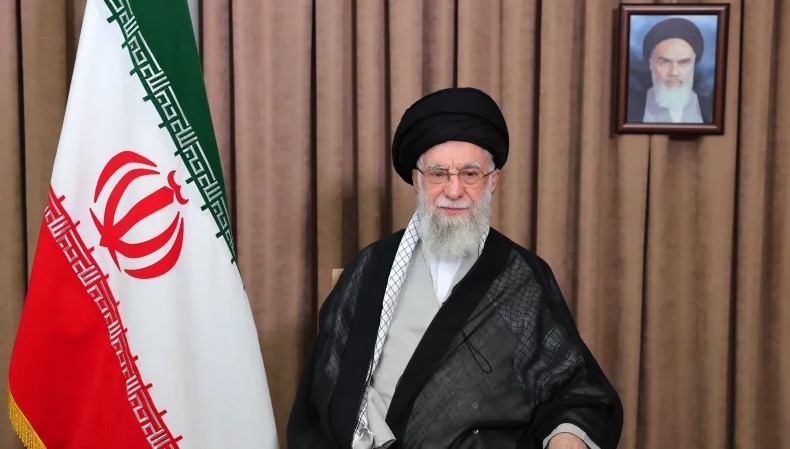
Assassination triggers power vacuum, succession battle, and constitutional crisis in the Islamic Republic
36 Years Ali Khamenei held supreme power (1989–2026)
10 Days between assassination and successor named
88 Members in the Assembly of Experts, the body that chose his successor
The Assassination That Shook Tehran
In the early hours of 28 February 2026, joint US-Israeli airstrikes tore through Ayatollah Ali Khamenei’s compound in Tehran. By 5:00 am Iran Standard Time on 1 March, Iranian state television confirmed what the Islamic Republic had spent hours denying. Their Supreme Leader, the man who had commanded the country’s religious, military, and political destiny for 36 years, was dead. He was 86.
Khamenei had reportedly been killed in his office within his residential compound. The strikes, part of a coordinated military campaign dubbed “Roar of the Lion” by Israel, were the culmination of months of precision intelligence work. According to subsequent reports, the CIA had been tracking his movements and identified a rare window during a senior officials’ meeting.
His wife, daughter Boshra, daughter-in-law Zahra Haddad-Adel, and other family members were also killed in the attack.
“The people that make all the decisions, most of them are gone.”
— Donald Trump, 1 March 2026
The Cascade: What Died With Him
The military decapitation extended far beyond Khamenei himself. Israel claimed that a majority of Iran’s senior military leadership were eliminated in the strikes.
Those reported killed included:
- Maj. Gen. Abdolrahim Mousavi, armed forces chief of staff
- Maj. Gen. Mohammad Pakpour, commander of the IRGC
- Ali Shamkhani, secretary of Iran’s Defense Council
Iran had long prepared for the possible killing of its Supreme Leader. What it had not prepared for was the simultaneous loss of so many senior figures at once. Analysts noted that the regime’s institutional memory, command structure, and decision-making capacity were suddenly hollowed out at the worst possible moment, during an active conflict.
The Constitutional Void and the Emergency Council
Under Article 111 of Iran’s constitution, the Supreme Leader holds absolute authority over government, military, and judiciary. There is no deputy. When the position becomes vacant, a three-member Interim Leadership Council assumes control until a successor is chosen.
That council was announced on 1 March 2026:
- President Masoud Pezeshkian
- Chief Justice Gholam-Hossein Mohseni-Ejei
- Senior cleric Alireza Arafi
Additional power centers emerged alongside the council:
- Ali Larijani overseeing national security coordination
- Mohammad Baqer Ghalibaf involved in defence delegation
The challenge was immediate and severe. A council designed for continuity was suddenly leading a nation at war, facing ongoing US-Israeli strikes, retaliatory missile fire, and deep internal divisions.
The Succession Struggle: Candidates and Conflicts
Khamenei had never publicly named a successor. Reports suggested he had privately identified contingency candidates, but none were officially confirmed.
Key Figures in the Power Struggle
Mojtaba Khamenei
Son of the late leader. Deep ties to the IRGC and Basij. Most discussed candidate.
Appointed 8 March 2026
Alireza Arafi
Member of Interim Council. Deputy chair of Assembly of Experts.
Contender
Ali Larijani
Acting national security chief. Experienced political operator.
Contender
Hassan Khomeini
Symbolic figure with revolutionary lineage.
Unlikely
Dynasty or Republic
The possibility of appointing Khamenei’s son carried deep symbolic weight. Iran’s system was built on opposition to monarchy, yet this move suggested dynastic succession. Analysts warned this could fracture the clerical establishment and raise legitimacy concerns. Despite this, the IRGC, wielding vast military and economic power, backed Mojtaba.
A Transition Under Fire
On 3 March 2026, the Assembly of Experts’ office in Qom was bombed during succession deliberations, highlighting the fragility of the moment.
Despite the instability, the process moved quickly.
Timeline of Events:
- 28 Feb 2026: Airstrikes hit Khamenei’s compound
- 1 Mar 2026: Death confirmed. Interim Council formed
- 3 Mar 2026: Assembly office bombed in Qom
- 8–9 Mar 2026: Mojtaba Khamenei appointed Supreme Leader
The speed of succession, just 10 days, reflected urgency rather than stability.
A Nation Divided
The domestic response exposed deep fractures within Iranian society.
- Some citizens celebrated in the streets
- Others mourned in large gatherings
- Pro-Iran protests erupted internationally
This duality reflects Iran’s core contradiction. A leader revered by many was also seen by others as a symbol of repression. Estimates from the January 2026 crackdown suggest protest deaths ranged from 3,117 to over 36,500, underscoring the scale of internal unrest.
Power Behind the Throne
Even after Khamenei’s death, one institution remains dominant: the IRGC.
It controls:
- Large segments of the economy
- Key security apparatus
- Significant political influence
With leadership weakened, the IRGC effectively became kingmaker in the succession process.
Meanwhile, opposition groups remain fragmented, with limited presence inside Iran.
What the Leadership Crisis Reveals
The constitutional system functioned as designed. However, the conditions were unprecedented.
Iran faced:
- An ongoing war
- A decapitated military leadership
- Public unrest and division
- A legitimacy crisis within the clerical system
Mojtaba Khamenei now inherits a state under immense pressure, both internally and externally.
The real question is no longer who leads Iran. It is whether the system itself can endure.
The Defining Question Ahead
The assassination of Ali Khamenei may prove to be more than a leadership change. It may mark a turning point. Whether the Islamic Republic stabilizes under new leadership or begins a deeper unraveling will define the next phase of the conflict and the future of Iran itself.



Comments (0)
Leave a Comment
No comments yet
Be the first to comment