What Did Iran Actually Announce?
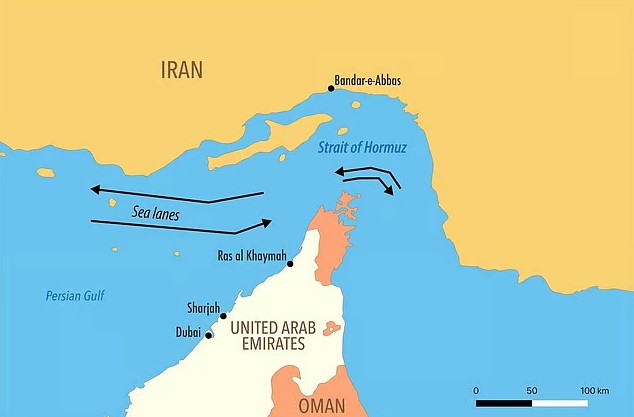
Iran Strait of Hormuz India passage was confirmed directly by Iranian Foreign Minister Seyed Abbas Araghchi in an interview broadcast on Iranian State TV on the night of March 25, 2026.
Araghchi said: "We have permitted certain countries that we consider friendly to pass through the Strait of Hormuz. We allowed China, Russia, India, Iraq, and Pakistan to transit."
He also added that ships linked to Iran's adversaries would not be allowed. "We are in a state of war. The region is a war zone, and there is no reason to allow the ships of our enemies and their allies to pass through. But it remains open to others," he said.
Araghchi further elaborated: "Many of the shipowners, or the countries that own these vessels, have contacted us and requested that we ensure their safe passage through the strait. For some of these countries that we consider friendly, or in cases where we have decided to do so for other reasons, our armed forces have provided safe passage."
This is a selective reopening, not a full reopening. The Strait remains closed to the US, Israel, and Gulf states supporting the war. It is open to those who stayed neutral or maintained diplomatic channels with Tehran.
Why India Specifically Made the List
India's inclusion is not accidental. It is the outcome of deliberate diplomatic positioning over the past four weeks.
In the last couple of weeks, India has made diplomatic efforts focused on ending the conflict in West Asia as soon as possible and ensuring the unimpeded flow of energy through the Strait of Hormuz.
Prime Minister Narendra Modi spoke directly with Iranian President Masoud Pezeshkian on March 12, 2026, conveying India's commitment to peace and its need for uninterrupted energy access. That call, combined with India's refusal to join the US-led military coalition, positioned New Delhi as a neutral, economically important partner that Iran had no reason to penalise.
The IRIS Dena incident deepened that goodwill further. When the Iranian frigate was attacked and sunk by a US Navy submarine on March 4 off the coast of Sri Lanka, two other Iranian vessels, IRIS Lavan and IRIS Bushehr, sought shelter nearby. Iran's Foreign Minister publicly thanked India and Sri Lanka for their significant help in transferring both ships to safety. IRIS Lavan docked in Kochi, India, while IRIS Bushehr docked in Trincomalee, Sri Lanka. This assistance, extended in the middle of an active conflict, registered in Tehran as a concrete act of goodwill.
The result is a bilateral arrangement that no amount of economic leverage alone could have produced: Iranian armed forces actively providing safe passage to Indian-flagged tankers through a waterway they have blockaded for everyone else.
What Iran's Selective Reopening Means Geopolitically
This development is analytically significant beyond India's energy security. It reveals the strategic architecture that Iran is constructing around the Strait of Hormuz crisis.
Iran is not treating the Strait as universally closed. Iran's decision to keep the passage open for select countries signals a calibrated approach, balancing geopolitical pressure with economic pragmatism.
By granting passage to India, China, Russia, Iraq, and Pakistan, Iran has effectively created a two-tier maritime system through a waterway it now claims sovereign control over. The five permitted nations together represent a significant portion of the world's population, energy consumption, and diplomatic weight. None of them joined the US-led military operation. None of them have applied economic sanctions against Tehran.
China receives 45 percent of its oil via the Strait of Hormuz. Russia has deep economic and military ties with Tehran. Pakistan's inclusion is notable given the simultaneous indirect peace talks being facilitated by Islamabad between the US and Iran. Iraq is geographically and politically intertwined with Iran.
The list is not arbitrary. It is a map of Iran's diplomatic relationships, drawn in maritime access.
The closure of the strait has been described as the largest disruption to the energy supply since the 1970s energy crisis, as well as the largest in the history of the global oil market. Granting selective passage to key partners allows Iran to maintain pressure on Western economies while insulating its own allies from the worst consequences of that pressure.
Iran's Sovereignty Claim: A New Post-War Framework
Araghchi's comments included a statement that will carry long-term significance beyond the immediate conflict.
He said: "The Strait of Hormuz is located in the territorial waters of Iran and Oman, and Iran's sovereignty is established there. After the war, we will also have new arrangements for passing through the Strait."
This is an explicit declaration that Iran intends to institutionalise its control over the Strait, not just as a wartime measure but as a permanent post-war arrangement. It is a direct challenge to the international legal framework under which the Strait has historically operated as an international waterway open to all nations under the UN Convention on the Law of the Sea.
Iran's closure of the Strait of Hormuz may constitute a violation of the UN Convention on the Law of the Sea by denying transit in a strait used for international navigation. Iran's post-war framework proposal, whatever form it eventually takes, will be one of the most consequential maritime governance questions of the decade.
For India, this raises a longer-term question: even after the current conflict ends, will access to the Strait require ongoing diplomatic maintenance with Tehran? The answer, based on Araghchi's comments, appears to be yes.
The Peace Talk Impasse: Why a Ceasefire Remains Distant
The passage announcement came on the same day that Iran firmly rejected the US ceasefire proposal.
Iran's state media reported that Tehran dismissed the US proposal and issued its own five-point counter-plan. The plan demands security guarantees against future aggression, war reparations, and a new framework to operate the Strait of Hormuz post-war.
Araghchi stated categorically in the same interview: "I state firmly that there has been no negotiation with the US. However, in recent days, the American side has begun sending various messages through different intermediaries, and we have responded by stating our positions. It is simply an exchange of messages through friends."
Pakistan's Deputy Prime Minister Ishaq Dar confirmed that the US had shared a 15-point proposal being deliberated upon by Iran, with Turkey and Egypt also extending facilitation support. President Trump, meanwhile, said Iran should "better get serious soon, before it is too late." The Pentagon was simultaneously reported to be sending additional troops to West Asia in preparation for a possible ground offensive.
The gap between Iran's position, continue resisting, extract guarantees, reshape the Strait's governance, and the US position, achieve unconditional surrender, remains as wide as at any point since February 28.
Conclusion: Iran Strait of Hormuz India Access Is Diplomacy Made Operational
The Iran Strait of Hormuz India passage confirmation of March 25, 2026, is the clearest proof yet that India's refusal to take sides in the Iran-US-Israel conflict has produced a tangible strategic dividend.
When US and European flagged vessels face restrictions in the maritime route, Indian carriers are gaining safe passage. This reflects India's strategic patience, negotiating skills, and diplomatic leverage in dealing with every stakeholder in the conflict with the ultimate goal of fulfilling national security priorities.
India imports approximately 40 percent of its crude oil and over 54 percent of its LNG through the Strait. That dependency makes access not a diplomatic preference but an existential economic requirement. The Modi-Pezeshkian call, the IRIS Dena assistance, and the consistent refusal to join any military coalition have together produced an outcome that sanctions, threats, or naval coalitions could not achieve for Western nations: working, Iranian-sanctioned passage for Indian energy tankers through the world's most consequential maritime chokepoint.
The Strait remains a war zone. The conflict is unresolved. But India's tankers are moving through it. That fact, on March 26, 2026, is what energy security diplomacy looks like in practice.



Comments (0)
Leave a Comment
No comments yet
Be the first to comment