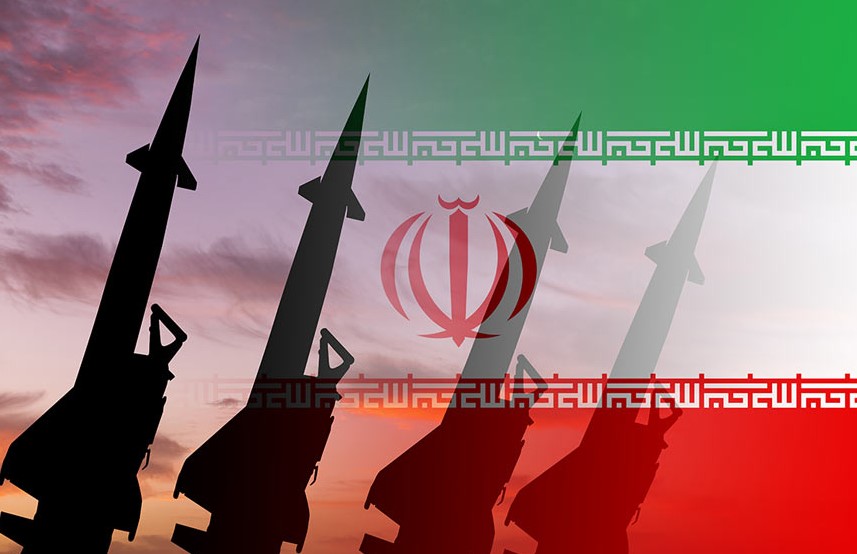
Iran’s nuclear program has become one of the most serious global security threats of the 21st century. The Iran nuclear program crisis has drawn the United States and Israel into direct military confrontation and raised fears of a nuclear arms race across the Middle East.
Enrichment, Sanctions and War Push the Middle East Toward a Dangerous Standoff
At a Glance
Stat | Detail |
|---|---|
408 kg | 60% enriched uranium stockpile (IAEA, May 2025) |
~Zero | Nuclear breakout time for fissile material production |
600+ | Iranian ballistic missiles fired at Israel, June 2025 |
1–2 Years | Pentagon-assessed setback from June 2025 U.S. strikes |
Iran’s nuclear program has become one of the most serious global security challenges of the 21st century. It has drawn the United States and Israel into direct military confrontation and raised fears of a nuclear arms race across the Middle East.
What began as a Cold War era civilian energy project has evolved into a strategic crisis involving covert facilities, economic sanctions, cyber warfare, and direct military strikes. Decades of mistrust and failed diplomacy have turned Iran’s nuclear program into one of the most dangerous unresolved flashpoints in international politics.
Origins of the Nuclear Program
From the Shah’s Reactors to a Strategic Deterrent
Iran’s nuclear ambitions date back to the 1950s when Shah Mohammad Reza Pahlavi began developing nuclear infrastructure with assistance from the United States under President Dwight Eisenhower’s Atoms for Peace program.
The 1979 Islamic Revolution temporarily halted the initiative. However, the devastating Iran–Iraq War during the 1980s dramatically reshaped Tehran’s strategic thinking. Iraq’s use of chemical weapons against Iranian forces convinced many Iranian leaders that a powerful deterrent capability was essential for national survival.
The modern nuclear crisis began in August 2002 when the exiled opposition group National Council of Resistance of Iran revealed two secret nuclear sites. One was an underground uranium enrichment plant at Natanz. The other was a heavy water production facility at Arak.
A third covert site was exposed in 2009 when the United States, the United Kingdom, and France revealed the Fordow enrichment plant. Built deep beneath a mountain near the city of Qom on an Islamic Revolutionary Guard Corps military base, the facility sits roughly 80 metres underground. Its design strongly suggested protection against possible air strikes.
The Enrichment Threat
Why 60 Percent Uranium Alarms the World
Uranium enrichment is the central issue in the Iran nuclear dispute. Commercial nuclear power reactors typically require uranium enriched to between three and five percent. Nuclear weapons require enrichment of roughly ninety percent.
Iran’s decision to enrich uranium to sixty percent has raised serious international concern because the level has no widely accepted civilian application.
By May 2025, the International Atomic Energy Agency reported that Iran possessed 408 kilograms of uranium enriched to sixty percent. Analysts estimate that this quantity could provide feedstock for roughly nine to ten nuclear devices if enriched further.
The IAEA also noted that Iran had become the only non nuclear weapon state producing uranium at this level of enrichment.
Understanding “Breakout Time”
Nuclear breakout time refers to how long a country would need to produce enough weapons grade fissile material for a single nuclear weapon. It does not include the additional time required to build and deliver a warhead.
By 2025, experts estimated Iran’s breakout time for producing weapons grade uranium had effectively collapsed to near zero. Using its existing stockpile of sixty percent enriched uranium and advanced IR-6 centrifuges, Iran could theoretically produce sufficient material for a bomb within weeks.
Diplomacy and Its Collapse
The Nuclear Deal That Worked and Then Fell Apart
After years of escalating sanctions and covert sabotage operations, diplomacy appeared to succeed in July 2015 with the signing of the Joint Comprehensive Plan of Action, widely known as the JCPOA.
The agreement was negotiated between Iran and the P5+1 powers, which included the United States, the United Kingdom, France, Russia, China, and Germany.
Under the deal, Iran agreed to reduce its enriched uranium stockpile by 98 percent and limit enrichment levels to 3.67 percent. These restrictions extended Iran’s nuclear breakout time to at least twelve months.
In return, international sanctions were lifted and Iran regained access to global financial markets. Throughout the agreement’s early years, the International Atomic Energy Agency repeatedly certified that Iran was complying with its obligations.
The agreement collapsed in May 2018 when U.S. President Donald Trump withdrew the United States from the deal and reimposed sweeping economic sanctions.
Iran initially waited for European partners to preserve the agreement’s economic benefits. When those efforts failed to protect Iranian banks and companies from American secondary sanctions, Tehran began gradually abandoning its commitments.
Iran raised enrichment levels, installed advanced centrifuges, and limited access for international inspectors. By 2025, the country’s nuclear capability had advanced far beyond its pre-deal level.
“Enrichment is our one very clear red line.”
Steve Witkoff, U.S. Special Envoy during June 2025 nuclear talks
Israel’s Threat Assessment
Why Jerusalem Calls It an Existential Crisis
Israel views Iran’s nuclear program through the lens of decades of political hostility.
Iran’s Supreme Leader Ayatollah Ali Khamenei has repeatedly referred to Israel as a “cancerous tumour” that must be removed. Iran has also built strong military ties with several regional groups including Hezbollah in Lebanon, Hamas in Gaza, and the Houthi movement in Yemen.
Together these forces form what Israeli analysts often call a “Ring of Fire” surrounding the country.
The October 7, 2023 Hamas attack that killed approximately 1,200 Israelis reinforced Israel’s concerns. Israeli officials argue that a nuclear armed Iran could shield its regional allies from retaliation and embolden far more destructive attacks.
By mid 2025, several developments appeared to create a strategic opportunity for Israel. Hamas had been largely dismantled in Gaza, Hezbollah’s leadership had suffered major losses in Lebanon, and Syria’s Assad government had collapsed.
Israeli leaders believed this window might close quickly if Iran’s nuclear program continued to advance.
Economic Pressure
Sanctions That Hurt but Did Not Stop the Program
Economic sanctions have long been a central tool in the international response to Iran’s nuclear ambitions.
The United States first imposed sanctions following the 1979 hostage crisis. Over time, these measures expanded into one of the most extensive sanctions regimes ever applied to a single country.
In 2012 Iran was effectively cut off from the SWIFT international banking system, severely restricting its ability to conduct global financial transactions. Analysts estimate the country lost roughly 160 billion dollars in oil revenue between 2012 and 2015.
These economic pressures played a major role in bringing Iran to the negotiating table during the JCPOA talks.
However, sanctions alone have not stopped Iran’s nuclear program. Tehran developed networks of shadow tanker fleets, routed payments through companies in the United Arab Emirates, and expanded energy trade with China.
By 2024, Iran’s oil exports had recovered to roughly 1.5 million barrels per day, demonstrating the limits of economic pressure.
Military Escalation in 2025
The Twelve Day War
Date | Event |
|---|---|
June 12, 2025 | IAEA declares Iran non compliant with safeguards for the first time since 2005 |
June 13, 2025 | Israel launches Operation Midnight Hammer, killing about 30 IRGC commanders and 14 nuclear scientists |
June 13–24 | Iran fires more than 600 ballistic missiles at Israel during a twelve day confrontation |
June 21–22 | U.S. B-2 bombers strike Fordow, Natanz, and Isfahan using GBU-57 bunker-buster bombs |
Sept 27, 2025 | United Nations sanctions reimposed through the JCPOA snapback mechanism |
October 2025 | Iran formally withdraws from the JCPOA and declares nuclear restrictions void |
March 2026 | United States and Israel launch Operation Epic Fury targeting rebuilt Iranian missile infrastructure |
The Pentagon later assessed that the June 2025 air strikes delayed Iran’s nuclear program by approximately one to two years.
Satellite imagery later in 2025, however, showed reconstruction work underway at both Natanz and Isfahan.
Iran also refused to allow IAEA inspectors access to some of the damaged sites. As a result, the status of Iran’s stockpile of more than 400 kilograms of enriched uranium remains uncertain.
The fundamental dispute continues to revolve around a single issue. Iran insists on maintaining its sovereign right to uranium enrichment, while the United States and Israel argue that enrichment must end entirely.
Strategic Assessment
A Crisis That Remains Unresolved
Military strikes have slowed Iran’s nuclear progress but have not eliminated it. Sanctions have imposed heavy economic costs but have not fundamentally altered Iran’s nuclear strategy.
Many analysts warn that continued military pressure may actually strengthen arguments within Iran’s leadership for building a nuclear weapon outright rather than remaining a threshold nuclear state.
Saudi Arabia has already signaled that it would pursue its own nuclear arsenal if Iran develops nuclear weapons. Such a development could trigger the most volatile nuclear environment the Middle East has ever faced.
Until a durable diplomatic framework emerges, the Iran nuclear crisis is likely to remain what it has been for more than two decades.
One of the most dangerous unresolved security challenges in the world.


Comments (0)
Leave a Comment
No comments yet
Be the first to comment