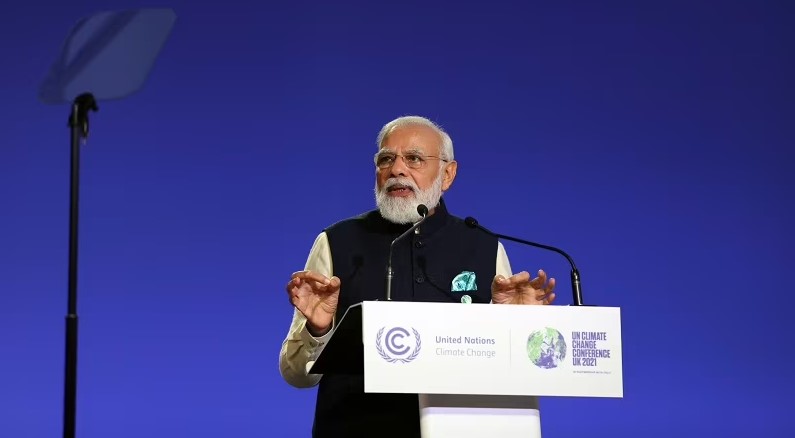
When Prime Minister Modi announced India's COP33 bid in Dubai, it felt like a defining moment. Less than two and a half years later, that offer was quietly withdrawn. The question is: why, and what does it mean for global climate diplomacy?
What Happened
On April 2, 2026, Rajat Agarwal, the Indian environment ministry official responsible for liaising with the UNFCCC, sent a letter to the chair of the Asia-Pacific Group. The message was four paragraphs long and carried significant weight: India was withdrawing its candidacy to host COP33 in 2028.
The official reasoning was minimal. India cited "a review of its commitments for the year 2028." No press conference. No formal public announcement. The government did not respond to media requests for comment.
"India's withdrawal from the COP33 bid is a strategic missed opportunity. Having proven it can green its economy at a record pace, India has now forfeited the home stage to showcase its renewable energy triumphs."-Harjeet Singh, Founding Director, Satat Sampada Climate Foundation
The timing is striking. As recently as July 2025, India's environment ministry had established a dedicated 11-member COP33 Cell within its Climate Change Division. The BRICS bloc had formally welcomed India's candidacy in a joint statement that same month. A reversal of this scale, executed this quietly, demands closer analysis.
The Numbers Behind the Decision
Year of Bid Announcement
Dec 2023 (COP28, Dubai)
Withdrawal Communicated
April 2, 2026
India's last COP hosted
COP8, 2002 (New Delhi)
Current front-runner
South Korea (sole bidder)
Why This Decision Is More Than Logistical
Sources at the Ministry of Environment, Forest and Climate Change (MoEFCC) have told reporters that several factors fed into the final call. These include the United States' exit from the Paris Agreement, declining attendance at recent climate conferences, and competing mega-events on India's domestic calendar, including the 2029 General Elections and the 2030 Commonwealth Games in Ahmedabad.
Each factor, taken alone, could be dismissed. Taken together, they reveal a government recalibrating its international commitments under real political and economic pressure.
"The decision was taken at the very top, and we do not have much of a clue about the exact reasons."-Senior official, Ministry of Environment, Forest and Climate Change (via Down To Earth)
Opposition leader Jairam Ramesh offered a sharper reading. He argued the original COP33 bid was tied to electoral optics ahead of 2029 polls, similar to how the G20 Summit was leveraged in 2023. If that framing is correct, India's withdrawal is less about climate and more about a changed domestic political calculus.
The Roots of India's Climate Philosophy: From COP8 to Today
To understand this decision, it helps to trace India's negotiating DNA. In 2002, India hosted COP8 in New Delhi and pushed through the Delhi Declaration, which embedded the principle that climate responsibility must be shared but unequal. Developing nations, which contributed far less to historical emissions, should not be forced to sacrifice economic growth for climate targets they did not create.
That philosophy has never really changed. At COP15 in Copenhagen in 2009, India aligned with China, Brazil, and South Africa to form the BASIC bloc, pushing back against binding cuts and arguing instead for climate finance from wealthy nations. At COP26, India introduced the language of "phase down" rather than "phase out" on coal, a distinction that carries enormous practical weight for a country still reliant on it for over 70 percent of electricity generation.
The COP33 withdrawal follows this same logic. Hosting would have placed India under intense scrutiny, creating pressure to announce stronger targets and faster transition timelines. Stepping back keeps India's negotiating position flexible.
A COP33 Timeline Worth Knowing
Dec 2023
PM Modi announces India's COP33 bid at COP28, Dubai.
July 2025
BRICS endorses India's candidacy. MoEFCC sets up 11-member COP33 Cell.
April 2, 2026
India formally withdraws from COP33 bid via letter to Asia-Pacific Group chair.
April 8, 2026
Climate Home News and Down To Earth break the story publicly.
2026 onwards
South Korea is the sole remaining candidate for COP33 hosting rights.
What India Is Giving Up
The India that stepped back from COP33 is not the India of 2002. This is a country that fulfilled its Paris Agreement emissions-intensity target 11 years ahead of schedule, recently upgraded its goal to cut GDP emissions intensity by 47 percent by 2035, and has committed to 60 percent cumulative electricity from renewables by the same year. It had the International Solar Alliance headquarters to showcase, an electric mobility revolution to highlight, and genuine climate credentials to project to the world.
Hosting COP33 would have given India the chair of the room where decisions get made. It would have allowed New Delhi to set the agenda, invite the delegates, and frame the narrative around equity and development at a summit that will assess global climate commitments under the Paris Agreement. That leverage is now gone, most likely to Seoul.
The Editorial Verdict
India's withdrawal is not purely a story about event logistics or calendar conflicts. It reflects the tension at the heart of India's global identity: a country that genuinely wants to lead on climate, but only on its own development-first terms. That is not a contradiction. It is a negotiating position. The question is whether stepping away from the host seat strengthens or weakens that position.
Climate leadership requires presence, not just participation. If India intends to speak for the Global South at COP33, doing so from the audience carries far less weight than doing so from the podium. This decision is not irreversible in impact, but it is difficult to walk back in credibility.
"India can wield international influence only by creating true capacity to host global events in multiple cities."- Free Press Journal editorial analysis, April 2026


Comments (0)
Leave a Comment
No comments yet
Be the first to comment