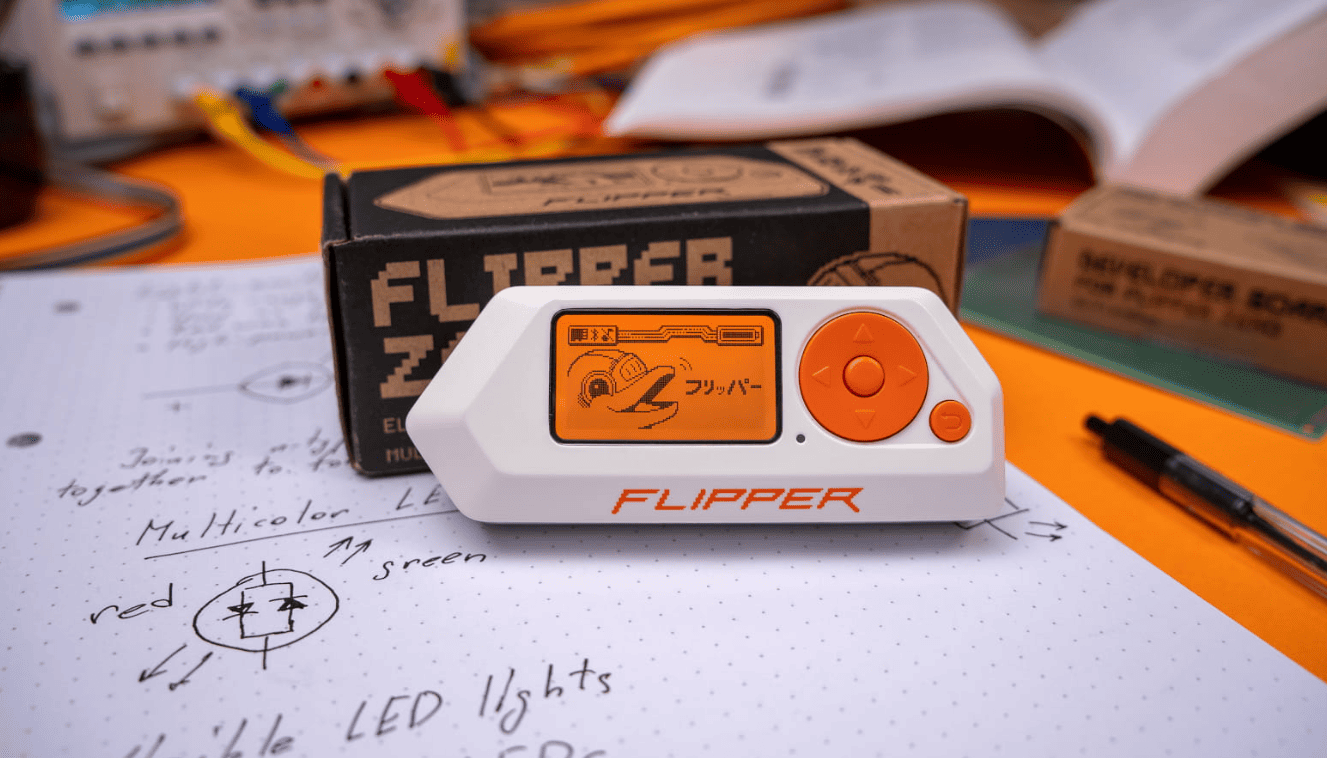
When Flipper Devices quietly pulled back from active firmware development earlier this year, over one million users noticed within days. What followed was one of the more instructive case studies in open-source governance that the cybersecurity hardware space has seen in a long time. A company that built its reputation on community energy had to decide whether that community would carry the product forward or watch it stagnate.
The answer, after significant backlash, turned out to be neither a clean handoff nor a full reinvestment. It was something more complicated.
What Changed and Why It Matters
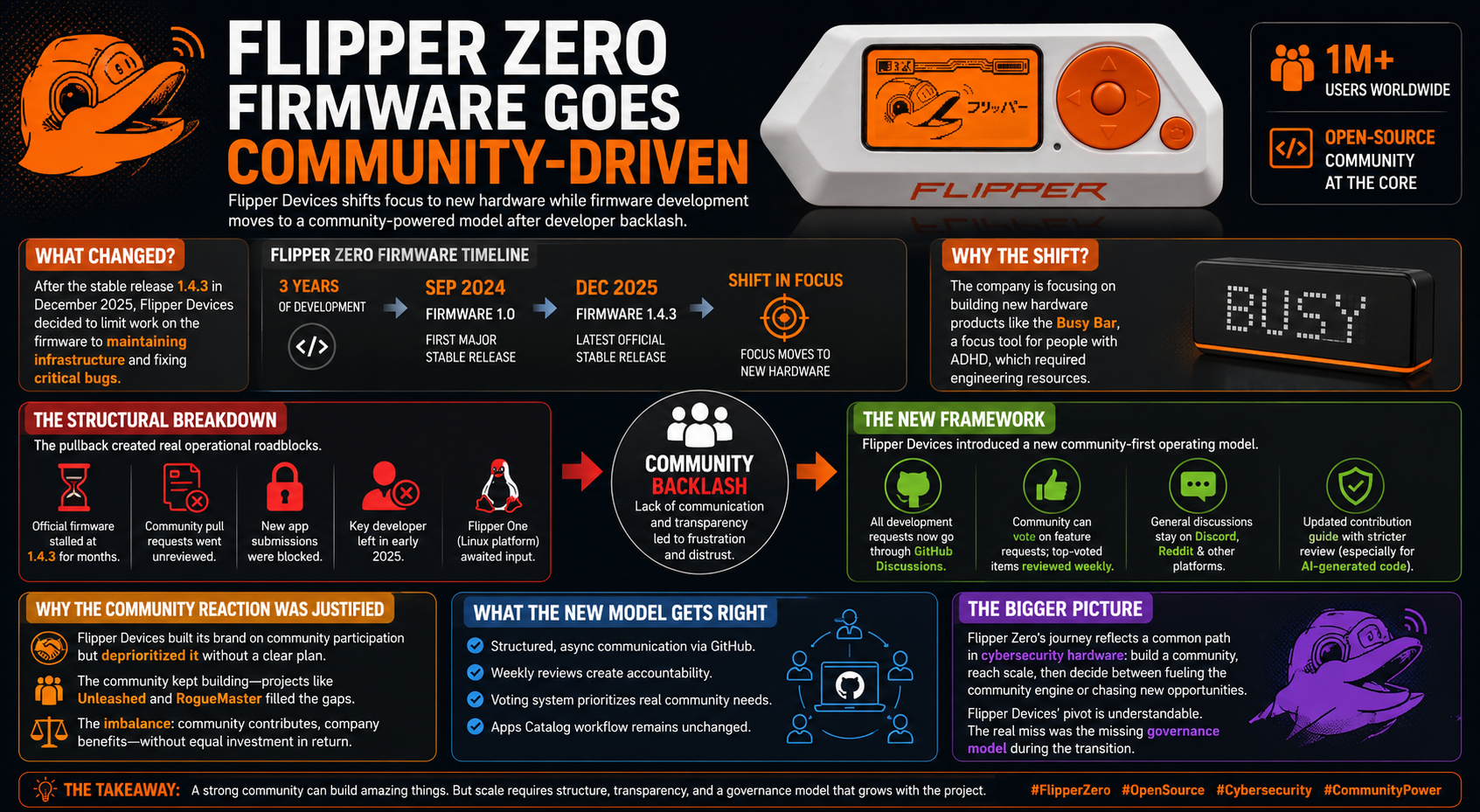
Flipper Zero Firmware 1.0, the first major stable release, shipped in September 2024 following three years of development. The most recent official stable version is 1.4.3, released in December 2025. At that point, Flipper Devices decided to limit their work to maintaining infrastructure and fixing critical bugs, shifting focus toward building new hardware devices.
That decision made internal sense. This transition reflects the company's adaptation to evolving user demands and resource constraints while maintaining the reliability of existing products. The Busy Bar, a focus tool designed to help people with ADHD minimize distractions, became a priority, pulling engineering resources away from the Flipper Zero firmware track.
The problem was communication. In recent interviews and online discussions, the Flipper Devices team gave the impression that firmware development had stopped entirely, triggering strong backlash from the community.
The Structural Breakdown That Followed
The pullback created concrete operational problems, not just sentiment issues. The Flipper Zero firmware no longer had manpower to accept new contributions or pull requests. The Flipper Zero Application Catalog no longer had anyone to approve new apps, which led to new apps being blocked from release and existing apps being held back to older prior-approved versions.
The app catalog problem was eventually mediated by giving access to one of the long-time developers in the community, which at least allowed apps to progress once more. But the firmware pull request freeze persisted.
- Official firmware stalled at version 1.4.3 for months.
- Community pull requests from established contributors sat unreviewed.
- New app submissions were blocked pending approval.
- Key developer who ran community Q&A sessions departed in early 2025.
- Flipper One, the open Linux platform project, also awaited community input to progress.
The New Framework
To address community demand, Flipper Devices outlined four operational changes: all development-related requests now route through GitHub Discussions rather than real-time chats or calls; community members can vote on proposed features with the team committing to review top-voted, concretely formatted requests weekly; general discussion and support queries remain on Discord, Reddit, and social media; and an updated contribution guide imposes tighter scrutiny on pull requests, particularly AI-generated code touching low-level libraries and changes affecting UI or documentation.
Flipper Devices cited scale as the primary driver. With over one million users generating requests across every communication channel, the company said it became impossible to distinguish genuine community-wide needs from isolated preferences, creating unmanageable noise.
That framing is honest. Managing open-source contributions at scale is a real engineering and organizational problem. GitHub's voting mechanism is a practical filter, not a dismissal.
Why the Community Reaction Was Justified
The frustration was not just about firmware updates being slow. It was about a company that built its entire brand on community participation visibly deprioritizing that community without a transparent plan in place first.
By the time Flipper Devices stepped back, an entire ecosystem of alternative firmware projects and communities had already existed, with people implementing features across every use case imaginable. Projects like Unleashed and RogueMaster filled gaps the official firmware left open. The community had effectively been running a parallel development track for years.
What stung was the asymmetry. The community kept contributing while the company extracted value from that ecosystem for brand credibility, and then reduced its reciprocal investment without a clear governance structure to replace it.
What the New Model Gets Right
The announcement signals an attempt to formalize open-source governance at scale, balancing limited internal engineering bandwidth against a large, technically engaged user base pushing for continued firmware innovation.
The async-only model, weekly review cycles, and voting-based prioritization are standard practices in mature open-source projects. The fact that Flipper Devices is adopting them now, rather than at launch, reflects a company catching up to the scale it achieved.
- GitHub Discussions replaces scattered real-time channels for technical requests.
- Weekly review cadence creates accountability for the team.
- Voting filters genuine community priorities from edge-case requests.
- Apps Catalog contribution process remains unchanged to preserve existing workflows.
The Broader Signal for Cybersecurity Hardware
Flipper Zero's situation reflects a pattern that repeats across cybersecurity tool development. A device ships, builds a devoted user base, and then the company faces a choice between feeding the community engine that made it successful or pivoting toward new revenue streams.
The honest answer from Flipper Devices, that the firmware reached maturity and the company is called Flipper Devices for a reason, is defensible. They built an accessible development platform, and communities can now shape it into whatever they want. That is a legitimate outcome for an open-source project.
The failure was not the pivot. It was the gap between the pivot and the governance model that should have accompanied it.




Comments (0)
Leave a Comment
No comments yet
Be the first to comment