
A growing body of peer-reviewed research confirms what geriatric medicine specialists have argued for years: combining resistance training with a higher-protein diet produces measurably better outcomes for muscle strength, physical function, and independence in older adults than either approach alone. The evidence base now spans randomized controlled trials, systematic reviews, and large observational studies, with consistent findings pointing toward a manageable, low-cost intervention that most older adults can access without medical supervision.
What Sarcopenia Actually Does to the Aging Body
Sarcopenia, the clinical term for age-related muscle loss, does not arrive suddenly. It begins earlier than most people expect and compounds silently over decades.
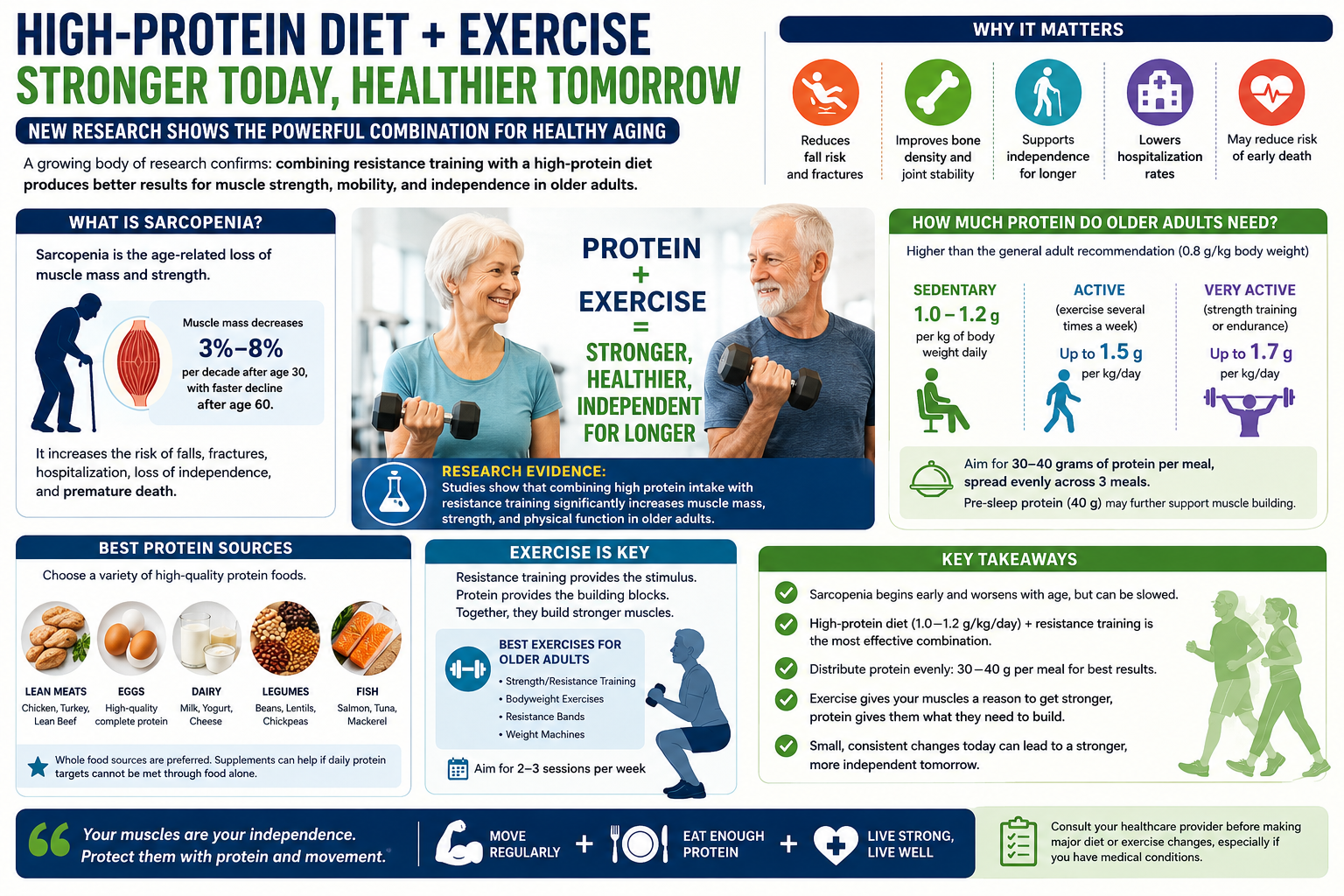
Muscle mass decreases approximately 3% to 8% per decade after age 30, and the rate of decline accelerates after age 60. By the time an individual reaches their late sixties or seventies, the accumulated loss of muscle tissue affects their ability to rise from a chair, climb stairs, carry groceries, and recover from a fall. Without enough protein, muscles weaken, making it a struggle to do everyday tasks. Eating a protein-rich diet and staying active, including walking and resistance exercises, can help maintain independence and lower the risk of falls.
The Rate of Muscle Loss Is Faster Than Most People Realize
Sarcopenia does not show on a standard weight scale because fat often replaces lost muscle volume, leaving total body weight unchanged while functional capacity drops. The condition connects directly to some of the most serious health outcomes in older populations:
- Increased fall risk and hip fractures.
- Reduced bone density and joint stability.
- Loss of independence requiring assisted living.
- Higher rates of hospitalization and mortality.
- Accumulated decline of muscle mass in the 60s and beyond increases the risk of falling, bone fractures, hospitalization, and earlier death .
What the Research Says About Protein and Exercise Combined
The clinical case for combining dietary protein with structured exercise is now well supported. A 17-week randomized controlled trial, the NutriAging Protein Study, examined whether a high-protein diet delivered mainly through food sources combined with resistance training altered the plasma metabolome of older adults. Optimizing dietary protein intake combined with resistance training has been proposed as an effective strategy to preserve muscle mass in older adults.
A study of healthy older male adults published in peer-reviewed literature found that the group receiving both a physical activity program and high-protein supplementation significantly decreased body fat percentage and waist-to-hip ratio while increasing basal metabolic rate and muscle mass. Although both protein-only and exercise-plus-protein groups received supplementation, the added physical activity program made it easier for that group to increase muscle mass and muscle strength. The researchers concluded that physical activity combined with resistance training and protein supplementation represents the most effective method to maintain muscle strength in older adults.
How Much Protein Older Adults Actually Need
The standard recommended dietary allowance for protein is 0.8 grams per kilogram of body weight per day for adults. That figure was not designed with older adults in mind and is widely considered insufficient by geriatric nutrition researchers.
The protein recommendation for older adults increases to 1.0 to 1.2 grams per kilogram daily. Some individuals, especially those who are very active or have certain health conditions, may need even more.
The practical targets by activity level are:
- Sedentary older adults: 1.0 to 1.2 g per kg of body weight daily.
- Those who exercise daily or several times a week: up to 1.5 g per kg per day.
- Those who lift weights regularly or train for endurance events: slightly more protein to support muscle repair and recovery, up to 1.7 g per kg per day .
- Researchers recommend a protein intake higher than 1.6 grams per kg of body weight per day combined with resistance training to improve muscle strength.
Why Meal Timing and Distribution Matter
The aging body does not process protein the same way a younger body does. For men in their early 20s, there was no difference in muscle protein synthesis between consuming 20 or 40 grams of protein in one sitting. For men in their early 70s, however, their muscles were unresponsive to 20 grams of protein. They needed 40 grams per meal to achieve the same anabolic response.
This finding has direct practical meaning. An older adult who spreads protein intake evenly across three meals, aiming for around 30 to 40 grams per sitting, is more likely to stimulate muscle protein synthesis than one who front-loads protein at dinner. Evenly balanced protein distributions of 25 to 30 grams of dietary protein per meal from both animal and plant protein sources are sufficient to maximize muscle protein synthesis rates in older populations. Pre-sleep protein intakes of 40 grams per night may also improve daily muscle protein synthesis and amino acid utilization.
What This Means for Healthy Aging Policy and Practice
The evidence does not call for extreme dietary changes. It calls for consistent, moderate adjustments that most older adults can make without clinical oversight. The gap between what research recommends and what older adults actually eat remains wide. A 2025 IFIC Spotlight survey found that nearly 71% of Americans are trying to increase their protein intake, yet many older adults still fall short, especially on high-quality sources that help protect muscle.
Exercise Is Still the Non-Negotiable Factor
Protein alone, without physical activity, produces limited gains in muscle mass for most older adults. "Protein is important, but strength training is the most important way to prevent age-related muscle loss, and it is important to consume around 30 grams of protein within a couple of hours after working out. First, give your body a reason to get stronger and build muscle by lifting weights, then give it enough materials by consuming protein to build."
Resistance training works by triggering the mechanical signal that tells muscles to adapt and rebuild. Without that signal, increased protein intake has no target to work toward. The two interventions are interdependent, not interchangeable.
Food-First vs. Supplement Approach
Most clinical researchers favor whole food protein sources over powders and supplements where possible:
- Older adults need at least 1.0 g per kg per day, with higher intakes up to 2.0 g per kg per day recommended for those who are ill or physically active.
- Lean meats, eggs, dairy, legumes, and fish all provide complete or near-complete amino acid profiles.
- Whole foods may provide a greater anabolic stimulus than protein isolated from food matrices.
- Whey protein and leucine-enriched supplements show clinical benefit for those unable to meet targets through food alone.




Comments (0)
Leave a Comment
No comments yet
Be the first to comment