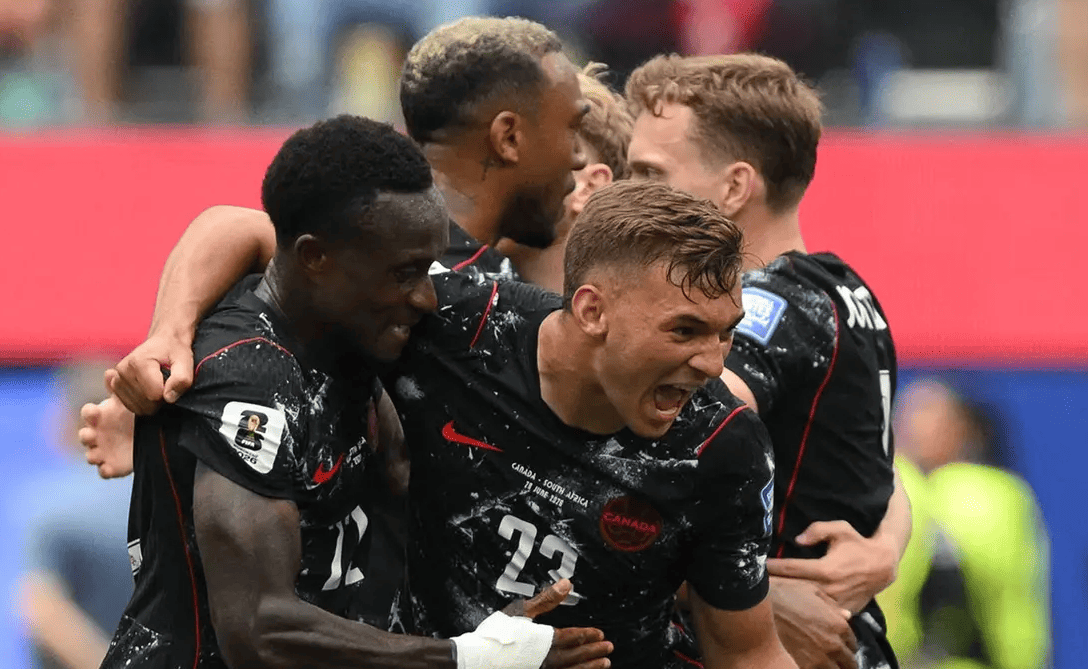
Canada needed a late miracle and got one. A 90th-minute goal sealed a 1-0 victory over South Africa on Sunday, sending the tournament's co-host nation into the FIFA World Cup 2026 Round of 16 in front of a partisan crowd. The result carries weight far beyond the scoreline. For a country that has waited decades to matter on the global football stage, this is not just a result. It is a national statement.
The Match in Numbers: Canada Won Without Dominating
The statistics tell a frank story. South Africa controlled 58% of possession and recorded 6 total shots, with 2 on target. Canada, working against that territorial disadvantage, generated 14 shots total with 7 on target, and goalkeeper Maxime Crepeau made 2 crucial saves to preserve the clean sheet.
Key match data at a glance:
- Canada shots on target: 7
- South Africa shots on target: 2
- South Africa possession: 58%
- Canada fouls committed: 15
- Canada yellow cards: 2 (54th and 67th minute)
- Winning goal: 90th minute, Canada
Canada absorbed pressure across both halves, absorbed a South Africa side that played with discipline and ambition, and struck when it mattered most. That combination of defensive resilience and clinical timing is not accidental. It reflects a squad that has matured considerably since their 2022 Qatar campaign.
The 90th-Minute Winner and What It Signals
Winning a match in the final minute of regulation at a home World Cup does more than deliver three points. It rewrites the psychological contract between a team and its supporters. Jonathan David, Tajon Buchanan, and Tani Oluwaseyi led the attacking line, with Stephen Eustaquio and Liam Millar providing midfield control. Canada's substitution pattern, five changes between the 59th and 75th minutes, injected urgency at the right moment and paid off immediately.
South Africa's Exit and What It Means for African Football
South Africa entered this match knowing a draw or better could keep their Round of 16 hopes alive. They played accordingly, sitting into possession without being toothless. Relebohile Mofokeng and Oswin Appollis created moments of genuine danger. But Bafana Bafana could not convert their pressure into goals, and Ronwen Williams, despite saving 5 shots across the match from Canada's relentless attack, could not save his team from the final blow.
From a geopolitical lens, this result carries continental significance:
- South Africa's World Cup run ends without advancing beyond the group stage.
- Africa's representation in the knockout rounds now depends on other qualified nations.
- The 2010 World Cup legacy South Africa holds as the first African host nation remains their defining moment.
- The sport's economic and diplomatic role in BRICS-aligned nations, including South Africa, means this exit generates internal political conversation beyond football.
South Africa's football federation faces hard questions about squad depth, youth development pipelines, and competitive preparation against top-tier CONCACAF opposition.
Canada at Home: What Hosting a World Cup Does to National Identity
This is where international context matters most. Canada co-hosting the 2026 FIFA World Cup alongside the United States and Mexico was a diplomatic and economic decision years in the making. The tournament represents Canada's largest peacetime international event. Every win the national team earns on home soil generates downstream effects across tourism, national unity, and soft power positioning on the global stage.
The Geopolitical Dimension of Canada's Advancement
Canada's federal government has invested heavily in this tournament as part of a broader international identity project. Reaching the Round of 16 on home soil does the following:
- Validates the public and private infrastructure investment made since 2018.
- Strengthens Canada's argument that it belongs in the top tier of global football nations.
- Reinforces CONCACAF's growing credibility as a competitive confederation.
- Delivers domestic political capital to leadership during a period of significant internal debate over trade, sovereignty, and national direction.
Canada's relationship with its southern co-host, the United States, adds another layer. Both nations advancing deep into the knockout stages would represent the strongest-ever CONCACAF World Cup performance and reshape how global football governs future hosting decisions.
Jonathan David and the Player as National Symbol
Jonathan David's presence in this squad is worth examining beyond statistics. A Lille striker with consistent Champions League-level output, David has become the face of Canadian football's technical evolution. For a country historically defined by hockey, rugby, and basketball, having a world-class striker leading a World Cup campaign carries cultural weight that extends well past sport.
His teammates reflect Canada's multicultural identity:
- Moise Bombito: French-Canadian defender with roots in the Democratic Republic of Congo.
- Richie Laryea: Toronto-born, Ghanaian heritage.
- Tajon Buchanan: New Brunswick-born, playing in Europe's top leagues.
- Tani Oluwaseyi: Nigerian-American background, naturalized Canadian international.
That diversity is not incidental. It is precisely the kind of national narrative that governments and sport bodies spend decades trying to construct organically.
Canada's Round of 16 Outlook and the Road Ahead
Advancing from the group stage on home soil is the floor, not the ceiling. Canada will now face a knockout opponent, and the pressure shifts entirely. One-game eliminations test squad depth, tactical flexibility, and mental resilience in ways group play does not.
Canada's coaching staff used all five substitutions in this match, which suggests they are managing minutes carefully and rotating based on opposition rather than sentimentality. That is a positive indicator of professional tournament preparation.



Comments (0)
Leave a Comment
No comments yet
Be the first to comment