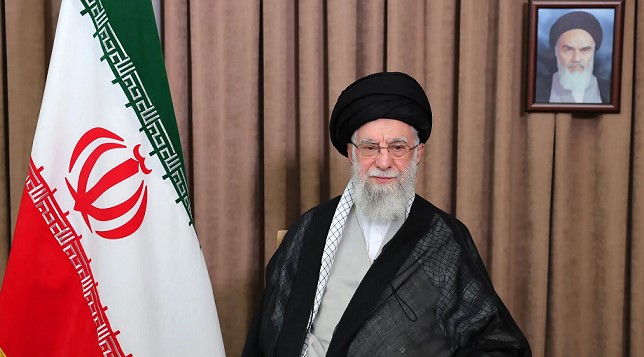
Supreme Leader’s Death Closes Nearly Four Decades of Power
Ayatollah Khamenei killed in a US-Israeli strike has reshaped Middle East geopolitics, marking the sudden end of Iran’s supreme leader and triggering regional escalation.
US President Donald Trump publicly announced the operation, calling it a decisive blow against tyranny. Iranian state television later confirmed his death, referring to it as “martyrdom.” Authorities declared 40 days of national mourning as large crowds gathered across the country.
The strike marks the most consequential moment in Iran’s political history since 1989, when Khamenei assumed leadership. His death closes one of the longest and most influential tenures in the modern Middle East.
From Humble Beginnings to Revolutionary Power
Born in 1939 in Mashhad into a religious Shia family, Khamenei rose through Iran’s clerical ranks during a period of political turbulence. A vocal opponent of Mohammad Reza Pahlavi, he was arrested multiple times and endured imprisonment and exile.
The 1979 Islamic Revolution transformed his trajectory. Under the leadership of Ruhollah Khomeini, Khamenei became Friday prayer leader in Tehran and emerged as a prominent voice in the newly formed Islamic Republic.
He supported the 444-day US embassy hostage crisis, an event that severely strained relations between Tehran and Washington and shaped decades of hostility.
Survival, War, and Consolidation
In 1981, Khamenei survived an assassination attempt when a bomb hidden in a tape recorder exploded during a speech, leaving his right arm permanently impaired. Later that year, he was elected president, serving throughout the devastating 1980–1988 Iran–Iraq War.
The war deeply influenced his worldview, reinforcing distrust toward Western governments, whom Iranian leaders accused of supporting Iraq under Saddam Hussein.
After Khomeini’s death in 1989, Iran’s Assembly of Experts selected Khamenei as supreme leader. Despite initially acknowledging his limited religious credentials, he gradually consolidated authority and built a durable political structure centered on clerical oversight and the Islamic Revolutionary Guard Corps.
Governance and Domestic Unrest
Over the next 36 years, Khamenei became the ultimate decision-maker in Iran’s political system, serving as head of state, commander-in-chief, and final authority over key institutions.
Major waves of unrest marked his tenure. The 1999 student protests, the 2009 Green Movement, fuel-price protests in 2019, and the 2022 demonstrations following the death of Mahsa Amini all challenged the government. Security responses were forceful, drawing international criticism and sanctions.
Regional Influence and Global Tensions
Internationally, Khamenei expanded Iran’s regional reach through allied movements, including Hezbollah. He maintained that Iran’s nuclear program was peaceful, citing a religious decree against nuclear weapons, though Western governments remained skeptical.
Iran entered the 2015 nuclear agreement with world powers, but tensions escalated after the United States withdrew in 2018. Relations further deteriorated following the 2020 US strike that killed Iranian commander Qasem Soleimani.
By early 2026, economic strain, sanctions, and renewed regional hostilities intensified pressure on Tehran.
The Final Operation
On February 28, 2026, coordinated US–Israeli strikes targeted Iranian military and leadership sites. Among them was Khamenei’s residence in Tehran. Officials described the operation as a high-precision attack aimed at strategic command infrastructure.
Iran responded with missile and drone launches toward Israeli and Gulf targets. Exchanges continued in the hours following the strike, raising concerns about broader regional escalation.
An Uncertain Transition
With Khamenei’s death, a temporary leadership council has assumed authority pending the selection of a new supreme leader. The process, normally guided by the Assembly of Experts, now unfolds amid active military tensions.
For many Iranians, Khamenei was the only supreme leader they had known. His portrait and directives shaped political life for a generation.
His legacy remains deeply polarizing—viewed by supporters as a guardian of revolutionary ideals, and by critics as an enforcer of rigid authoritarian rule.
Whether his death ushers in reform, instability, or prolonged conflict remains unclear. What is certain is that a defining chapter in Iran’s modern history has closed abruptly—and the consequences will reverberate far beyond its borders.


Comments (0)
Leave a Comment
No comments yet
Be the first to comment