The Announcement That Changes More Than Classrooms
India's competitive exam ecosystem runs on one foundational assumption: that a qualified teacher at the right moment changes the trajectory of a student's life. For decades, aspirants in tier-2 and tier-3 districts have lacked that access. A new government initiative is now attempting to close that gap with the largest state-level AI teacher training push the country has seen.
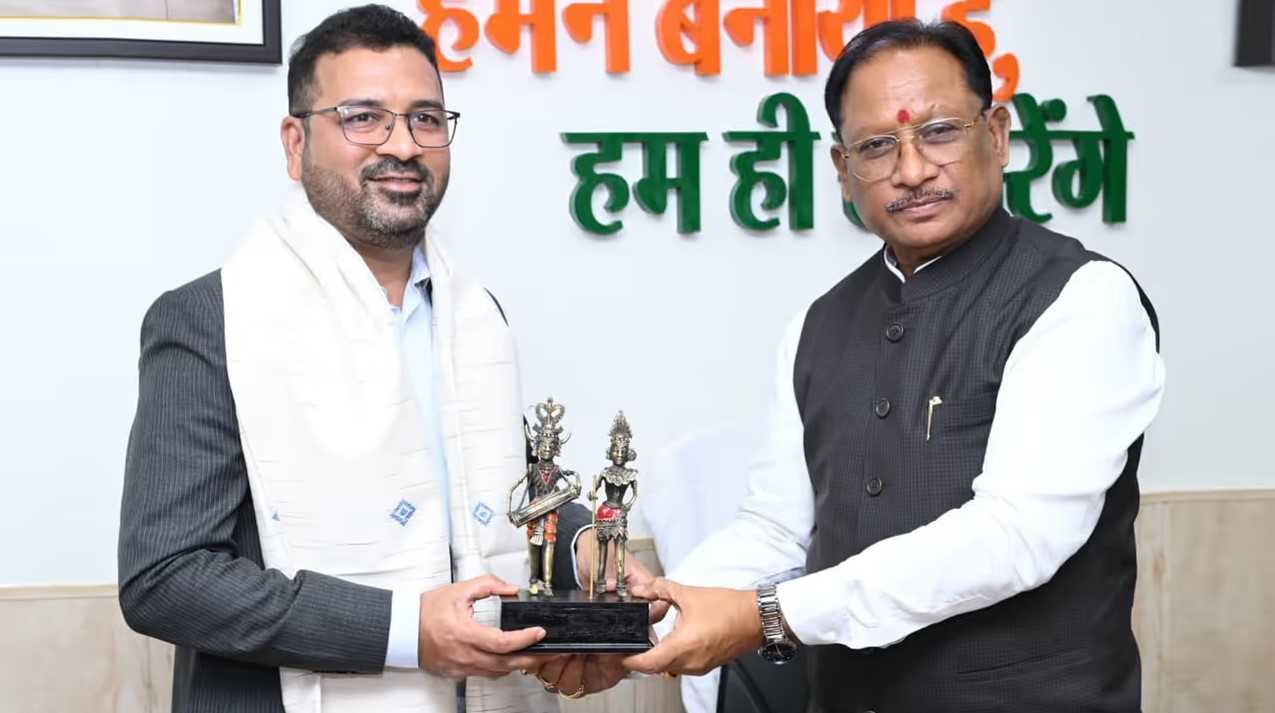
A Letter of Intent has been signed between the Raipur district administration and Google under which a pilot project titled "AI Saksham Shiksha Abhiyan," an AI-enabled education campaign, has been launched to promote AI-based innovations in school education. Under the broader Saksham Shikshak Abhiyan, teachers across the state will receive training in modern digital tools and AI-based teaching methodologies. The first phase will commence in Raipur, after which it will be expanded to all districts of the state.
A target has been set to provide AI certification to over two lakh teachers under this programme. To achieve this, Google for Education has planned to make its digital platform available free of cost, thereby technically empowering the teachers. In the initial phase, special workshops involving 200 teachers will be organized, where practical training on Google for Education tools will be conducted.
The numbers are not symbolic. Two lakh trained teachers, even over a multi-year horizon, is the kind of structural intervention that competitive exam preparation in rural and semi-urban India genuinely needs.
What Google for Education Brings to the Table
This is not the first time Google has engaged with India's education ecosystem at scale. The scope of the current push, however, is significantly larger.
Alongside state-level partnerships, Google has also launched a nationwide teacher appreciation and support initiative aiming to provide teachers with AI tools that simplify administrative tasks and lesson design. Google is also working closely with institutions like NCERT, AICTE, and local ecosystem experts to ensure innovation is deployed responsibly, reflecting India's cultural and linguistic diversity.
The free platform access is the critical detail. Previous EdTech initiatives often collapsed because per-device or per-license costs made scale impossible. By removing that cost barrier at the teacher level, the programme attempts to solve the adoption problem before it starts.
"By empowering teachers with AI-based training and digital resources, classroom teaching can become more effective and outcome-oriented." This is not just a policy statement. It is the answer to the question every rural UPSC and state PSC aspirant has been asking for a decade.
The Scale Problem India's EdTech Has Never Solved
Before analyzing whether this initiative will succeed, it is worth understanding why previous attempts have not.
India's school education system serves about 247 million students across nearly 1.47 million schools, supported by 10.1 million teachers. One of the clearest lessons for Google has been that AI in education cannot be rolled out as a single, centrally defined product. In India, where curriculum decisions sit at the state level and ministries play an active role, Google has had to design its education AI so that schools and administrators decide how and where it is used.
This is a significant operational acknowledgment. India's education ecosystem resists top-down, one-size deployments. What works in Raipur may need adaptation for Bastar or Surguja. The programme's district-first approach, starting with Raipur and then expanding, suggests awareness of this reality.
Nearly 50 percent of Indian schools lack basic digital infrastructure like electricity, internet, and computers. Introducing AI without bridging the digital gap could worsen educational inequalities. The majority of teachers are not trained in AI pedagogy or ethical usage. In some schools, one teacher handles multiple classes, and scaling a technology-heavy subject poses serious challenges.
These structural constraints cannot be resolved through intent alone. The programme's long-term credibility will depend on how quickly infrastructure catch-up happens alongside the training rollout.
Why This Matters Directly for Competitive Exam Aspirants
The connection between AI teacher training and competitive exam preparation is more direct than it appears.
The Ministry of Education plans to introduce Artificial Intelligence and Computational Thinking from Class 3 onwards in the 2026-27 academic year under the National Curriculum Framework for School Education 2023, in line with National Education Policy 2020.
A student entering Class 3 today will appear for UPSC, SSC, or state PSC examinations in roughly fifteen years. The cognitive habits formed by AI-integrated schooling, analytical thinking, data interpretation, structured reasoning, are exactly the skills that separate top performers from average ones in competitive examinations.
AI tools now provide high-quality study materials, personalized study plans, and instant doubt-clearing support no matter where the aspirant lives. AI is transforming traditional UPSC preparation by removing limitations of geography, language barriers, and costly coaching. Even aspirants from remote towns or villages can access high-quality study materials and mock tests.
But AI tools for self-directed aspirants and AI literacy embedded in classroom instruction are two very different interventions. The AI Saksham Shiksha Abhiyan addresses the second and harder problem: building a generation of students who are not just using AI tools but thinking with them.
"AI is a tool, not a substitute for the discipline, perseverance, and critical analysis required to succeed in one of the most competitive examinations in India." This distinction is central to how aspirants should approach both the technology and their own preparation.
What the National Policy Backdrop Confirms
This state-level initiative does not exist in isolation. The national policy direction is explicitly moving in the same direction.
The Ministry of Education has proposed the establishment of a Centre of Excellence in AI for Education, with a dedicated budgetary allocation of Rs. 500 crores under the Union Budget 2025-26. The CoE is envisioned to serve as a national hub for integrating AI into teaching and learning processes, with a focus on enhancing higher education outcomes and preparing students for emerging job roles in AI-driven sectors.
OpenAI has committed to providing ChatGPT access for teachers in government schools from Classes 1 to 12, supporting lesson planning, student engagement, and improved outcomes. Each partner will work with OpenAI to design and distribute training programs that build AI literacy and confidence among educators and students, ensuring the technology is used effectively and responsibly.
Chhattisgarh's programme, therefore, sits within a converging national and global commitment to AI-enabled education. The question is no longer whether India will integrate AI into its education system. The question is whether the integration will be equitable.
Editorial Verdict: Credible Start, Long Road Ahead
The government aims to position Chhattisgarh as a knowledge-based and technologically advanced state, ensuring access to modern, high-quality education for every student.
That ambition is the right one. But two lakh certifications mean little if teachers are completing digital modules without changing how they actually teach. The programme needs robust outcome measurement, not just completion tracking. It needs district-level accountability, not just state-level announcements.
For competitive exam aspirants in Chhattisgarh and beyond, the practical implication is clear. The classroom of 2026 is being redesigned around digital fluency and analytical thinking. Aspirants who learn to use AI tools intelligently for preparation, while maintaining the depth of reading, critical thinking, and ethical grounding that competitive exams demand, will be the ones who convert this structural shift into personal advantage.
"The programme such as the AI Saksham Shiksha Abhiyan will be transformative for both teachers and students." Whether that transformation is surface-level or structural depends entirely on implementation.
Prepare smarter. Stay updated. Demand outcomes, not just announcements.



Comments (0)
Leave a Comment
No comments yet
Be the first to comment