When the United States and Israel launched coordinated airstrikes against Iran on 28 February 2026, the 2026 Iran War global reaction was immediate and intense, reshaping alliances, fracturing diplomacy, and triggering a geopolitical crisis across the international system.
28 Feb
US-ISRAEL STRIKES BEGIN
13–0
UN RESOLUTION VOTE (2 ABSTENTIONS)
12+
NATIONS STRUCK BY IRANIAN MISSILES
A Diplomatic Earthquake
When the United States and Israel launched coordinated airstrikes against Iran on 28 February 2026, killing Supreme Leader Ali Khamenei and targeting nuclear and military sites under Operation Epic Fury, the world's capitals were given no warning and no time to prepare. What followed was not merely a regional war. It was a diplomatic earthquake. The conflict has reshaped global alliances, fractured Security Council unity, and forced every major power to declare where it stands. In just three weeks, the crisis has triggered more emergency diplomacy than most international conflicts generate in years.
The United Nations, the European Union, NATO, the Arab League, and the IAEA all convened urgent sessions. Heads of state made calls they had not planned to make. Alliances once assumed to be fixed revealed themselves to be negotiable. This is how the world reacted.
The United Nations
Emergency Sessions, Divided Powers
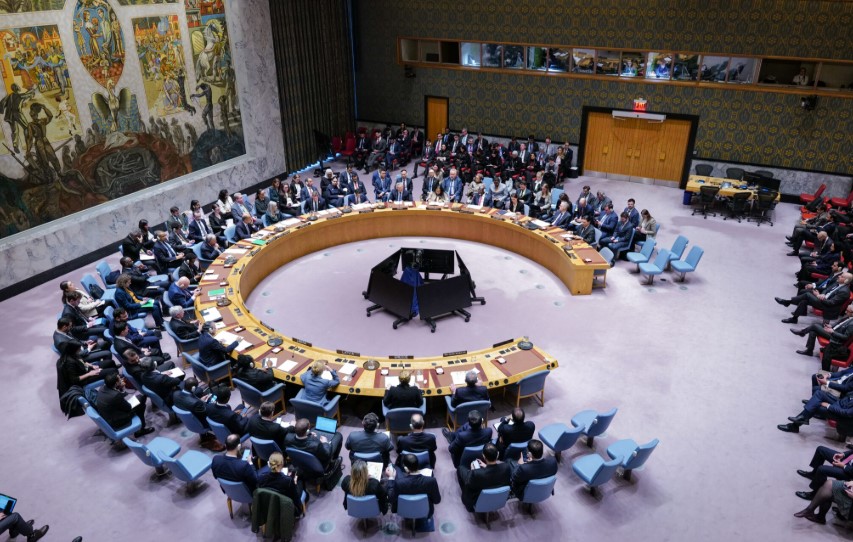
Within hours of the first strikes, France demanded an emergency Security Council session, quickly joined by Colombia. China and Russia filed their own request, framing the crisis as an act of aggression by the United States and Israel. The United Kingdom, holding the Council presidency, convened the session that same evening. UN Secretary-General António Guterres delivered a stark warning.
"I deeply regret that this opportunity of diplomacy has been squandered."
He called for an immediate ceasefire and warned that the collapse of Oman-mediated nuclear talks risked triggering a wider regional war.
KEY RESOLUTION
UNSC 2817
Around 10 March 2026, the Security Council adopted Resolution 2817 by 13 votes to zero, with China and Russia abstaining. The resolution condemned Iran’s missile and drone strikes against Bahrain, Kuwait, Oman, Qatar, Saudi Arabia, the UAE, and Jordan, and demanded an immediate halt to attacks on civilian infrastructure and maritime trade. Russia introduced a rival draft calling for de-escalation without assigning blame. It failed, receiving 4 votes in favour, 2 against, and 9 abstentions. The result underscored a central reality. The Security Council cannot produce a unified response to the war.
Russia
Strategic Ambiguity and Calculated Advantage
Russia condemned the US-Israeli strikes as an act of aggression, echoing its own language from the Ukraine war. However, its practical support for Iran has remained limited and carefully calibrated. Moscow reportedly provided intelligence assistance, including data on US military positions, helping Iran sustain its defence without triggering direct Russian involvement. Limited arms resupply may have occurred, but no large-scale transfers were confirmed. Russia coordinated with China at the UN and abstained on resolutions critical of Iran. Analysts note a familiar pattern. Russia benefits from the crisis without fully committing to it. The war distracts Western attention, raises oil revenues, and weakens US credibility, all at minimal cost.
China
Restraint, Oil, and Strategic Positioning
China’s response has been the most measured. Beijing condemned the strikes as violations of international law and called for an immediate ceasefire. It described the killing of Iran’s leader as a serious breach of sovereignty and criticised the collapse of negotiations. At the UN, China abstained from Resolution 2817.
"This is a war that should not have happened, and a war that benefits no one."
Despite strong rhetoric, China has avoided escalation.
Four key factors explain its restraint:
- Focus on domestic priorities
- Desire to avoid confrontation with the United States
- Balancing relationships across the Middle East
- Uncertainty over Iran’s future leadership
China remains the largest buyer of Iranian oil. When Iran allowed Chinese-flagged vessels to pass through the closed Strait of Hormuz, Beijing accepted the access without endorsing the closure. China is managing the crisis carefully, protecting energy flows while preserving its role in any future reconstruction.
The European Union
Divided and Reluctant
Europe finds itself in an uncomfortable position. EU leaders condemned Iranian missile attacks on Gulf states. France, the UK, and Germany signalled support for defensive measures against Iranian drones and missiles. Britain allowed limited US use of its bases for defensive purposes. But when asked to join military operations to reopen the Strait of Hormuz, Europe refused. At an emergency meeting in Brussels on 16 March, Germany made its stance clear.
"This is not our war. We have not started it."
Across the bloc, leaders echoed the same message. There was no appetite for escalation.
NATO Fault Line
Support Without Commitment
NATO has increased defensive readiness, particularly missile defence. The Secretary-General described Iran as a threat, but member states stopped short of invoking collective defence or joining offensive operations. European leaders stressed that any Hormuz mission would not be a NATO operation. The result is a visible divide. Europe supports defence but refuses participation in the war itself.
Calls for Ceasefire
Loud Voices, Limited Leverage
Calls for a ceasefire have been widespread but largely ineffective. China and Russia urged de-escalation from the outset. Turkey condemned both sides and offered mediation. Oman continued diplomatic efforts despite being struck by Iranian missiles. The Arab League convened an emergency meeting and condemned Iran’s attacks as violations of international law, but stopped short of supporting the US-Israeli campaign. Diplomatic momentum exists, but enforcement power does not.
A Region on Edge
Escalation Already Underway
The fear of a wider war is no longer hypothetical. Iran has launched strikes against Israel, US bases, and multiple Arab states. Qatar shot down two Iranian Su-24 aircraft. A UK base in Cyprus was targeted by a drone. Critical energy infrastructure in Qatar has been attacked. Meanwhile, GPS disruption across the Persian Gulf threatens maritime safety and global trade. Guterres warned of the consequences early.
"A wider conflict would have grave consequences for civilians and regional stability."
That wider conflict is already taking shape.
ANALYTICAL VERDICT
Five Structural Conclusions
1. The UN Security Council is paralysed
Resolution 2817 passed but avoided addressing the root cause of the conflict. The Council cannot enforce a unified ceasefire.
2. China is the most consequential bystander
Its balanced approach positions it as a future mediator and key player in post-war reconstruction.
3. Russia is exploiting the crisis
Moscow gains strategically while avoiding direct involvement.
4. Europe is divided
Support for defence exists, but participation in the war does not. Transatlantic tensions are resurfacing.
5. Diplomacy failed before the war began
The collapse of Oman-mediated talks removed a viable path to de-escalation.
Final Assessment
A War Beyond Control?
Three weeks into the conflict, the central question has shifted. It is no longer whether escalation can be prevented. It is whether it can be contained.



Comments (0)
Leave a Comment
No comments yet
Be the first to comment