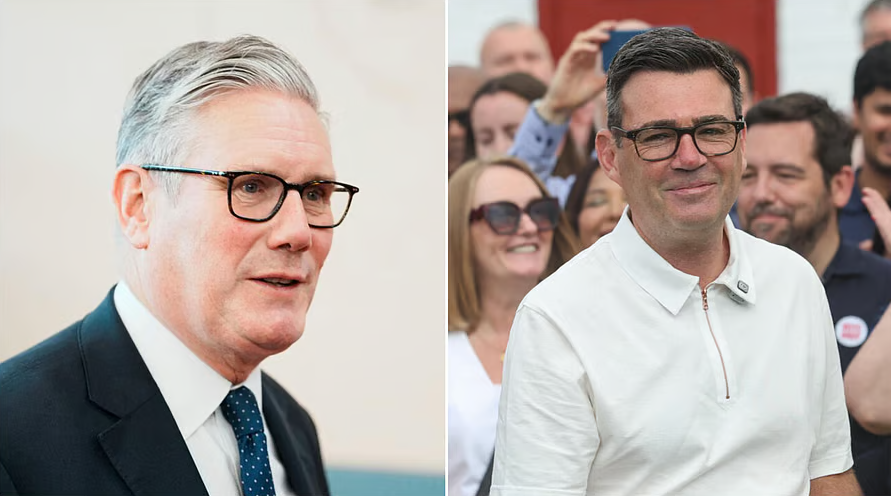
Keir Starmer resigned as UK Prime Minister on June 22, 2026, ending a troubled premiership that never recovered its early momentum. The decision came after sustained internal pressure, back-to-back cabinet walkouts, and a by-election result that handed Andy Burnham the parliamentary seat he needed to challenge for the top job. Britain now faces its seventh prime minister in a decade.
What Pushed Starmer to the Exit
The resignation did not come without warning. By late 2025, Starmer held one of the worst approval ratings of any sitting prime minister in modern British history, with a net score of -46% recorded in November 2025. A string of policy failures and personnel disasters had drained public confidence well before the formal announcement.
Key events that made the position unsustainable:
- Health Secretary Wes Streeting resigned on May 14, 2026, openly criticising Starmer's record of indecision and signalling a leadership election should follow.
- Defence Secretary John Healey quit in June 2026 over a disagreement on military funding.
- The Peter Mandelson scandal became a sustained liability. Appointed as British Ambassador to the United States in December 2024 despite his known friendship with convicted sex offender Jeffrey Epstein, Mandelson was arrested in February 2026 on suspicion of misconduct in public office. Starmer was forced to deny misleading Parliament over the vetting process.
- Welsh Labour suffered historic losses in the 2026 Senedd election, ending 100 years of Labour control in Wales. Scottish Labour leader Anas Sarwar publicly called for Starmer to resign.
- By September 2025, just 14% of people approved of the government's record, while 69% disapproved.
The Final Trigger: Makerfield
On June 18, 2026, a by-election was held in Makerfield after sitting MP Josh Simons resigned specifically to create a vacancy for Burnham. It was the first time since the 1965 Leyton by-election that a seat had been vacated solely to allow an individual not in Parliament to stand. Burnham won with 54.8% of the vote and a majority exceeding 9,200, well above pre-election projections. Four days later, Starmer announced he was stepping down.
Who Is Andy Burnham and Why Is He the Clear Frontrunner
Andy Burnham, born January 7, 1970, in Aintree, Merseyside, entered politics from a working-class background and spent nearly a decade as Mayor of Greater Manchester. He has been described as the only major politician in the country who enjoys positive favourability ratings, according to opinion polls. Two Labour conference polls in 2025 found 62% of Labour members preferred him over Starmer, and 43% listed him as their first choice for leader, far ahead of any rival.
His decade in Manchester gave him something most Westminster politicians cannot claim: a record of delivery. His handling of public transport, regional investment, and the COVID-19 pandemic, where he clashed publicly with Boris Johnson over financial support for Greater Manchester, built the reputation that now follows him.
The Party Consolidates Fast
Less than an hour after Starmer's announcement, Streeting, who had been expected to mount a challenge, backed Burnham instead. That removed the only credible rival from the contest and pointed toward an uncontested succession.
Factors behind the rapid consolidation:
- Burnham championed a model of regional devolution, sometimes called "Manchesterism," which advocates giving city councils more power and is seen as a workable contrast to Westminster-centric governance.
- His by-election result demonstrated he could hold Labour votes against a strong Reform UK challenge in northern England.
- Senior Labour figures across ideological wings viewed further infighting as an unacceptable risk ahead of the next general election.
- Nominations for leader open July 9 and close July 16, 2026, when Parliament breaks for summer recess. If no challenger emerges, Burnham could take office shortly after that. If a contest does follow, a new leader will be confirmed by September 1.
What Critics Have Said
Not all assessments are favourable. Some in the party describe Burnham as a politically adaptable figure who has aligned himself with different Labour factions at different points in his career. One Conservative MP dismissed him as "Keir Starmer with a Northern accent." His foreign policy positions, particularly on the UK-US relationship under President Trump, remain untested at national level. Green Party leader Zack Polanski warned that Burnham "must be bold or he will be bust."
What This Leadership Change Means for British Politics
Seven prime ministers in ten years is a record that points to structural weakness, not just individual failure. The next leader inherits a party that won a landslide majority in 2024 and then shed public trust at a rate few governments have matched.
The Governing Challenge Ahead
Labour's 2024 election victory came with the smallest share of the electoral vote of any majority government since record-keeping of the popular vote began in 1830. That narrow base left the government exposed. Polling from 2024 showed:
- 64% of voters rated the National Health Service as poorly managed under the government.
- 67% held negative views of Labour's immigration policies.
- Roughly two-thirds of voters described the Labour Party as out of touch, unclear about what it stood for, weak, and untrustworthy.
The threat is not only from Reform UK. In England, only 5% of 2024 Labour voters switched to Reform, while 32% moved to the Greens or Liberal Democrats. Burnham must simultaneously defend northern seats from Reform and hold progressive voters who drifted left.



Comments (0)
Leave a Comment
No comments yet
Be the first to comment