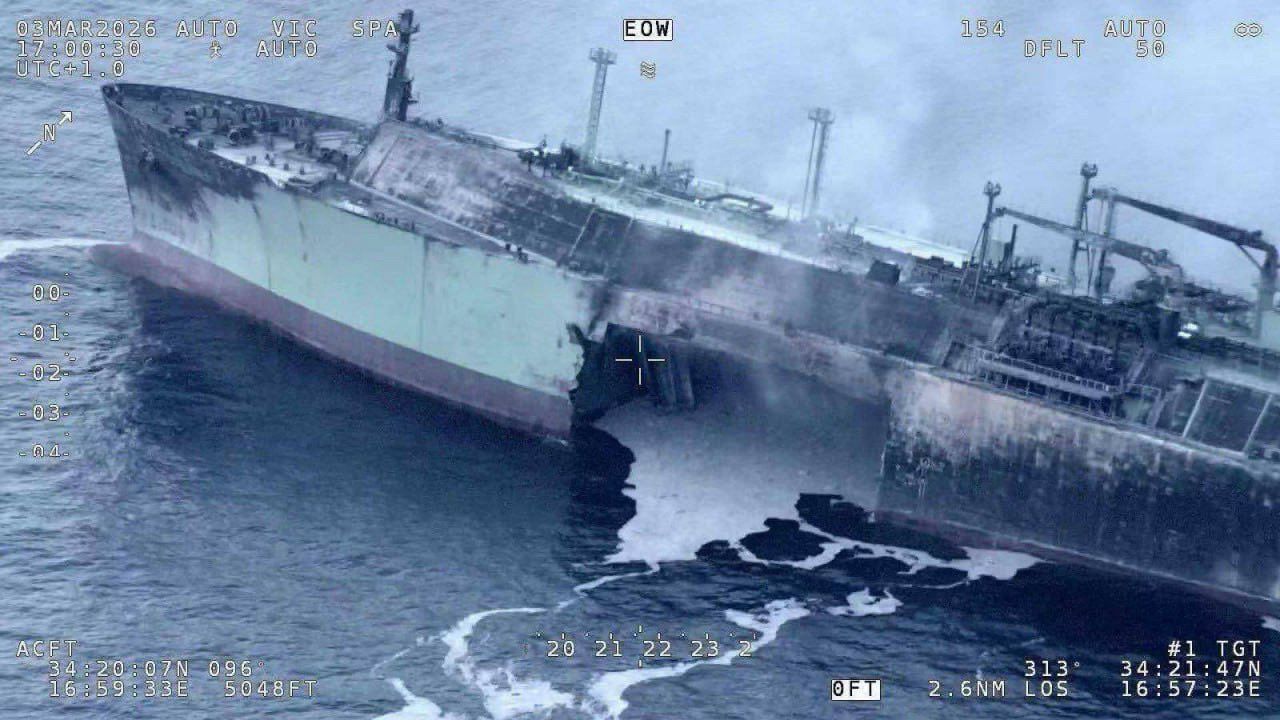
A major LNG tanker explosion in the Mediterranean Sea has triggered new tensions between Russia and Ukraine after Moscow accused Ukrainian naval drones of attacking a Russian-flagged gas carrier sailing between Libya and Malta. A high stakes maritime incident in the Mediterranean Sea has triggered fresh tensions between Russia and Ukraine after a Russian flagged tanker carrying 61,000 tons of liquefied natural gas exploded and sank between Libya and Malta.
The Kremlin has directly blamed Ukrainian naval drones for the blast, describing it as an act of international terrorism. The incident has sparked concern among regional governments and shipping authorities as fears grow that the ongoing Russia-Ukraine War could spill into one of the world’s busiest maritime corridors.
The Midnight Blast
The Libyan Maritime Authority reported that the tanker Arctic Metagaz was struck by sudden explosions late Tuesday night while sailing about 240 kilometres off the coast of Sirte. The blasts triggered a massive fire that eventually caused the vessel to sink within Libya’s maritime search and rescue zone.
All 30 crew members on board were rescued by nearby ships and transported safely to Benghazi. No casualties were reported, though the tanker and its cargo were declared a total loss.
Kremlin Calls Incident ‘International Terrorism’
Speaking about the sinking, Russian President Vladimir Putin condemned the attack and linked it directly to Ukraine’s growing use of maritime drones.
“This was a terrorist attack designed to sabotage global energy stability and exacerbate the situation on international gas markets,” Putin said in a statement released Wednesday evening.
Russian authorities say the attack was carried out using uncrewed surface vessels launched from the Libyan coastline.
Suspected Drone Technology
Security analysts point out that Ukraine has rapidly expanded its maritime drone capabilities during the war. Among the most discussed systems is the “Sea Baby” drone, which reportedly has an operational range of up to 1,500 kilometres.
If confirmed, the attack would signal a major expansion of Ukraine’s reach beyond the Black Sea and into the wider Mediterranean.
A Target in Russia’s ‘Shadow Fleet’
Experts note that the Arctic Metagaz was believed to be part of Russia’s so called “shadow fleet.” These vessels are often used to transport sanctioned energy supplies while avoiding Western monitoring systems.
By targeting such ships, Ukraine could theoretically weaken Russia’s energy revenue without directly striking official naval vessels.
Strategic Gains and Strategic Risks
The sinking presents a complicated balance of advantages and dangers for all sides involved.
Economic pressure on Moscow
Disrupting shipments linked to the Arctic LNG 2 project could damage one of Russia’s most important energy initiatives.
Psychological impact
An attack in the Mediterranean demonstrates that Russian assets may no longer be safe even far from the Black Sea theatre of war.
However, the incident also raises serious risks.
Environmental concerns
Although LNG itself evaporates quickly, the tanker’s fuel oil and machinery lubricants could threaten nearby marine ecosystems. Authorities in Malta and Libya are monitoring the area closely for signs of pollution.
Threat of escalation
Moscow has warned that it could retaliate by targeting shipping routes connected to Ukraine, including key grain export corridors.
Regional Alarm Across the Mediterranean
The incident has alarmed governments across the Mediterranean region, where major shipping lanes carry energy supplies, food exports and commercial cargo between Europe, Africa and the Middle East.
Malta’s Rescue Coordination Centre assisted with emergency communications during the rescue operation, while authorities monitored maritime traffic around the site.
Meanwhile, Egypt’s Petroleum Ministry clarified that the tanker was not bound for Egyptian ports, distancing the country from the sanctioned vessel.
For many coastal states, the incident underscores a growing fear that the war between Russia and Ukraine could open a volatile new front far from its original battlefield.



Comments (0)
Leave a Comment
No comments yet
Be the first to comment