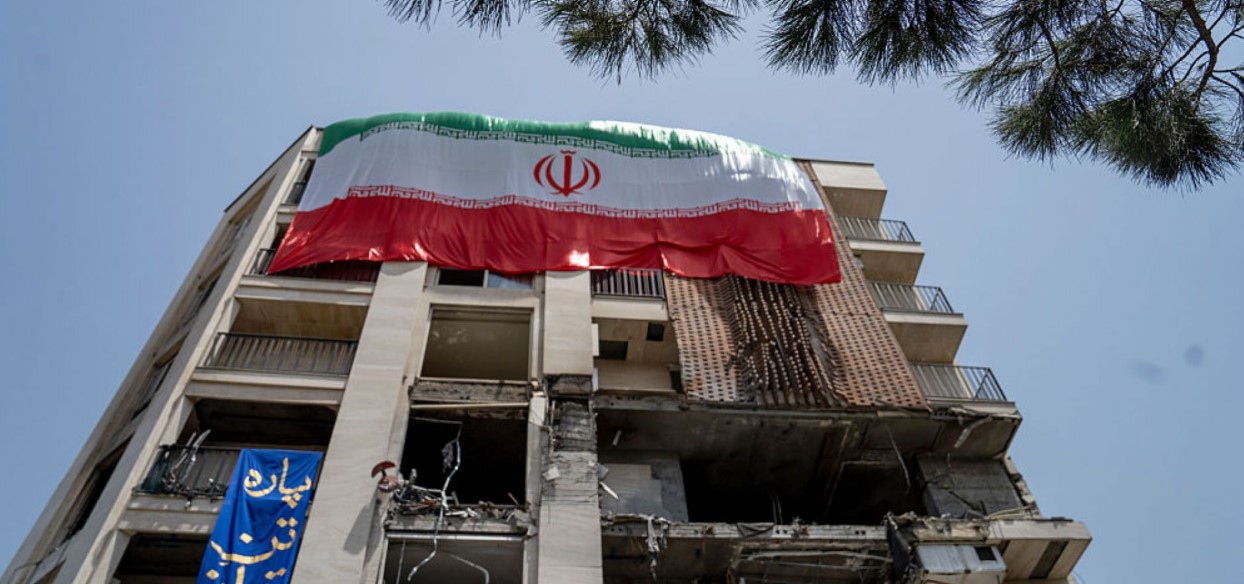
What Happened and Why It Matters
Israeli jets struck deep into Iran. Tehran responded with an unprecedented missile barrage. Washington scrambled to contain the fallout. Then came a ceasefire that proved fragile, contested, and incomplete. This is the story of the conflict that reshaped the strategic balance of the Middle East.
Inside This Report
- Background: The Road to Conflict
- Israeli Strikes on Iranian Nuclear Facilities
- Iranian Missile Retaliation
- US Involvement: Shields, Signals, and Pressure
- The Ceasefire: Terms, Tensions, and Collapse
- Setting the Stage for the 2026 Escalation
A War That Lasted Twelve Days but Changed the Region
In the summer of 2025, a conflict that analysts had warned about for two decades finally arrived. It unfolded quickly, violently, and far more briefly than most military planners had anticipated. Over twelve days in June, Israel and Iran exchanged direct military strikes that shook global markets, threatened energy supplies, and altered the nuclear calculations of the Middle East.
The fighting stopped before it evolved into a full regional war. Yet the consequences did not disappear when the missiles stopped flying. Political divisions deepened, military doctrines hardened, and the strategic rivalry between the two powers intensified.
Understanding the events of the 2025 conflict has become essential for interpreting the escalating tensions of 2026. This report reconstructs what happened, why it happened, and what each side believed it achieved.
BACKGROUND
The Road to Conflict
The crisis that erupted in June 2025 had been building for years. Iran’s nuclear program advanced steadily despite international sanctions and repeated sabotage operations that intelligence officials widely attributed to Israeli covert activity.
By early 2025, Western intelligence agencies concluded that Iran’s “breakout time” had fallen dramatically. Analysts estimated Tehran could produce enough weapons-grade uranium for a nuclear device in less than two weeks. For Israel, this threshold was unacceptable.
Diplomatic efforts failed to slow the trajectory. Attempts to revive negotiations under the Joint Comprehensive Plan of Action framework collapsed in late 2024. Iran rejected expanded inspection requirements demanded by the United States and European partners, insisting its enrichment program remained civilian.
Many Western governments were no longer convinced.
With diplomacy stalled, Israeli military planners accelerated contingency plans that had existed for years but had never been executed.
“The region was moving toward a moment where diplomacy could no longer keep pace with nuclear capability.”
By the Numbers: The 12-Day War
12
Days of active military exchange
3
Iranian nuclear sites struck by Israel
300+
Ballistic and cruise missiles launched by Iran
2
US carrier strike groups deployed to the region
ISRAEL’S OPENING STRIKE
Airstrikes on Iran’s Nuclear Facilities
Israel launched its offensive on June 13, 2025.
More than one hundred combat aircraft participated in the operation. The strike involved complex flight routes, aerial refueling, and suppression of Iranian air defenses. According to defense analysts, the mission had been rehearsed for more than eighteen months.
The targets were Iran’s three most significant nuclear facilities:
- Fordow Fuel Enrichment Plant near Qom
- Natanz enrichment complex in Isfahan Province
- Arak heavy water reactor
The Fordow facility posed the greatest challenge. Built deep inside a mountain, it had long been considered one of the hardest nuclear sites in the world to destroy. Israeli bunker-penetrating munitions inflicted heavy damage, though Iranian officials disputed the scale of destruction for months afterward.
Simultaneously, Israeli cyber units and electronic warfare teams targeted radar systems and command infrastructure. These operations aimed to delay Iran’s ability to coordinate an immediate retaliation.
The attack lasted roughly six hours.
The Israeli government confirmed the strikes the following morning, framing them as a preventive act of self-defense intended to stop Iran from acquiring nuclear weapons capability.
“The strikes were not the beginning of a war. They were Israel’s attempt to prevent one on far worse terms.”
International reactions divided quickly. The United States criticized the timing but signaled quiet support for the objective. Russia and China condemned the strikes as violations of sovereignty. Gulf Arab states issued public protests while privately expressing concern about Iran’s nuclear progress.
IRAN’S RESPONSE
The Largest Missile Attack in Modern History
Iran retaliated within thirty-six hours.
The first wave included hundreds of ballistic missiles and armed drones aimed at Israeli military installations. Key targets included radar facilities and the Nevatim Air Base in the Negev Desert.
By several estimates, it was the largest direct ballistic missile strike ever launched against a single country.
Israel’s multi-layered missile defense network played a decisive role. Systems including Arrow-3, Arrow-2, David’s Sling, and Iron Dome intercepted the vast majority of incoming projectiles.
Still, some missiles penetrated the defenses. Several Israeli cities suffered infrastructure damage, and civilian casualties were reported.
The psychological effect was profound. Millions of Israelis spent days moving between shelters as warning sirens sounded across the country.
Timeline of the 12-Day War
Day 2 – June 15
Iran launches its first missile barrage. Israeli air defenses intercept most projectiles.
Day 4 – June 17
Israel conducts follow-up strikes targeting missile launch sites and air defense systems.
Day 7 – June 20
Iran launches a second wave. Hezbollah and Houthi forces join the conflict with rocket and missile attacks.
Day 10 – June 23
Back-channel diplomacy begins through Qatar and Oman.
Day 12 – June 25
A ceasefire is announced. Full terms remain undisclosed.
Iran’s second missile wave on day seven was smaller but more precise. At the same time, Iran’s regional proxy network became active. Hezbollah fired rockets from Lebanon. Houthi forces launched missiles toward Israeli territory. Iran-aligned militias attacked US bases in Iraq and Syria using drones and rockets.
These actions signaled Iran’s ability to widen the conflict if necessary.
THE UNITED STATES
Shields, Signals, and Strategic Pressure
The United States played a complex role in the conflict.
Washington did not participate in offensive strikes against Iran. However, American forces provided critical defensive support that shaped the battlefield.
Two US carrier strike groups moved into the region:
- USS Gerald R. Ford in the Eastern Mediterranean
- USS Dwight D. Eisenhower in the Gulf of Oman
US Navy destroyers helped intercept Iranian ballistic missiles during the first retaliation wave using SM-3 interceptors. The Pentagon described these actions as defensive operations designed to protect Israeli territory.
Diplomatically, the United States attempted to limit escalation. American officials urged Israel to avoid strikes on Iranian civilian infrastructure and warned Tehran that attacks on US personnel would trigger direct retaliation.
“Washington’s objective was not victory. It was containment.”
At home, political debate intensified. Some lawmakers demanded stronger support for Israel, while others warned against a deeper military entanglement. No formal authorization for the use of force was passed.
Analyst Note
This report synthesizes open-source reporting, declassified briefing summaries, and peer-reviewed analysis from strategic studies research institutions. Readers seeking primary reporting can consult Reuters, the Associated Press, and the International Crisis Group archives.
DIPLOMACY
The Ceasefire and Its Fragile Terms
By the tenth day of the conflict, quiet negotiations were underway.
Qatar facilitated indirect communications between Israeli and Iranian officials. Oman also helped shuttle messages between Tehran and Western governments.
A ceasefire agreement was announced on June 25, ending twelve days of combat.
Both sides claimed limited success.
Israel argued that its strikes had degraded Iran’s nuclear enrichment infrastructure and forced renewed international inspections of surviving facilities. Iran claimed it had forced Israel to halt its military campaign and demonstrated its capacity to retaliate.
Yet the agreement left major issues unresolved.
Iran’s nuclear program remained intact. No long-term monitoring mechanism was established. Iranian proxy groups were not included in the agreement and continued low-level attacks afterward.
“A ceasefire is not peace. It is simply the pause between conflicts.”
The deal also ignored Iran’s expanding ballistic missile program. In the months after the war, Iran accelerated production of new missile variants that were harder to intercept.
AFTERMATH
Setting the Stage for the 2026 Escalation
The twelve-day conflict resolved little.
Israeli leaders concluded that their strategy of preventive action had succeeded. The performance of Israeli missile defense systems reinforced confidence in future preemptive operations.
Iran reached a different conclusion. The war exposed vulnerabilities in its nuclear infrastructure and demonstrated the limits of its deterrence capabilities.
Tehran responded by strengthening three priorities:
- Hardening and dispersing nuclear facilities
- Expanding advanced ballistic missile development
- Accelerating efforts toward a credible nuclear deterrent
Regional politics shifted as well. The conflict accelerated security cooperation between Israel and several Gulf states, which increasingly viewed Iran as a shared threat.
At the same time, Iran deepened ties with Russia and China, both of which provided diplomatic support and technical assistance after the war.
The escalating tensions of 2026 did not appear suddenly. They emerged from the unresolved contradictions left behind by the twelve days of war in June 2025.
“The war lasted less than two weeks. Its consequences may shape the region for decades.”
The 12-Day War was not an ending. It was the opening chapter of a new and uncertain strategic era in the Middle East.


Comments (0)
Leave a Comment
No comments yet
Be the first to comment