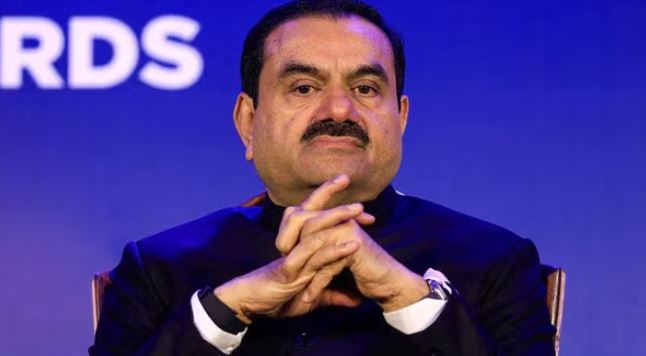
A U.S. judge ended the criminal case against Gautam Adani and his nephew Sagar Adani. This drops a major legal fight that has put big pressure on the business group since 2024.
Judge Nicholas G. Garaufis approved the request from the U.S. Department of Justice to end the case. However, he criticized senior official R. Trent McCotter for how the government handled the drop. He questioned why prosecutors suddenly gave up on a case they once fought so hard.
This choice ends a big criminal threat in the U.S. Still, it is not an acquittal, and the court did not find anyone innocent. The government simply chose to stop the charges, and the court agreed to end the case.
Who is Gautam Adani?
Gautam Adani is an Indian billionaire who leads the Adani Group. The group is one of India's biggest companies. It works in ports, power, gas, green energy, and roads.
He started with a small trade firm in the 1980s. Over twenty years, he built a large business network. Today, his firm manages key ports, air hubs, and power plants across India. He also owns assets in other countries.
He is one of the richest people in the world. His wealth changes with the stock price of his firms. His fast growth has made him a major global figure, but it has also brought sharp public and government review.
What was the Adani bribery case about?
The case began in November 2024. U.S. prosecutors accused Gautam Adani, Sagar, and other leaders of a plan involving over $250 million in bribes to Indian officials.
Prosecutors said the payments aimed to win solar power deals expected to yield big profits. They also said the leaders lied to investors and banks about their actions.
Adani and the other leaders denied all charges.
These claims created big problems for the Adani Group. The U.S. case raised serious doubts about funding, investor trust, and the firm's global name.
Who is Sagar Adani?
Sagar Adani is a key executive at the Adani Group. He was also named as a target in the U.S. criminal case.
The claims against him were part of the main solar power bribery case. Dropping the case brings major legal relief to him as well as to the top firm leadership.
How Gautam Adani overcame the legal challenge
The end of the case came after a few key shifts rather than a single win in court.
First, the defense team questioned the facts of the case. Later, the Department of Justice chose to stop spending time and money on the trial. Prosecutors said the case faced tough legal and proof issues. The choice went to Judge Garaufis, who asked for more details before he agreed to drop it.
Key events in order:
- The original charges came in 2024.
- The defense team denied all claims.
- The government asked to drop the case.
- The judge asked for more details from the team.
- The defense said no deal or promise led to the drop.
- The judge approved the drop but hit the process used.
This order is key to see. The defense did not win by a jury vote. The case ended because prosecutors chose to stop.
Judge Garaufis Adani ruling raises questions about DOJ conduct
The court decision matters beyond the case itself.
Judge Garaufis first refused to drop the case because the government gave a weak reason. He made the Department of Justice give real facts to explain why it wanted to stop the trial.
In his final ruling, Garaufis hit the work of senior official R. Trent McCotter. The judge asked why McCotter made the choice without listening to the lead team on the case. He also rejected claims that the first trial was just a political move.
This part of the ruling is key for legal experts. It shows the clear push and pull between government choices and court review.
Did the $10 billion U.S. investment pledge affect the case?
Reports linked a proposed $10 billion U.S. investment to the choice to end the prosecution. This created strong public debate.
The Justice Department denied that the money offer affected its choice. Official R. Trent McCotter stated the plan was not the reason to drop the case. Under oath, top firm leadership denied any deal or promise tied to the decision.
This point is key. An investment plan existing does not mean it was traded to drop the case.
What role did Trent McCotter play?
Senior official R. Trent McCotter played a key role in the choice to drop the criminal case. Judge Garaufis questioned his process and arguments, but this does not mean the drop was illegal. It simply shows that the court had strong doubts about how the government used its power. This raises a bigger question: how much control should courts have when the government drops a major criminal trial?
Many readers confuse the criminal drop with civil court payouts. Top firm leadership agreed to pay $18 million in total to end a separate civil case with the U.S. Securities and Exchange Commission.
These civil payments are not criminal guilty verdicts or proof of wrongdoing. The civil deal and the criminal drop were two separate legal matters. Readers should not group the criminal case, the civil SEC deal, and other separate legal matters into one single issue.
What does the dismissal mean for Gautam Adani?
The immediate result is strong legal relief. The criminal case no longer poses a direct threat to the group's leadership. It may also lower doubts for the wider business group as it works with global lenders and partners.
However, dropping the case does not wipe out past claims or clear every public concern.
The outcome also highlights the gap between criminal charges and civil actions. A criminal case can stop without a trial, while civil actions can move ahead on their own path.
What about Gautam Adani's net worth?
Gautam Adani's net worth has moved up and down over time. His wealth is tied to the stock value of his companies and changing market trends.
Dropping the case removes one key source of legal risk, but it does not auto-raise his wealth by a set amount. Share performance, firm values, debt levels, and investor trust continue to shape his total net worth.
What happens to the allegations now?
The dismissal alters the legal status of the criminal case. It does not mean a court found the claims to be false.
This distinction is key when reporting on the matter.
A drop based on a government request is very different from an acquittal after a trial. Here, prosecutors chose to abandon the case rather than test it before a jury.
Still, the decision is a major win for top firm leadership because the criminal charges no longer pose an immediate threat.
Conclusion
Ending the criminal case is a major step for the business group and its leadership. It removes the immediate threat of a U.S. trial, but it is not a court vote of innocence. Instead, it shows the government chose to stop the case, while the judge raised sharp questions about the process.
This case shows how global trade, legal rules, and court oversight connect. The drop brings strong relief in a major legal fight, but questions about the group's global reputation will likely continue.
Explore the More story and facts: Read More..




Comments (0)
Leave a Comment
No comments yet
Be the first to comment