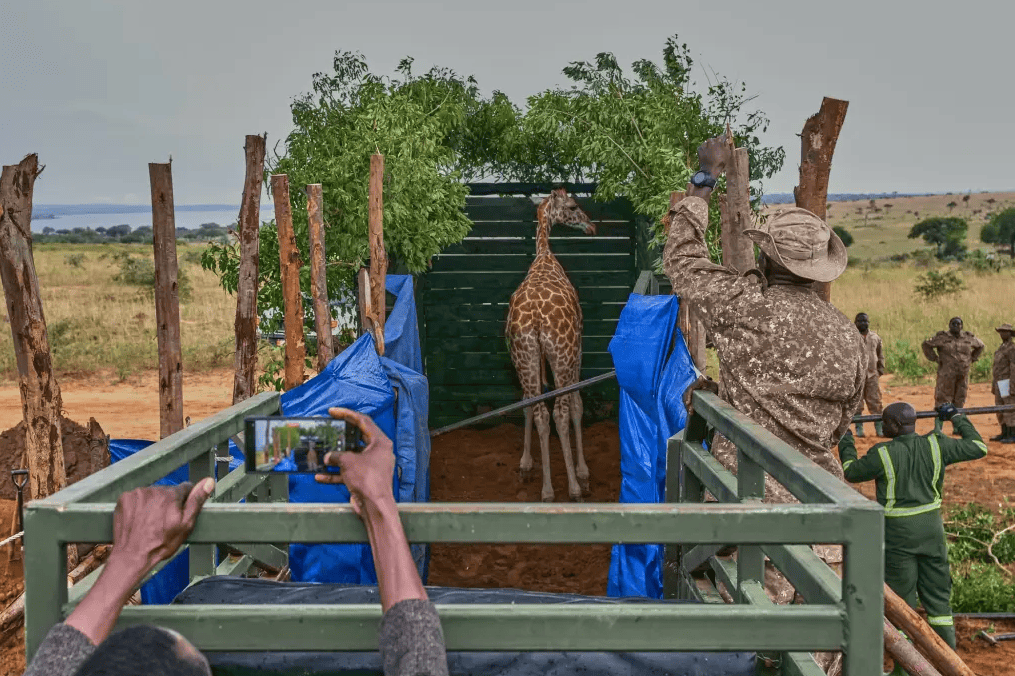
Uganda has launched a major wildlife translocation project to protect its endangered Nubian giraffes from mounting environmental and industrial pressure. Wildlife rangers at Murchison Falls National Park began moving 12 giraffes to the Ajai Wildlife Reserve, a journey of roughly 106 kilometers, in one of the country's most ambitious conservation operations in recent years. The effort reflects a growing global push to protect keystone species as oil development, tourism expansion, and climate change reshape East Africa's protected landscapes.
Why Uganda Is Moving Its Giraffes
Murchison Falls National Park holds an estimated 40 percent of Uganda's oil reserves, and drilling activity inside the park has accelerated since TotalEnergies began operations in the Tilenga project area. Wildlife officials say this industrial growth, combined with tourism development, bush encroachment, and invasive plant species, is steadily shrinking the giraffes' natural range.
A Seed Population for Long-Term Survival
Conservation veterinarians describe the relocation as a strategy to build a second, self-sustaining population outside the pressure zone. Establishing giraffes in a separate protected area reduces the risk that a single environmental disruption could threaten the entire population. Officials involved in the project note that placing a new group roughly 100 kilometers away, but still within the same conservation network, allows the species room to grow while limiting exposure to industrial activity.
How the Translocation Works
Moving an animal as tall as a giraffe requires careful planning and specialized equipment. The process generally follows several stages:
- Veterinary teams sedate each giraffe using tranquilizer darts.
- Rangers cover the animal's eyes to reduce stress during handling.
- Ground crews guide the giraffe into a custom transport trailer.
- The convoy travels overland to the new reserve under veterinary supervision.
- Rangers monitor each animal after release to confirm safe adjustment.
The Bigger Picture: Climate Pressure on Wildlife Habitats
The giraffe relocation is not an isolated event. It fits into a wider pattern across Uganda's protected areas, where rangers are also reintroducing southern white rhinos, buffalo, zebras, and Uganda kobs to Ajai Wildlife Reserve. The reserve, established in 1937, is being partially fenced, and ranger numbers have increased to guard against poaching as animal populations return.
Climate Policy and Habitat Management
Environmental researchers point to shifting rainfall patterns and rising temperatures as long-term stressors on East African wildlife corridors. Habitat loss driven by climate change compounds the pressure already placed on animals by human development, making active habitat management, including translocation, a more common tool for wildlife agencies across the region.
Community Roles in Conservation Success
Local communities near Ajai Wildlife Reserve receive a share of tourism revenue generated by the reserve, and conservation officials have run education programs explaining why protecting wildlife benefits the area long term. Reports from the ground describe residents, including some who previously hunted wildlife in the area, expressing support for the new arrivals rather than resistance.
What This Means for Conservation Education and Policy
The Uganda Wildlife Authority's approach offers a working case study for environmental educators and policymakers studying species resilience. It demonstrates how translocation, habitat diversification, and community engagement can work together as a practical conservation model rather than three separate strategies.
Key takeaways for conservation planning include:
- Diversifying wildlife habitats reduces risk from localized industrial or environmental disruption.
- Community revenue sharing can shift local attitudes toward wildlife protection.
- Increased ranger presence supports both anti-poaching efforts and reintroduction success.
- Cross-agency coordination allows multiple species to be relocated in a single initiative.
Wildlife officials say the Ajai project will be monitored over the coming years to track how well the new population adapts, with lessons expected to inform future translocation efforts elsewhere in Uganda and neighboring countries.



Comments (0)
Leave a Comment
No comments yet
Be the first to comment