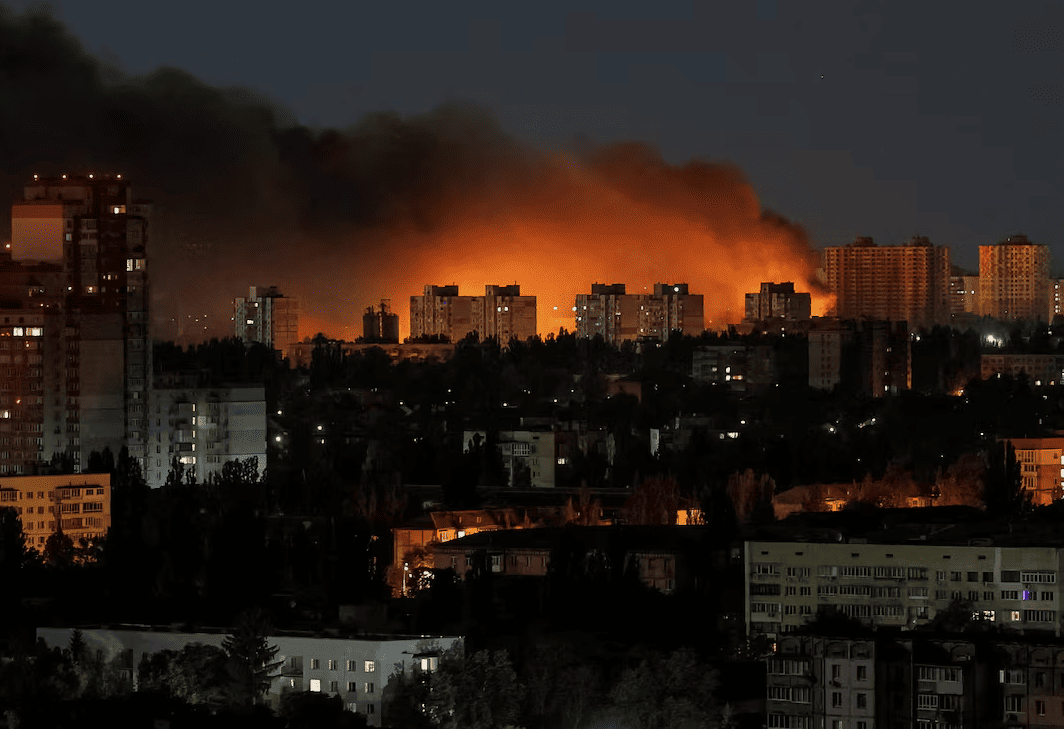
Russian ballistic missiles killed at least 13 people across Ukraine on Thursday, with strikes reaching as far west as Lviv and forcing Poland to scramble fighter jets to secure its airspace. The overnight barrage hit Kyiv, Dnipropetrovsk, Poltava, and the western border region, arriving hours after President Volodymyr Zelensky returned from Washington, where he said President Donald Trump had agreed to grant Ukraine licences for Patriot missile systems.
Air raid alerts sounded across most Ukrainian regions as explosions were reported in the capital. Kyiv Mayor Vitali Klitschko said several non-residential sites caught fire following the strikes. Emergency services confirmed one person killed and two injured in Kyiv, while six more people, including two children, died in Dnipropetrovsk and Poltava.
In Zelensky's hometown of Kryvyi Rih, six people were killed, among them two girls aged 5 and 12. Oleksandr Vilkul, head of the city's defence council, said the deaths resulted from a direct strike by a Russian Iskander-M ballistic missile. In Lviv, close to the Polish border, missiles damaged two apartment buildings and injured multiple residents as rescue crews worked to clear rubble.
Casualty Breakdown by Region
- Kyiv: one killed, two injured.
- Kryvyi Rih: six killed, including two children, eight injured.
- Dnipropetrovsk and Poltava: six additional deaths reported combined.
- Lviv: no fatalities confirmed, multiple residents injured in apartment strikes.
Poland's Airspace Response and NATO's Eastern Flank
Poland's armed forces confirmed on X that fighter aircraft and an early warning aircraft began operations as the strikes unfolded, with ground based air defence systems and radar reconnaissance reaching a heightened state of readiness. The military described the measures as preventive, aimed at securing airspace near regions bordering Ukraine.
This is not an isolated episode. Poland, a NATO and European Union member, has scrambled jets multiple times in recent months whenever Russian missile and drone barrages have approached its border. Romania and Estonia have reported similar airspace violations, reinforcing concern along NATO's eastern flank.
Why Poland Keeps Scrambling Jets
Several factors explain the recurring alerts.
- Poland shares a direct border with Ukraine, placing it closest to missile flight paths during large scale Russian attacks.
- Long range Russian weapons, including cruise and ballistic missiles, sometimes travel close enough to Polish territory to trigger precautionary responses.
- NATO's collective defence posture requires member states to demonstrate readiness even when no direct incursion occurs.
- Past confirmed violations of Polish airspace have made military planners more cautious about ambiguous radar signals.
Poland's response reflects a broader pattern across the alliance. Analysts tracking NATO's eastern defences note that scrambles have become a routine, almost procedural, feature of the war rather than a sign of imminent escalation. Still, each incident adds to the political pressure within European capitals to expand air defence cooperation.
Diplomatic Backdrop: Zelensky, Washington, and the Patriot Question
The timing of the strikes carries diplomatic weight. Zelensky had warned in the days prior that Moscow was preparing a large scale bombardment, tying Ukraine's safety directly to allied willingness to supply anti-missile defences. Writing on Telegram, he said it was essential that partners understood the stakes, since protection of civilian lives depended on their support.
His visit to the United States produced what he described as an agreement from President Trump to issue licences allowing Ukraine access to Patriot missile systems, a step Kyiv has sought for months as Russian strikes have grown in scale and precision. The strikes that followed his return underscore the urgency Ukrainian officials attach to accelerating that supply chain.
What the Patriot Licence Agreement Could Mean
For parliamentary and policy watchers, the licence arrangement raises several practical questions.
- How quickly can licensed systems and interceptors reach Ukrainian air defence units.
- Whether European governments will co-finance additional batteries alongside the US arrangement.
- How this shapes upcoming discussions in NATO and EU defence ministerials.
- Whether Russia's continued strikes are partly aimed at pressuring Western capitals before such systems arrive.
These questions will likely dominate parliamentary debate in allied capitals in the coming weeks, particularly as defence committees assess both the cost and the speed of delivery.
Regional and Humanitarian Impact
Beyond Kyiv and Kryvyi Rih, the strikes reached deep into Ukraine's interior, illustrating Moscow's continued willingness to target sites far from the front line. Local officials in Poltava and Dnipropetrovsk reported casualties among residential and non-military areas, consistent with patterns seen throughout the war of strikes affecting civilian infrastructure.
Rescue operations in Lviv continued through the day as crews searched damaged apartment buildings. The city's proximity to Poland means any escalation there carries direct implications for NATO's border security posture, reinforcing why Polish jets responded so quickly.




Comments (0)
Leave a Comment
No comments yet
Be the first to comment