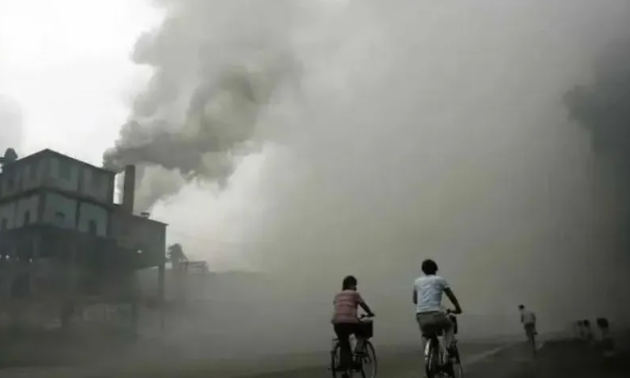
The Meghalaya High Court has intensified pressure on state authorities over the Byrnihat pollution crisis, questioning why regulators sat on a detailed scientific report for months while air and water quality in the industrial town kept worsening. A division bench hearing a suo motu case on the matter has criticized both the pollution control board and the state health department for slow and incomplete responses, ordering a more thorough status report and directing a senior official to appear at the next hearing.
Why the Court Stepped In
Byrnihat sits along the Assam-Meghalaya border and houses the Export Promotion Industrial Park, home to steel plants, smelters, and alloy production units. Combined with heavy traffic on the Guwahati-Shillong National Highway, industrial emissions have pushed the town into hazardous air quality territory, drawing scrutiny from courts, researchers, and residents alike.
The NEERI Report and Its Findings
In 2024, the Meghalaya State Pollution Control Board commissioned the CSIR-National Environmental Engineering Research Institute (CSIR-NEERI) to study pollution sources in Byrnihat. The report, submitted in March 2025, identified several major contributors:
- Silica and quartz handling at industrial units.
- Industrial fuel combustion.
- Dust from construction and transport activity.
- Vehicular emissions along the highway corridor.
- Biomass and waste burning.
The court noted that despite receiving these findings well over a year ago, the pollution board failed to act promptly, prompting the bench to demand accountability.
Health Department's Report Called "Sketchy"
During a hearing this month, the court described the state health department's status report as sketchy and said it did not address the core issues raised in the case. The bench granted the state additional time to submit a fuller report and directed that an officer familiar with the facts be present going forward. Media reports cited in the hearing pointed to a sharp rise in respiratory illnesses among residents living near the industrial belt.
The Scale of the Air Quality Problem
Byrnihat drew global attention after the IQAir World Air Quality Report 2024 recorded an annual mean PM2.5 concentration far above the World Health Organization's guideline, a level that placed it among the most polluted towns anywhere in the world. The town remains classified as a non-attainment city under India's National Clean Air Program, which sets a national target to cut particulate pollution by 40 percent from 2017 levels.
Steps Already Taken by Regulators
State officials say enforcement action has not been absent entirely. The Meghalaya State Pollution Control Board has previously ordered the closure of several non-compliant coke and ferro-alloy units and required others to install pollution control equipment such as bag filters and electrostatic precipitators. Officials have also expanded air quality monitoring sensors and strengthened inspection routines for industries operating under Consent to Operate approvals.
Why Coordination Between States Matters
Because Byrnihat straddles the Meghalaya and Assam border, effective pollution control depends on both state governments acting together. The NEERI report specifically recommended coordinated regulatory measures, continuous environmental monitoring, and periodic scientific assessment across both jurisdictions rather than isolated action from a single state.
What This Means Going Forward
For residents, researchers, and policymakers, the court's intervention signals that judicial oversight may now drive faster implementation than administrative processes alone. Key priorities emerging from the case include:
- Full implementation of NEERI's emission-reduction recommendations.
- Joint Assam-Meghalaya enforcement coordination.
- Transparent public reporting on industrial compliance.
- Independent verification of respiratory illness claims near the industrial belt.
The case remains active, with the court expected to review the state's revised action report at the next hearing.



Comments (0)
Leave a Comment
No comments yet
Be the first to comment